


 For acknowledgements associated with these three brand-new
fashion, beauty and style news images, click here--
and you'll see the acknowledgements come around to
that instagram page of ours either at once or within
a day or so.
For acknowledgements associated with these three brand-new
fashion, beauty and style news images, click here--
and you'll see the acknowledgements come around to
that instagram page of ours either at once or within
a day or so.
Most recent essay here:
The world is full of proofread unwise texts. If there is any wisdom here, it isn't proofread. Just as any good painting isn't proofread either. SOME FEATURES OF WORLD ECONOMY PREDICTIONS FOR THE YEAR 2022 November 6, 2021 In 2022 I think it is likely that we will see, in the area of global business, economical growth areas and such--relevant to those who daytrade currencies successfully: * A general good business for most airplane companies [the waves associated with the now-dampened off covid issues will continue for a good while esp in specific regions but covid is now more considered a particularly vile type of flu most places] * A general decline in value of local currencies which are too wedded to specific forms of energy * A stability of world affairs that is in very broad statistical terms a bit better than before the covid phase due to the increased orientation towards digital interaction with the type of attitudes towards favouring stability of infrastructure that this may lead to as a general attitude * Very novel attempts at environmentally friendly product and service creations, some with powerful influence and enduring success * A technology in which small and knowledge- transparent units are favoured more than before S.R.Weber *** Reproduction of whole unedited text in educational settings and such is permitted. Contact info to author is in the link above as for reprint permissions. ****************** 2020 ******************* IN 2023 SOMETIME THE COVID19 IS A THING MOSTLY OF THE PAST Decenber 22, 2020 Those who wish to think clearly about the present political situations around the world where covid19 restrictions and other covid19 related themes are over-dominant, and who have a harmonious, intuitive, creative agenda, ought to be served something better than wishful thinking about when it will all lighten up. Obviously, any such vaguely flu-like thing is making itself somewhat less present in hot temperatures. Apart, therefore, from a light easing during summer times here and there, when will the covid19 restrictions really go away? That is about predicting a lot of factors including how politicians think and how their affects affect the spread and how their actions slow the building up of a herd immunity; and how digital platforms soak in loads of profit on having people sitting home; the very same digital platform whose top experts are advicing the politicians. This whole set of factors, including biological factors, such as variations of forms of covid19 and so on, must be considered in the various scenarios we look into. In one scenario, everything gets better month by month, vaccinations provide optimism. In another, they do get better but only after some months. In a third scenario, only in 2023 can people really look back on covid19 as a thing of the past, or mostly of the past. There are some more scenarios but I regard all these as possible and for reasons that are mostly intuitive I have come to stick to the third one. S.R.Weber *** Reproduction of whole unedited text in educational settings and such is permitted. Contact info to author is in the link above as for reprint permissions. COVID VACCINATIONS BETTER THAN LOCKDOWNS November 29, 2020 Politicians across the globe pin their hopes on vaccination programmes, hoping to get a majority of the population vaccinated against COVID-19 long before summer 2021. There are three things one might say about this: [1] Good luck with it, and glad you are focussing on vaccination rather than the way too heavy-handed approach of city lockdowns. [2] Most have had a passing mild cold that actually was COVID-19, is the opinion of some people; they will not need that vaccine. [3] Build a way to handle future diseases that has no more of the Orwellian approaches that we have seen with COVID-19; enough is enough. S.R.Weber *** Reproduction of whole unedited text in educational settings and such is permitted. Contact info to author is in the link above as for reprint permissions. BELOW IS PART OF THE ARCHIVED SECTION OF THE YOGA6D ECONOMY COLUMN.
Vogue Paris October 2017 Fashionmodel Ulrikke Hoyer Archive page 1. Archive page 10. ********************A BIT MORE PRIVACY? HERE YOU ARE:********************** As the first head of the Norwegian State's Data Protection Agency --a sort of "Ombudsman for Privacy"--pointed out: one can be a completely respectable and law-abiding citizen and nevertheless not want the State to know everything about oneself. Privacy is a matter of quality of living. This is not just about the State; it's a matter also of not letting one's life be altogether dominated by large tech corporations and their spamming of the Internet experience with unesthetical advertisements. One can be in favour of general ad campaigns and advertisements shown, beside quality articles and quality photos, in a way that has been human edited so as to provide a good reading experience, and not approving of the hyper-targeted ads that appear all over the place by scripts operated by these companies. A newspaper can provide ads in its digital forms without engaging in hyper-targeting: simply by showing images and texts in the classic manner, so that everyone sees the same images and texts, both editorial content and advertisements. By turning JavaScript off you are not turning such classical advertisements off. You are turning off some of the capacity of the PC to spy on you so as to give hypertargeted ads-- that's all. So, non-tracking advertisements we can welcome. The best would be to have a DECENTLY made browser of a type that is also wholly modern and up-to-date in all respects. No such browser exist. Firefox is half-decent because they keep on making it difficult to switch off cookies and switch javascript on and off, and other browsers are generally either even less decent, or they can't process the latest verisions of HTML and so on well enough. Firefox however tries to hold the banner of 'privacy' high, and, all things taken in consideration, it is probably the best of the lot: To improve privacy at least a little bit, whether in Linux or Windows, this is what many recommend: www.noscript.net But only if you learn to configure it right for the right sites. The next solution is a good one in its simplicity: At the very least, every serious explorer of Internet ought to have a switch on the browser to turn javascript on and off--so that the pages that do have some meaningful content but which get horribly slow with javascript turned on can be browsed at speed. So, the minimum would be something like this: add0n.com/javascript-toggler.html (You can search up other addons that does rather the same--be sure the present version of your browser does in fact work with each addon.) Combine this with intelligent adjustments of the Cookie preferences and of selecting Delete History quite often. You should combine the use of any such approach with an actual quitting of the browser and a cleansing of all flash cookie folders and other temporary internet files and such. In sum, this might just be a lot better than using 'privacy mode'. NoScript can also prevents some of the sometimes very cunning flash cookies to come into your system and track it (flash cookies escape the normal cookie settings and are features of the Adobe's Flash plugin). So you want something to COMPLETELY cleanse away flash cookies regularly--and most of the ways that worked five years ago aren't working anymore. As it seems: you must search in unusual ways on the net on flash cookie removal methods (the search engines here often give only obsolate or over-complicated answers--guess why), and you mustn't be too gullible. It SEEMS that the following is a pretty good link both for Windows and Linux (hint: try use the Software Center in your Linux). Such 'cleaning programs' are run IN BETWEEN your sessions on the internet, with focus on deleting the temporary files associated with your browsers, and in particular with focus on the Flash folders. HOWEVER SUCH A PROGRAM MUST BE MADE BY TRUSTWORTHY PEOPLE AND IT MUST BE UPDATED ALL THE TIME to be relevant here. To generate some more links to relevant program, put the same type of keywords you find here into Geek Forums and see what they say there (but only use information that are no more than months old as for Flash cookie cleaners if you wish to be reasonable certain you get it right). www.bleachbit.org Bleachbit is a good program but it is also well known by those who make the plugins and the browsers and so there is always the question-mark of whether it can fully do the job it is set up to do. To repeat, I don't guarantee that this program do the work of cleansing flash cookies fully, but I think it is one of the best bets at present. In any case, it seems a good idea to find a program that seems trustworthy enough and that you learn well enough that it can actually locate and delete the stored flash cookies every time you want, after quitting the browser and before re-starting it. As for NoScript, it takes getting used to, but there is no doubt that you get a much more reliable, fast, interesting netsurf-time when handling it while going through vast number of sites for suitable images and so on. Be sure, as you go back and forth between public sites and log-in sites, to constantly go into the Cookies settings--Always, Never--and to press CTRL-SHIFT-DEL to get those away. Turn NoScript's JavaScript back on to 'globally' before any log-in or any site that has complicated content that you must view in full. Turn Cookies to Always also before logging in to places which have complicated log-in mechanisms. You can bookmark the position of the Privacy settings inside the newest version of Firefox by CTRL-D, so you can get to it faster. But what with all these measures, most operating systems are made so that any activity has lots of traces around on the disk. And even with a reformat of the disk, the disk physically usually has many remaining traces of the activity. You just have to learn to live with it all. ************************************************************* * * * * * * * * * * * * * * * * * * * * * * * * * * * * * * * * * ===========>Here you can YOGA6DORG SPARKLES PRODUCTION SUITE or certificates by getting the 7.5 GB .ova file we have prepared for you and start it within such as Oracle Virtualbox. Read on:==================== Here are 15 ca 500MB bundles for SPARKLES.OVA, which, when you have got it all, should combine to the exact size 7581443584 bytes. These are, in Linux, easily combined by a simple command as indicated here: readme.txt Further notes: installing_the_best_linux.txt Before you do this, note that this version of GNU/Linux of the Debian kind as our open source friendly and legal extension and modification of SparkyLinux to suit professional creative production purposes do require that the ground PC you run it on is lots and lots of times faster than a typical PC from the year it was made {we made this available Septemeber 18th 2015}. You should carefully read the installation document as for what to expect and what not to expect with this platform, which has an orientation more towards independent creative production than towards internet connectivity or such: it is a healthy desire to retain an 'imprint' of well-made programs before they are swept away by clumsy upgrades in the decades to come that led us to make it. sparkles.ova.001 sparkles.ova.002 sparkles.ova.003 sparkles.ova.004 sparkles.ova.005 sparkles.ova.006 sparkles.ova.007 sparkles.ova.008 sparkles.ova.009 sparkles.ova.010 sparkles.ova.011 sparkles.ova.012 sparkles.ova.013 sparkles.ova.014 sparkles.ova.015 The above installation info text also talks about this ca 1.5 GB LTFIRTH: ltfirth.ova Exact size: 1582907392 bytes. We appreciate that you make use of these links as an individual {ie, pls don't set up systems for massive loading of huge files, for we need to protect the servers against too much pressure}. For further extension of this platform you may also want to get the following OVA's, listed further on. The first, RH8, can be combined elegantly and fairly effortlessly with the Y6ALL.ZIP G15 PMN programming platform (linked to elsewhere in this page; the Y6ALL works in fullscreen mode in RH8) and which offer the possibility of running such as the 'toprinti' programs, the output of which you see the result of when you go to yoga6d.org/look.htm and select the 'Print weekplans' part. The Sparkles Linux works with the 'bnw' programs. Both of these are linked to at norskesites.org/fic3, the main location to get G15 PMN core works. NOTE: USEFUL WORKAROUNDS! SPARKLES, SPARKYLINUX AND SOME RELATED LINUX FORMS CAN MAKE USE OF SOME WORKAROUNDS--how to disband an annoying screensaver when it asks too much for updates, and more such. These workarounds are given a handful of screenfuls further on in this EcoNomy page. * * * * * * * * * * * * * * * * * * * * * * * * * * * * * * * * * ===========>Here you can get RH8. It has many features. It allows, if you wish, install of the Y6ALL.ZIP package for wholescreen G15 PMN performed elegantly and fast in a minimalistic linux. It can also run classic applets without signs or certificates. Do get the 2GB .ova file we have prepared for you and start it eg within Oracle Virtualbox. Read on:==================== YES TO RUNNING ALL CLASSIC JAVA APPLETS WITH GREAT EASE AND TO ALWAYS HAVING INTERNET OF THE HTTP NOT JUST HTTPS KIND The best of internet is free from meaninglessly overdone cryptisation efforts, certificates provided by conglomerates of companies, etc etc. Freedom is core to the internet. To this, http:// as prefix represents the best of the internet, with https:// as secondary class, but part of a whole package of securities which banks and such must provide. And free Java applets of the classic type, 1.1 and early 1.2 and so on,, unsigned and easy to write and without bother with certificates, is part of the natural anarchy of compassion of the internet. Is there a shortcut to running all the good ones of them without all the new cluttered arrangements, which is safe enough for people who have a good mind? There's a way to run all the world's unsigned Java applets as easy as in 2006 -- in fact, as easy as April 10, 2006 -- it's just to go back to that date. You have Virtualbox installed, then get this file (2GB) and select 'Import appliance', and you're up and running. {If you give this link to others, do it in a way that ensures moderate rather than massive use of this link to this giant file, spare our servers pressure. Tks.} So, what you fiind there, we've done, easily, by means of only free software, the RH8, the Konqueror, and such, from around that time, all GNU GPL and legal runtimes. Login-name and password and additional hints you'll find in the readme.txt for it. Note that we are in favour of meaningful security when using your PC. That meaningful security involves that you think through each step when you do these things, and not go to just any site with this type of "certification-less" approaches. Do use it with the attentiveness you should have when giving even an emulated part of your machine such freedom. By putting the Centos 5.5 into another virtual PC inside your PC you can get Firefox with javascript of the classic type, -- which constantly works, on all internet, and will do so, always. For this is the Web III. * * * * * * * * * * * * * * * * * * * * * * * * * * * * * * * * * * * * * * * * * * * * * * * * * * * * * * ===========>Not enough with RH8? You can get C55DOS! Here are 8 parts of a 4GB .ova file we have prepared for you and start it within Virtualbox. Read on:==================== YES TO RUNNING CLASSIC MOZILLA WITH AN EASE OF TURNING JAVASCRIPT OFF, FREE FROM ANY TOO MUCH PLUGINS, AND FULLY IN SUPPORT OF http:// SITES NATURALLY The c55dos in the present form of VirtualBox offers only 800x600 window, not as big screen as the RH8 above, with the free open source CentOS 5.5 here included, and a library for DOS-enthusiasts as well. Read all about it before loading anything of this c55dos.ova here: readme.txt You have Virtualbox installed, and a program to merge these files into one -- example is given in readme.txt for a free such program for many linuxes -- and then get these 8 files each of 500 MB == made available this date: May 5, 2015: c55dos.ova.001 c55dos.ova.002 c55dos.ova.003 c55dos.ova.004 c55dos.ova.005 c55dos.ova.006 c55dos.ova.007 c55dos.ova.008 After you have got them, merge them, after that, select File->Import appliance in VirtualBox and you get a window where you can select between C55 and DOS. {As with the above link to rh8, if you provide links or info about these links to others, do it towards a moderate loading of these our files rather than a massive loading, to spare our servers pressure. Tks.} It is all legal free software, provided in a benefit-for-all sense, and to support good standards. * * * * * * * * * * * * * * * * * * * * *
 OUR CURRENCY TRADING TUTORIAL MINI-ESSAY 1:
STATISTICAL GRAPHING:
If you're a norwegian-talking student who wants to acquire a greater
capacity to think about numbers in terms of abstract patterns
and plot these graphically e.g. in connection to a thesis,
and who wants to get started with statistical programming,
you may find the following educational notes useful:
http://www.norskesites.org/r-programmering.
To acquire such a sense of numbers is useful also to get
going with interactive PMN programming in the new G15
platform. There is a vague inspiration of some aspects
of R to some aspects of PMN, of course. (PMN is open
source part of the Firth and Linux G15, see links to
this elsewhere on this EcoNomy page.)
THE CASE FOR LONG-TERM LOW-LEVERAGED CURRENCY TRADING
-- CT of a low leverage with some of your surplus money
can be seen as a way of learning something about the planet
and its economies
A word of caution: pls read in the archive section, page
10, of this our EcoNomy texts, as for what you can expect
in terms of prices -- how meaningful (or not) they are.
The idea of 'leverage', as known by those already acqainted with
eg currency trading -- here called CT -- is that of multiplying
the sum you trade with, so that the fluctuations become more
noticable. More gain, if you have done the right type of bet,
and more loss, if not. I suppose all of us have heard of
billionaires who have made gigantic gains on CT, but there
are also stories about billionaires who have made gigantic
losses on CT. A leverage of 1 means that the chances of
gain are not bigger than the normal fluctuations between
the currencies. From one year to the next, does it matter
whether you store money say, in one or in another of the
most robust currencies? It probably will matter a little bit --
some percent, on the average, in one or the other direction.
Suppose you're able to bet right -- that XXX will increase
relative to YYY by, let's say, four percent during the next
twelve months. And so by a leverage of 1 you gain four
percent on your surplus money. By a leverage of 10 you gain
forty percent. By a leverage of 50, 200 percent. But if the
bet is in the wrong direction, and you use a leverage of 50,
the betting sum will decrease to zero and that surplus money,
set aside for CT, will be permanently gone.
But fluctuations of currencies are much like details of
a coastline -- the closer you focus on the detail, all the
way to the pebbles on the beach -- the longer the coastline
gets. And so, if GBP raises four percent relative to USD
during the next twelve month -- given, say, the currency
value at noon today and at noon 365 days into the future --
it may perfectly well has swayed much more than that during
some days and weeks.
Like when you do sailing or windsurfing of some kind, you
want there to be some wind, but if the wind is strong, and
the waves are big, your boat must be more robust and the
sail ought in general to be smaller relative to the size of
the boat. The idea of a low leverage is that you can handle
'currency storms' without sleepless nights. Add to this the
recommendation of only trading with surplus money, not with
money that is vital to you, and your sleep won't be affected
in the least by your CT bets.
This is perhaps obvious to quite a few, but still it is a
point that seems to be relatively rarely expressed among the
many brokers that offer CT to individuals. Rather, they say:
it's important to set a 'stop loss' factor when you do a
trade. I don't think that's important at all -- not when you
do a low leverage CT. On the contrary. The whole point of
doing a low leverage CT is that the bet can go very much in
the wrong direction without you having to call an automatic
close on the bet. If, in addition, the CT concerns some of
the most stable currencies on the planet, there's all the
more reason why it will swing to a more positive result
within, say, some weeks or months. Suppose, for instance,
you have done a bet and it seems to go well for a week but
when you next check it, it turns out to show a loss of
some ten percent on your surplus savings put into the
CT broker account. Had it been ten times as much leverage,
it would have been nothing left in the account. But with
adequately small leverage, bad weather is easy to handle.
Your bet might still be right and still come out positive.
You may have sensed something substantial about world
economy, and, lo and behold, after maybe three weeks it is
five or ten or fifteen percent into the positive. If you
feel like it, you can close the bet then, not risking
another bout of bad CT wheather.
In the meantime, without doubt, your interest in the
affairs of central banks and giant G8 economies' decision-
making relative to debts, bonds, currency printing,
import/export politics, as well as climate effects and
all that, have naturally been perked up. If you sensed
that the USD is going to go up relative to an european
main currency like GBP, surely a lot of previously rather
boring details about how the big nations interact and act
in terms also of money policy will have a greater interest
to you. If the leverage you have put on your CT is adequately
low, and it is in fact surplus not vital money you're trading
with, you won't have any fear as to how world economies are
making out, but you surely will have increased, natural
interest. Politics and economy news will be more
personally interesting to you than it might otherwise
have, if your area of work is not already directly tied
up to these phenomena.
Compare it to science, scientific research in the true
spirit of enquiry and doubt, open-minded sceptisism --
the CT bet is to put forth a hypothesis. You are putting
a theory of the developments to come into a mild money
form. If the theory is confirmed, you can easily beat the
normal interest rates that banks will pay you on this
portion of your surplus money. If the theory isn't
confirmed, but disconfirmed (to use the popperian or
neopopperian language), well then, you have had a gain
in insight, in having a period of fruitfully elevated
interest in global affairs, and you have learned to go
still more deeply into yourself before doing the next
bet. Scientific research, in this impersonal, disinterested
sense, is a win-win situation: there's a considerable gain
if your hypothesis gets instances of confirmation, but
there is also gain with instances of disconfirmation, for
both results are, indeed, results. Results from which one
can learn, and which have involved learning all the way.
[[[Practical info: if you use something like MT4 --
a program often used by many brokers, and which can start
in Windows and in some cases--for some versions of MT4
only--under Wine Windows emulator--you don't type in what
leverage you are going to apply given a particular trade.
Rather you type in how many "lots" you are going to trade
with. There are typically three types of lots -- a standard
lot, which is 100,000, a mini lot, which is 10,000, and a
micro lot, which is 1,000. What size of the lot you have
is dependent on the account type you have. The lot refers
to the first in a currency pair, so in the case of one
mini-lot of GBP/USD, we're talking of the value of 10,000
british pounds as seen from the perspective of US dollars.
(So the idea of the 'lot' is usually independent of the
ground currency of your account.)
The smallest trading sum in MT4 is usually 0.01 of the
lot type you have. If the CT account you have has $250
in it, then when the lot refers to dollars, and it is a
standard lot, trading with 0.01 (a hundredth of 100,000),
means multiplying that sum with four (so you get 1000).
Imagine you have mini-lots in an account with $250 in it,
and you're trading with a currency pair where the first
one listed is either USD or a currency with a value fairly
near it. If you then use MT4 to trade with 0.1 (which times
the minilot size of 10,000 means 1,000), you are invoking
more or less a leverage of four.
The CT accounts in USA normally allow up to a leverage of
50, while most other places allow up to 500. Be sure, however,
to check out the broker really well for there are three
other factors involved: the distance between the buy and
sell price (the 'spread'), the honesty of the currency
value you get relative to official values (it may be a
manipulated value, for the official values are not
compulsory -- so prefer STP brokers), and finally the
question of the up-time of the servers (they may not
work at all for hours and the CT broker may be in praxis
rather unavailable for any support of substance unless
you're a millionaire or better -- the support channels
may actually only go to a separate company whose only
capacity is to tell how the MT4 program is supposed to
work). So stick to virtual sum on virtual accounts so as
to get a sense of what the company is up to, and start
carefully, with small sums, before doing anything big
with the company, and see how things work out. Intuition
must be brought in and have its say, and you must see
small results being real before going bigger with them.]]]
A VARIETY OF LINKS
This great work is constantly updated:
G15 PMN programming language: http://www.norskesites.org/fic3/fic3inf3.htm
THE EARLIER FIRTH: Existing since April 10 2006, and with
occasional uses all over the world:
www.yoga4d.org/firth.iso (6-700 MB!)
The http://www.norskesites.org/firth-up.txt
sets forth how to install it. Requires technical expertise.
Firth has been brought into PCs of all sorts, it has the
Manhattan Transformation, or MT, scifi erotic texts
spread around in it in .txt form, it has earlier forms
of the new programming language G15 PMN in it (and a
version of G15 PMN has been made so as to be compatible
with it, the G15SP_F, and is available at the link above),
a number of originally made programs and loads of docs.
By its DOS-compatible Firth234 operating approach,
containing a modified extremely powerfully expanded
GNU GPL FreeDOS with open source versions of Perl,
Pascal, Lisp, Forth, APL and you name it included,
alongside various freeware games and editors and what not,
it sets the whole standard for the classical IBM PC area
and those who are technically expert and enthusiastic
are able to get many portions of this to work with
modern PCs directly--or via some of the virtual
solutions. The WHOLE Firth experience is however only
available at hardware of the Y2000 kind with a 1024x768
sized analog monitor and the typical hardware which
existed at that time including SoundBlaster16.
Note that the word "Firth" as defined in the context
of G15 PMN programming works refer to any G15 PMN
extension in terms of hardware such as robotics or
networking, whether as Linux or as our own intraplates
Avenuege G15 PC.
SOME EXTRA WORKAROUNDS FOR THE SPARKLES LINUX
The Sparkles Linux is a package that either works
enormously well for you--or you have to get another
package altogether, because it has now existed for
such a long time that there is no automatic way to
install packages (ie, its inbuilt 'Synaptic' no
longer connects to an active pool of updated packages,
so in case they have to be assembled manually and that's
usually something to be avoided). However, workarounds
do exist. The first is for Gftp (included) which doesn't
handle some newer popular servers as well as e.g.
Filezilla (not included). But Gftp can be modified to
work just as well, so it no longer reports 'stalling'
when uploading to servers in case FileZilla just rolls
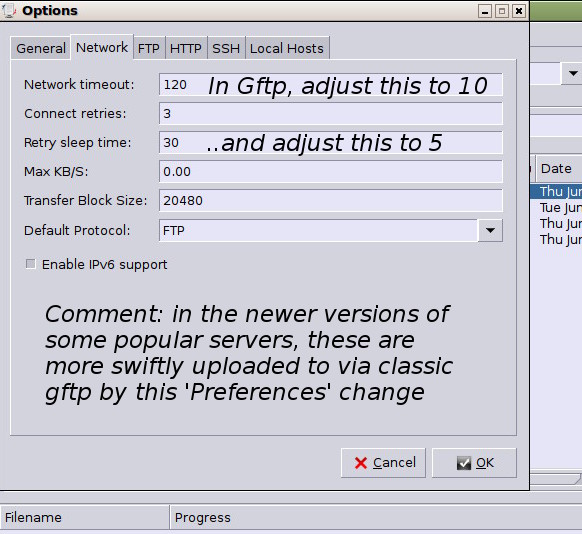
on and does it fast. Here's how to modify it:
OUR CURRENCY TRADING TUTORIAL MINI-ESSAY 1:
STATISTICAL GRAPHING:
If you're a norwegian-talking student who wants to acquire a greater
capacity to think about numbers in terms of abstract patterns
and plot these graphically e.g. in connection to a thesis,
and who wants to get started with statistical programming,
you may find the following educational notes useful:
http://www.norskesites.org/r-programmering.
To acquire such a sense of numbers is useful also to get
going with interactive PMN programming in the new G15
platform. There is a vague inspiration of some aspects
of R to some aspects of PMN, of course. (PMN is open
source part of the Firth and Linux G15, see links to
this elsewhere on this EcoNomy page.)
THE CASE FOR LONG-TERM LOW-LEVERAGED CURRENCY TRADING
-- CT of a low leverage with some of your surplus money
can be seen as a way of learning something about the planet
and its economies
A word of caution: pls read in the archive section, page
10, of this our EcoNomy texts, as for what you can expect
in terms of prices -- how meaningful (or not) they are.
The idea of 'leverage', as known by those already acqainted with
eg currency trading -- here called CT -- is that of multiplying
the sum you trade with, so that the fluctuations become more
noticable. More gain, if you have done the right type of bet,
and more loss, if not. I suppose all of us have heard of
billionaires who have made gigantic gains on CT, but there
are also stories about billionaires who have made gigantic
losses on CT. A leverage of 1 means that the chances of
gain are not bigger than the normal fluctuations between
the currencies. From one year to the next, does it matter
whether you store money say, in one or in another of the
most robust currencies? It probably will matter a little bit --
some percent, on the average, in one or the other direction.
Suppose you're able to bet right -- that XXX will increase
relative to YYY by, let's say, four percent during the next
twelve months. And so by a leverage of 1 you gain four
percent on your surplus money. By a leverage of 10 you gain
forty percent. By a leverage of 50, 200 percent. But if the
bet is in the wrong direction, and you use a leverage of 50,
the betting sum will decrease to zero and that surplus money,
set aside for CT, will be permanently gone.
But fluctuations of currencies are much like details of
a coastline -- the closer you focus on the detail, all the
way to the pebbles on the beach -- the longer the coastline
gets. And so, if GBP raises four percent relative to USD
during the next twelve month -- given, say, the currency
value at noon today and at noon 365 days into the future --
it may perfectly well has swayed much more than that during
some days and weeks.
Like when you do sailing or windsurfing of some kind, you
want there to be some wind, but if the wind is strong, and
the waves are big, your boat must be more robust and the
sail ought in general to be smaller relative to the size of
the boat. The idea of a low leverage is that you can handle
'currency storms' without sleepless nights. Add to this the
recommendation of only trading with surplus money, not with
money that is vital to you, and your sleep won't be affected
in the least by your CT bets.
This is perhaps obvious to quite a few, but still it is a
point that seems to be relatively rarely expressed among the
many brokers that offer CT to individuals. Rather, they say:
it's important to set a 'stop loss' factor when you do a
trade. I don't think that's important at all -- not when you
do a low leverage CT. On the contrary. The whole point of
doing a low leverage CT is that the bet can go very much in
the wrong direction without you having to call an automatic
close on the bet. If, in addition, the CT concerns some of
the most stable currencies on the planet, there's all the
more reason why it will swing to a more positive result
within, say, some weeks or months. Suppose, for instance,
you have done a bet and it seems to go well for a week but
when you next check it, it turns out to show a loss of
some ten percent on your surplus savings put into the
CT broker account. Had it been ten times as much leverage,
it would have been nothing left in the account. But with
adequately small leverage, bad weather is easy to handle.
Your bet might still be right and still come out positive.
You may have sensed something substantial about world
economy, and, lo and behold, after maybe three weeks it is
five or ten or fifteen percent into the positive. If you
feel like it, you can close the bet then, not risking
another bout of bad CT wheather.
In the meantime, without doubt, your interest in the
affairs of central banks and giant G8 economies' decision-
making relative to debts, bonds, currency printing,
import/export politics, as well as climate effects and
all that, have naturally been perked up. If you sensed
that the USD is going to go up relative to an european
main currency like GBP, surely a lot of previously rather
boring details about how the big nations interact and act
in terms also of money policy will have a greater interest
to you. If the leverage you have put on your CT is adequately
low, and it is in fact surplus not vital money you're trading
with, you won't have any fear as to how world economies are
making out, but you surely will have increased, natural
interest. Politics and economy news will be more
personally interesting to you than it might otherwise
have, if your area of work is not already directly tied
up to these phenomena.
Compare it to science, scientific research in the true
spirit of enquiry and doubt, open-minded sceptisism --
the CT bet is to put forth a hypothesis. You are putting
a theory of the developments to come into a mild money
form. If the theory is confirmed, you can easily beat the
normal interest rates that banks will pay you on this
portion of your surplus money. If the theory isn't
confirmed, but disconfirmed (to use the popperian or
neopopperian language), well then, you have had a gain
in insight, in having a period of fruitfully elevated
interest in global affairs, and you have learned to go
still more deeply into yourself before doing the next
bet. Scientific research, in this impersonal, disinterested
sense, is a win-win situation: there's a considerable gain
if your hypothesis gets instances of confirmation, but
there is also gain with instances of disconfirmation, for
both results are, indeed, results. Results from which one
can learn, and which have involved learning all the way.
[[[Practical info: if you use something like MT4 --
a program often used by many brokers, and which can start
in Windows and in some cases--for some versions of MT4
only--under Wine Windows emulator--you don't type in what
leverage you are going to apply given a particular trade.
Rather you type in how many "lots" you are going to trade
with. There are typically three types of lots -- a standard
lot, which is 100,000, a mini lot, which is 10,000, and a
micro lot, which is 1,000. What size of the lot you have
is dependent on the account type you have. The lot refers
to the first in a currency pair, so in the case of one
mini-lot of GBP/USD, we're talking of the value of 10,000
british pounds as seen from the perspective of US dollars.
(So the idea of the 'lot' is usually independent of the
ground currency of your account.)
The smallest trading sum in MT4 is usually 0.01 of the
lot type you have. If the CT account you have has $250
in it, then when the lot refers to dollars, and it is a
standard lot, trading with 0.01 (a hundredth of 100,000),
means multiplying that sum with four (so you get 1000).
Imagine you have mini-lots in an account with $250 in it,
and you're trading with a currency pair where the first
one listed is either USD or a currency with a value fairly
near it. If you then use MT4 to trade with 0.1 (which times
the minilot size of 10,000 means 1,000), you are invoking
more or less a leverage of four.
The CT accounts in USA normally allow up to a leverage of
50, while most other places allow up to 500. Be sure, however,
to check out the broker really well for there are three
other factors involved: the distance between the buy and
sell price (the 'spread'), the honesty of the currency
value you get relative to official values (it may be a
manipulated value, for the official values are not
compulsory -- so prefer STP brokers), and finally the
question of the up-time of the servers (they may not
work at all for hours and the CT broker may be in praxis
rather unavailable for any support of substance unless
you're a millionaire or better -- the support channels
may actually only go to a separate company whose only
capacity is to tell how the MT4 program is supposed to
work). So stick to virtual sum on virtual accounts so as
to get a sense of what the company is up to, and start
carefully, with small sums, before doing anything big
with the company, and see how things work out. Intuition
must be brought in and have its say, and you must see
small results being real before going bigger with them.]]]
A VARIETY OF LINKS
This great work is constantly updated:
G15 PMN programming language: http://www.norskesites.org/fic3/fic3inf3.htm
THE EARLIER FIRTH: Existing since April 10 2006, and with
occasional uses all over the world:
www.yoga4d.org/firth.iso (6-700 MB!)
The http://www.norskesites.org/firth-up.txt
sets forth how to install it. Requires technical expertise.
Firth has been brought into PCs of all sorts, it has the
Manhattan Transformation, or MT, scifi erotic texts
spread around in it in .txt form, it has earlier forms
of the new programming language G15 PMN in it (and a
version of G15 PMN has been made so as to be compatible
with it, the G15SP_F, and is available at the link above),
a number of originally made programs and loads of docs.
By its DOS-compatible Firth234 operating approach,
containing a modified extremely powerfully expanded
GNU GPL FreeDOS with open source versions of Perl,
Pascal, Lisp, Forth, APL and you name it included,
alongside various freeware games and editors and what not,
it sets the whole standard for the classical IBM PC area
and those who are technically expert and enthusiastic
are able to get many portions of this to work with
modern PCs directly--or via some of the virtual
solutions. The WHOLE Firth experience is however only
available at hardware of the Y2000 kind with a 1024x768
sized analog monitor and the typical hardware which
existed at that time including SoundBlaster16.
Note that the word "Firth" as defined in the context
of G15 PMN programming works refer to any G15 PMN
extension in terms of hardware such as robotics or
networking, whether as Linux or as our own intraplates
Avenuege G15 PC.
SOME EXTRA WORKAROUNDS FOR THE SPARKLES LINUX
The Sparkles Linux is a package that either works
enormously well for you--or you have to get another
package altogether, because it has now existed for
such a long time that there is no automatic way to
install packages (ie, its inbuilt 'Synaptic' no
longer connects to an active pool of updated packages,
so in case they have to be assembled manually and that's
usually something to be avoided). However, workarounds
do exist. The first is for Gftp (included) which doesn't
handle some newer popular servers as well as e.g.
Filezilla (not included). But Gftp can be modified to
work just as well, so it no longer reports 'stalling'
when uploading to servers in case FileZilla just rolls
on and does it fast. Here's how to modify it:
 The next is about screensaver (not so much a
workaround as how to get rid of it completely),
the next is about the top menu line which may
jump around, then about change of wallpaper,
and finally a hint about linux printer use.
The screensaver stuff found on most operating systems
are typically displeasing to those of an advanced taste,
because it's notoriously nerdy and if not nerdy, often
made on the premise that it should satisfy everybody
and that typically means it should look like plastic
which is stretched or some obscene kind of seaanimal.
The approach we take in G15 PMN is totally different
and should be pleasing to those of an esthetically
refined and girl-friendly taste in beauty. :)
You see this eg in the Gem and B9edit startups,
which can function as screensavers.
Linux screensavers can usually be switched off
somehow. When it's switched off within the
screensaver program, then, in the case of
'xscreensaver', it may come up with a very
annoying message when it isn't given regular
updates. In Sparkles this is done via Synaptic.
If you don't want to do this, you can remove
the screensaver from the autostart. But then
Xorg, which is the display driver, will blank
the screen anyway after ten minutes or so.
However we can still run G15 PMN continously,
see next point after this.
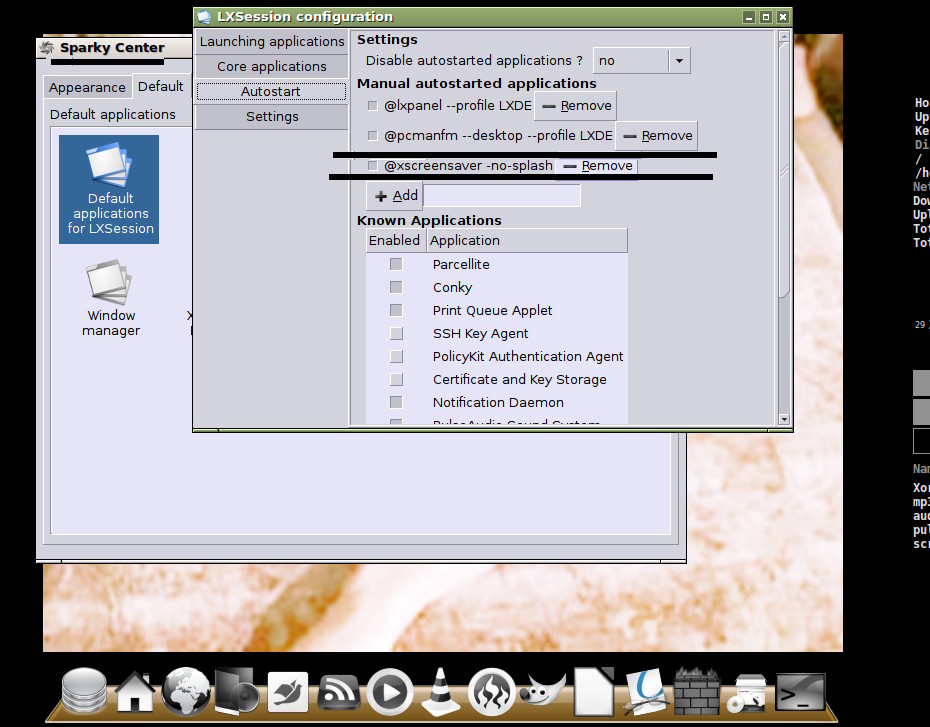
To remove xscreensaver from autostart:
Move mouse pointer up to the top left and
click on the menu button (there's a workaround
if you have a screen-size with SparkyLinux/Sparkles
where the top menu line jumps up and down on
the screen, this is one of the workarounds after
after the following):
Select the following set of submenues:
System Tools => Sparky Center
=> Defaults
=> Default applictions for LXSession
=> Autostart
Click here on the "remove" to the right
of xscreensaver, as shown on image, next:
The next is about screensaver (not so much a
workaround as how to get rid of it completely),
the next is about the top menu line which may
jump around, then about change of wallpaper,
and finally a hint about linux printer use.
The screensaver stuff found on most operating systems
are typically displeasing to those of an advanced taste,
because it's notoriously nerdy and if not nerdy, often
made on the premise that it should satisfy everybody
and that typically means it should look like plastic
which is stretched or some obscene kind of seaanimal.
The approach we take in G15 PMN is totally different
and should be pleasing to those of an esthetically
refined and girl-friendly taste in beauty. :)
You see this eg in the Gem and B9edit startups,
which can function as screensavers.
Linux screensavers can usually be switched off
somehow. When it's switched off within the
screensaver program, then, in the case of
'xscreensaver', it may come up with a very
annoying message when it isn't given regular
updates. In Sparkles this is done via Synaptic.
If you don't want to do this, you can remove
the screensaver from the autostart. But then
Xorg, which is the display driver, will blank
the screen anyway after ten minutes or so.
However we can still run G15 PMN continously,
see next point after this.
To remove xscreensaver from autostart:
Move mouse pointer up to the top left and
click on the menu button (there's a workaround
if you have a screen-size with SparkyLinux/Sparkles
where the top menu line jumps up and down on
the screen, this is one of the workarounds after
after the following):
Select the following set of submenues:
System Tools => Sparky Center
=> Defaults
=> Default applictions for LXSession
=> Autostart
Click here on the "remove" to the right
of xscreensaver, as shown on image, next:
 As said, when xscreensaver doesn't startup, then
after 10 minutes or so, the linux main desktop
will blacken. To show G15 PMN continuously such
as with the Goodtime Clock or the G15 PMN Gem
or B9edit screensavers, you first put in the
following change in the startup file of the
graphics of the Linux (this may or may not be
significant, as some of the data in this are
set by other files deep into the Linux during
startup, but I always do it anyway):
Start up Terminal, go into Administrator mode,
by typing sudo -i and type your password.
Then type
cd /etc/X11/xinit
ls
And you see listed some files including one
called xserverrc (the display server is called
X, this is resource for it). Bring it up in your
favourite .txt simple editor, eg gedit. But first
you backup it, and everything else on the PC, as
it only starts normally if you do this right:
cp xserverrc xserverrc.bkp
Then
gedit xserverrc
and VERY precisely change the line in it that says
exec /usr/bin/X -nolisten tcp "$@"
into this:
exec /usr/bin/X v -p 9999999 -s 9999999 -nolisten tcp "$@"
Reboot. (If by any chance you didn't get it to start
the graphics just log in as normal, do the sudo -i
thing and the cd thing and then type the opposite
cp, namely cp xserverrc.bkp xserverrc and it will
be back to normal. Try it, it should work, then do
it again with more attention to detail.)
Then you can start the y6 version in fullscreen
and it will be on continously, and if you removed
the xscreensaver first, it won't be any annoying
message during startup, and so all is fine. But
always restart G15 PMN more than once pr day when
you work much with it.
Hint: for quicker startup of G15 PMN you can put
the startup command you usually use to a one-letter
form, eg y (or some other letter not in use by
the command line already, try typing it first!),
and put this one letter to /usr/bin. For instance,
cp -i g15.sh /usr/bin/y
should work, when ./g15.sh is the usual command to
start it up. Then it'll be enough with command y,
after the cd into the right folder (eg y6).
More workarounds:
On several screenformats, the topline with the menu and
volume control flaps here and there and there's a workaround
for that. Open such as a Terminal window. Move this Terminal
window nearly to the top. This will 'push' the topline to the
top where it belongs so it is easy to access.
Another workaround: You may find that Synaptic or other
programs requiring password suddenly won't accept the correct
password, that you know in fact does work. The workaround
for this is:
Open the Terminal window.
Type
sudo -i
and answer with the password that you know works.
Type
passwd
And type in the same password. After this, the Synaptic
Software center should agree to this password.
Another workaround, which I think has been mentioned before
in one form or another, but it's no harm in repeating it:
after changing wallpaper, eg by right-click on mouse on a
place of the desktop, start up Terminal, type wbar-config
and click on the RELOAD button there, then click ESC.
This saves you the trouble of rebooting when you often
change wallpaper.
That'll update also the part of the wallpaper that's
behind the bottom-most menu area on the typical Sparkles
screen.
Be very sure that you do this from the Terminal that's
freshly started, and which therefore refers to your local
username, rather than after the 'sudo -i' command. The
wallpaper must be changed without being in the administrator
mode or else the graphics gets funny.
Finally, a workaround or hint as regards printer for Linux
in general: the image viewer, which in many GNU/Linuxes can
be started by command eog in Terminal, may or may not
print an image correctly. Typically, if it doesn't work with
a .jpg, then a .gif of the same will work. This you can
achieve by typing, in Terminal,
convert imagename.jpg imagename.gif
then
eog imagename.gif
with CTR-P should work. If not, take it up in Gimp, which
has a better worked-through print module in it:
gimp imagename.jpg
or whatever. Most browsers don't print correctly, and so
to print from a website, the foolproof solution is to take
up Gimp at the same time and use the option to File->Create
Screenshot, or use some other method of screenimage-making,
and crop the image and print it via Gimp to the printer.
OUR CURRENCY TRADING TUTORIAL MINI-ESSAY 2:
DOING MULTIPLE CT BETS
-- Some high-leverage, some low-leverage, and how to think
about it
Each bet you put in -- when YOU put it in, not an algorithm --
has a meaning, a mental content about it -- we can call it
the 'semantics' of the bet. As those who have tried to bet
by means of program doing the decisions knows, these programs
may work for a period then fail miserable -- especially when
more people catch up on using the same programs. For it is
so in betting over currencies as in every other form of
betting, that it is the bet that few has put in which is
nevertheless right that gives the best yield. Programs can
detect patterns of the near or distant past, and have a
certain rule-bound action connected to these patterns. But
it takes something more beautiful than that, and greater
than that, to put in a good currency bet, speaking in
general terms. Just as one can understand programs running
trains on a railway which has no crossing lines, no
visiting trains from an alternate railway path or anything
like that, it makes no sense to give control over cars
running on complex road patterns with complex car and
people movements to a program. When it comes to betting, it
is more like driving a car than a train. If you're not
willing to engage the whole of your intuitive apparatus,
alongside your analytical intellect, you might as well go
in for massage or start a cafe. Currency trading isn't for
train-thinkers; it is not for algorithmically inclined
betters.
A single bet is an expression of an idea, an intent, it
has a meaning -- each bet has a semantics, we can say --
the word 'semantics' meaning here 'mental content'.
The semantics of a long-term bet using a relatively
low leverage (what 'relatively low leverage' means must
be seen as relative to the degree of fluctuations that
are found at present in the currency pairs you are
considering), is that of your sense of the substance of
the economies and the biggest factors in the currencies,
and how they are likely to move over a longer period of
time -- anywhere from say a month to maybe many months,
or a couple of seasons.
The semantics of a short-term bet using a relatively
high leverage is that of rolling in a bet on a wave that
you trust enough to want to make a quick gain on, you
trust it enough that you consider the risk of a similar-
sized loss small and that, as a result, the risk is a
'smart' risk, not a stupid one. You put on a high
leverage, say, ten times more than on your low leverage
bets, and so in a matter of minutes may get a result
that the other type of bet can only give over a
considerable longer time. In these minutes, you watch
how it goes, while you partipate -- it's like jumping
into seawater, you gotto swim until you get up. So you
watch the trade until you close it. You watch it, and
you're watching the money of your own account increasing,
with luck, or decreasing, if not so lucky. With luck,
you can build up considerable money with these short-term
high-leverage bets.
And by the notion of the 'semantics' of each bet, you
don't touch the long-term bet or bets. These have a
different semantics, a different role. These are set
to be possible sources of some moderate income given
enough time to mature. There is nothing at all wrong in
betting against oneself, in a sense, in that a long-term
low-leverage bet may go in one direction, while a
short-term high-leverage bet may go in the exact
opposite direction. These have different semantics,
and the semantics don't compete; rather they complement
each other.
*Added notes:
* about long-term currency transactions: In some
contexts, for a long-term currency bet there will
usually be a gradually more noticable interest-like
amount called 'swap' (which can be an income for long
trades, an expense for short sales_, which one should
learn to take into account; the pricing of this type
of interest rate is one of the things you should
consider when choosing a forex trader
* is there a value in doing CT work on a surplus amount
of money one has without doing it with a rigid intent
to earn money? For anyone who has a deep sense of
participation in the flux of the world through its
resonances and synchronicities, the answer is a vast,
resounding YES. Engaging in a bet which has a small
leverage {ie, using only a small portion of the maximum
trading amount} can be done in order to 'put in a vote'
on what is sensed to be the 'true momentum' of a certain
world q-field pattern, in contrast to trends that are
mechanically easier to cash in on but which are driven
by some type of temporary folly, so to speak. There is
a connectedness and a listening in at a q-field level
by having a long-term bet going more or less constantly.
* the relationship between news about a country, such as
statistical data on jobs and national income and all sorts
of things like that, and the fluctuations as for the currency
most identified with this country, is complex. It is also
not fixed, for -- as Mr G Soros, a thinker and a pioneer in
making fortunes on currency trading often has pointed out,
people's expectations ALSO WHEN FALSE HAVE TRUE EFFECTS.
If a lot of people expect a currency to gain value relative
to some other currencies when the nation data are good,
and these people also possess an adequate amount of means,
as well as swift tools for doing currency transactions
with a leverage, obviously this theory will seem to
be true, at least in the short term. But there are also
other theories, which concern how people stack up money
in banks when a nation isn't doing terribly well economically.
And so, wealthy investors may come to buy up a lot of a
nation's currency just when this nation has bad data,
leading to an appreciation instead of a depreciation of
the currency. Yet again, when there are many more
opportunities for investment, across the planet, for just
these wealthy investors, they may behave differently than
before. So ONE MUST ALWAYS APPLY INTUITION and one cannot
blame the markets for not behaving according to theory.
An honest person twists theories to match with reality
rather than confusing the perception of reality to match
with subjective theories. Such honesty is a foundation for
appropriate intuitions.
* design a process for how to do CT. If you do consistently
short-term CT's, find an appropriately high factor -- high
leverage -- to work with; decide on an approximate amount
of standard duration allotted to each trade.
During the period, you may find it valuable to disconnect
from the graphs showing the development of the trade. This
will also enhance the likelihood that you are not stressing
the servers for the trading program (such as MT) that you
are using, for these servers sometimes have an internal log
which delays those who try to use them the most. You may also
find it valuable to work with art and erotic photography and
porn, also by means of our search engine, in just that period.
In that way, you deliberately go into a mood of trust and
playfulness, and allow sexuality to up your income potential.
As said, when xscreensaver doesn't startup, then
after 10 minutes or so, the linux main desktop
will blacken. To show G15 PMN continuously such
as with the Goodtime Clock or the G15 PMN Gem
or B9edit screensavers, you first put in the
following change in the startup file of the
graphics of the Linux (this may or may not be
significant, as some of the data in this are
set by other files deep into the Linux during
startup, but I always do it anyway):
Start up Terminal, go into Administrator mode,
by typing sudo -i and type your password.
Then type
cd /etc/X11/xinit
ls
And you see listed some files including one
called xserverrc (the display server is called
X, this is resource for it). Bring it up in your
favourite .txt simple editor, eg gedit. But first
you backup it, and everything else on the PC, as
it only starts normally if you do this right:
cp xserverrc xserverrc.bkp
Then
gedit xserverrc
and VERY precisely change the line in it that says
exec /usr/bin/X -nolisten tcp "$@"
into this:
exec /usr/bin/X v -p 9999999 -s 9999999 -nolisten tcp "$@"
Reboot. (If by any chance you didn't get it to start
the graphics just log in as normal, do the sudo -i
thing and the cd thing and then type the opposite
cp, namely cp xserverrc.bkp xserverrc and it will
be back to normal. Try it, it should work, then do
it again with more attention to detail.)
Then you can start the y6 version in fullscreen
and it will be on continously, and if you removed
the xscreensaver first, it won't be any annoying
message during startup, and so all is fine. But
always restart G15 PMN more than once pr day when
you work much with it.
Hint: for quicker startup of G15 PMN you can put
the startup command you usually use to a one-letter
form, eg y (or some other letter not in use by
the command line already, try typing it first!),
and put this one letter to /usr/bin. For instance,
cp -i g15.sh /usr/bin/y
should work, when ./g15.sh is the usual command to
start it up. Then it'll be enough with command y,
after the cd into the right folder (eg y6).
More workarounds:
On several screenformats, the topline with the menu and
volume control flaps here and there and there's a workaround
for that. Open such as a Terminal window. Move this Terminal
window nearly to the top. This will 'push' the topline to the
top where it belongs so it is easy to access.
Another workaround: You may find that Synaptic or other
programs requiring password suddenly won't accept the correct
password, that you know in fact does work. The workaround
for this is:
Open the Terminal window.
Type
sudo -i
and answer with the password that you know works.
Type
passwd
And type in the same password. After this, the Synaptic
Software center should agree to this password.
Another workaround, which I think has been mentioned before
in one form or another, but it's no harm in repeating it:
after changing wallpaper, eg by right-click on mouse on a
place of the desktop, start up Terminal, type wbar-config
and click on the RELOAD button there, then click ESC.
This saves you the trouble of rebooting when you often
change wallpaper.
That'll update also the part of the wallpaper that's
behind the bottom-most menu area on the typical Sparkles
screen.
Be very sure that you do this from the Terminal that's
freshly started, and which therefore refers to your local
username, rather than after the 'sudo -i' command. The
wallpaper must be changed without being in the administrator
mode or else the graphics gets funny.
Finally, a workaround or hint as regards printer for Linux
in general: the image viewer, which in many GNU/Linuxes can
be started by command eog in Terminal, may or may not
print an image correctly. Typically, if it doesn't work with
a .jpg, then a .gif of the same will work. This you can
achieve by typing, in Terminal,
convert imagename.jpg imagename.gif
then
eog imagename.gif
with CTR-P should work. If not, take it up in Gimp, which
has a better worked-through print module in it:
gimp imagename.jpg
or whatever. Most browsers don't print correctly, and so
to print from a website, the foolproof solution is to take
up Gimp at the same time and use the option to File->Create
Screenshot, or use some other method of screenimage-making,
and crop the image and print it via Gimp to the printer.
OUR CURRENCY TRADING TUTORIAL MINI-ESSAY 2:
DOING MULTIPLE CT BETS
-- Some high-leverage, some low-leverage, and how to think
about it
Each bet you put in -- when YOU put it in, not an algorithm --
has a meaning, a mental content about it -- we can call it
the 'semantics' of the bet. As those who have tried to bet
by means of program doing the decisions knows, these programs
may work for a period then fail miserable -- especially when
more people catch up on using the same programs. For it is
so in betting over currencies as in every other form of
betting, that it is the bet that few has put in which is
nevertheless right that gives the best yield. Programs can
detect patterns of the near or distant past, and have a
certain rule-bound action connected to these patterns. But
it takes something more beautiful than that, and greater
than that, to put in a good currency bet, speaking in
general terms. Just as one can understand programs running
trains on a railway which has no crossing lines, no
visiting trains from an alternate railway path or anything
like that, it makes no sense to give control over cars
running on complex road patterns with complex car and
people movements to a program. When it comes to betting, it
is more like driving a car than a train. If you're not
willing to engage the whole of your intuitive apparatus,
alongside your analytical intellect, you might as well go
in for massage or start a cafe. Currency trading isn't for
train-thinkers; it is not for algorithmically inclined
betters.
A single bet is an expression of an idea, an intent, it
has a meaning -- each bet has a semantics, we can say --
the word 'semantics' meaning here 'mental content'.
The semantics of a long-term bet using a relatively
low leverage (what 'relatively low leverage' means must
be seen as relative to the degree of fluctuations that
are found at present in the currency pairs you are
considering), is that of your sense of the substance of
the economies and the biggest factors in the currencies,
and how they are likely to move over a longer period of
time -- anywhere from say a month to maybe many months,
or a couple of seasons.
The semantics of a short-term bet using a relatively
high leverage is that of rolling in a bet on a wave that
you trust enough to want to make a quick gain on, you
trust it enough that you consider the risk of a similar-
sized loss small and that, as a result, the risk is a
'smart' risk, not a stupid one. You put on a high
leverage, say, ten times more than on your low leverage
bets, and so in a matter of minutes may get a result
that the other type of bet can only give over a
considerable longer time. In these minutes, you watch
how it goes, while you partipate -- it's like jumping
into seawater, you gotto swim until you get up. So you
watch the trade until you close it. You watch it, and
you're watching the money of your own account increasing,
with luck, or decreasing, if not so lucky. With luck,
you can build up considerable money with these short-term
high-leverage bets.
And by the notion of the 'semantics' of each bet, you
don't touch the long-term bet or bets. These have a
different semantics, a different role. These are set
to be possible sources of some moderate income given
enough time to mature. There is nothing at all wrong in
betting against oneself, in a sense, in that a long-term
low-leverage bet may go in one direction, while a
short-term high-leverage bet may go in the exact
opposite direction. These have different semantics,
and the semantics don't compete; rather they complement
each other.
*Added notes:
* about long-term currency transactions: In some
contexts, for a long-term currency bet there will
usually be a gradually more noticable interest-like
amount called 'swap' (which can be an income for long
trades, an expense for short sales_, which one should
learn to take into account; the pricing of this type
of interest rate is one of the things you should
consider when choosing a forex trader
* is there a value in doing CT work on a surplus amount
of money one has without doing it with a rigid intent
to earn money? For anyone who has a deep sense of
participation in the flux of the world through its
resonances and synchronicities, the answer is a vast,
resounding YES. Engaging in a bet which has a small
leverage {ie, using only a small portion of the maximum
trading amount} can be done in order to 'put in a vote'
on what is sensed to be the 'true momentum' of a certain
world q-field pattern, in contrast to trends that are
mechanically easier to cash in on but which are driven
by some type of temporary folly, so to speak. There is
a connectedness and a listening in at a q-field level
by having a long-term bet going more or less constantly.
* the relationship between news about a country, such as
statistical data on jobs and national income and all sorts
of things like that, and the fluctuations as for the currency
most identified with this country, is complex. It is also
not fixed, for -- as Mr G Soros, a thinker and a pioneer in
making fortunes on currency trading often has pointed out,
people's expectations ALSO WHEN FALSE HAVE TRUE EFFECTS.
If a lot of people expect a currency to gain value relative
to some other currencies when the nation data are good,
and these people also possess an adequate amount of means,
as well as swift tools for doing currency transactions
with a leverage, obviously this theory will seem to
be true, at least in the short term. But there are also
other theories, which concern how people stack up money
in banks when a nation isn't doing terribly well economically.
And so, wealthy investors may come to buy up a lot of a
nation's currency just when this nation has bad data,
leading to an appreciation instead of a depreciation of
the currency. Yet again, when there are many more
opportunities for investment, across the planet, for just
these wealthy investors, they may behave differently than
before. So ONE MUST ALWAYS APPLY INTUITION and one cannot
blame the markets for not behaving according to theory.
An honest person twists theories to match with reality
rather than confusing the perception of reality to match
with subjective theories. Such honesty is a foundation for
appropriate intuitions.
* design a process for how to do CT. If you do consistently
short-term CT's, find an appropriately high factor -- high
leverage -- to work with; decide on an approximate amount
of standard duration allotted to each trade.
During the period, you may find it valuable to disconnect
from the graphs showing the development of the trade. This
will also enhance the likelihood that you are not stressing
the servers for the trading program (such as MT) that you
are using, for these servers sometimes have an internal log
which delays those who try to use them the most. You may also
find it valuable to work with art and erotic photography and
porn, also by means of our search engine, in just that period.
In that way, you deliberately go into a mood of trust and
playfulness, and allow sexuality to up your income potential.

The image is a rework of an classic fashion photo of Candice
Swanepoel.

Classic fashion photo of Hailey Clausson.

This is a sample from porn transformed to art.

Dlassic fashion photo of Miranda Kerr.

Original rendering by Aristo Tacoma of a classic
photo "Queen of Hip Hop" -- with
acknowledgement for the ground photo behind this is to
V Magazine, model Chrishell Stubbs in www.models.com/work/v-magazine-the-queen-of-hip-hop/75062
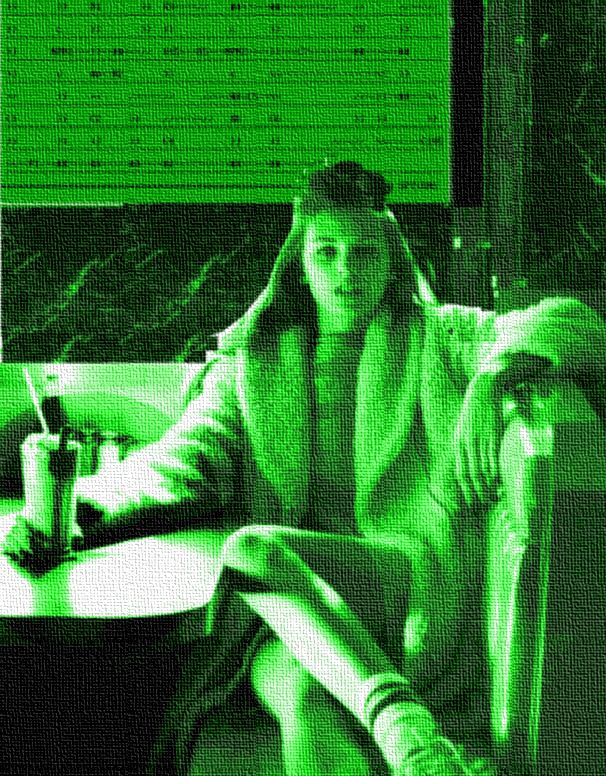
Elsketch 'textual graphics' of an AM radio
pasted into this digital rework of a masterly cafe
photo of supermodel A. Stephens by B. Staub,
in this digital re-rendering done by A.T. for yoga6d.org,
with acknowledgement to www.fashiongonerogue.com
for use of their scanned archive photo.
In these images, the original setting and particular
colors are consciously transcended so as to fathom,
and affirm, a variety of good images of beautiful
situations -- cafe situations, in this case.

Digital transformation (rendering) by Aristo of
photo of Swedish supermodel Julia Hafstrom,
This image (museface.jpg) is, by means of computer programs,
re-transformed or rendered into something suggestive rather
than something photo-affirmative. It is derived from
a classic fashion photo of Lindsay Ellingson.
Orig.comp.rend. by Aristo Tacoma.

A re-rendering (by ATwLAH) of an excerpt of a photo of asian supermodel Tian Yi, photo: William Lords, Fusion Models.

___________________________________________________________________ ___________________________________________________________________ ___________________________________________________________________ ___________________________________________________________________ ___________________________________________________________________ ___________________________________________________________________
 Image above has come about after a strong rerender by srw
from an anonymous photo somewhere in the NSFW section
(ie, the yoga6d.org/over18.htm search engine section)
Image above has come about after a strong rerender by srw
from an anonymous photo somewhere in the NSFW section
(ie, the yoga6d.org/over18.htm search engine section)
/////Quote in the wind RECENTLY OVERHEARD There is an orientation towards thinness in the model industry. Quite apart from all the scientific research that indicates that being too thin is generally a more promising state of the body than being too fat, it stands to reason that thinness for many is associated with both pains and dangers. After all, it is only by accepting both pains and dangers that most people are able to get into touch with some elements of luxury and greatness in this world. If a model starts eating, and starts following the advices in the (generally left-wing) press, it's not as if she will be transported into a life of great beauty and happiness. Most likely, she'll become one of the millions on unemployment benefits who live by junk foods and whose main component in life is to watch TV. Because that's the type of world we have, and that's the type of thing that happens with the majority -- especially when they try to avoid pains and dangers. Also, there is no cure in drugs -- for or against eating, for or against fatness, for or against mental alertness, for or against trance-like dance and sex -- no cure in drugs, for drugs create twice the feature they were meant to cure when one has used them for a while, and three times more when one stops using them for maybe a very long time after. ***
 Rerender by srw of a stunning, classic photo by Yelena Yemchuk
of danish model Josephine Skriver in Lulamag.com
utilizing scan in
thefashionspot
[[[Note: next articles permanent, and WEB III as
well as first-hand economics and first-hand
technologies are keywords that more or less
bind them together.]]]
THE WEB III: INTRODUCTION
-- And a number of relatively optimistic predictions
As of 2011::12::22
The Web III we are beginning, I would say, to get into
-- and which I expect will come to full flourishing in
2012-2014 as a new permanent standard, more or less, is
the ripe internet. It looks in som way a bit like Web
1.0 in that it is SMES-friendly. (SMES = Small and
Medium-sized Enterprises.)
What we saw with the Web 2.0 phase we have just been
through (and which due to a massive amount of work by
individuals but also by U.S. and european regulators and
other regulators as well has been overcome), was a massive
coercion of individuals on behalf of a few monopolistic
companies doing a lot of secret database work. These
companies had for a time the glory of being new -- now
they are just as un-gloried as any other global chocolate
or air plane engine conglomerate. They are also -- what
with the recent public exposures of some social network
websites, and all the court orders imposed on them, --
pretty much equally regulated as the rest of the world
outside of internet.
The war between Microsoft and Linux and Apple, put
simply, which dominated Web 1.0, was subdued when the
focus went over to some big companies, some big
websites, to virus complexities, and to content
on-screen rather than hardware due to increased
standardisation of web-presentation standards in the
form of the ripe Mozilla Firefox, the ripe Opera, and
such.
In Web 2.0, one saw a false emphasis on celebs. It
has been sweetly messed up with greater focus again
on those who deserve to get attention, rather than
those who recursively get attention because they
get attention. For instance, in the music industry,
too much focus has been on being a celeb and having
a cool video instead of coming with delightful new
music that plays on deep meaning vibration strings
inside young people. Vogue has begun to sway away
from the temptation to put an old celeb who has had
thirty face-lifts on the cover, and rather go for
those who are less known but more deserving. The
trouble with celebs is that by the time they are
celebs, most are too old to deserve great attention.
Further, the power associated with celeb status
tend to corrupt the person so much as to make the
radiance of that person boring. That is a realisation
that the 'systematisation' of celeb presentation
happening in the Web 2.0 phases now bygone made
rather clear, I should say, to human consciousness.
Web III has more honesty and more spirituality.
In Web III, which in upcoming years will become more
manifest, people have got bored with the too-big
companies and their manipulative tricks and that's a
thing we should all protect -- that creative
dissatisfaction has put the various Linux versions in
upper gear again, it has completely changed the
landscape for what types of website and social network
communication young adults and adults in general are
choosing (despite immature parents still enlisting their
kids into monopolistic networks in some parts of the
world, this only settles the case for the kids that they
are going to go into other, less-known-to-parents and
less-known-to-grandparents type of networks before next
summer or so).
The Web III is also a place where new forms of
connectivity are being discovered -- some would say
re-discovered:
* Connectivity, and the feeling of being together with
others, with oneself, and friends with reality, by means
not just of sending quasi-public messages to one
another, but by means of discovering quality websites
* And connectivity by means of healthy variation
* And connectivity by means of being alert to virus
and to too-targeted marketing and tech-savvy enough to
be at least acqainted with one's own machine to the
extent one can turn off javascript, also when searching
porn
* Connectivity also by means of stable routines,
getting into good rhythms where Web III plays a healthy
role
As Web III, the SMES-friendly web, with genuine
pluralism in how people can connect exist, email stands
forth as a unique power that every enterprising
individual must learn to harness with efficiency, expert
at regulating one's own spam-filters and expert at using
the freedom one has with email to give a valuable delay
of some days before answering emails where thought is
required.
For it is so that in a world where it is possible to
put in pauses, it is also more possible to give wisdom a
chance to grow. And we have indeed seen wisdom grow in
2011 -- the freedom from fear even of death as has
characterised the wise uprising against meaningless
dictatorships in what has this year been labelled the
Arab Spring, and all analogous movements.
[..]
The rest of the world with all its enormous political
changes must constantly learn to harness technology
nonviolently and healthily, and put limits on what
we can accept of short-term-greed-motivated actions.
Electric cars with big safe batteries and charge-
stations all over the place not just in cities but
also in the country, with each gasoline station,
and with extremely flexible elcar-lease arrangements
to make it possible for groups to use elcars when
going far in their elcars and cannot wait for charging,
such things must go along with a new realism that
electricity is part of human well-being and must be
made in abundance in safe ways. I have a number of
eco-oriented points for societal technology in my
archive section that is compatible with Web III.
Pollution must be fought (not just CO2), water must
be destilled, cleansed, forests protected, landrights
for the many not just the few must be protected,
and -- for the sake of the humaneness of our
societies -- electricity should be extremely cheap.
In the Web III world, the spirituality axis of
most has non-systematised key components including,
I should think, God, muses, reincarnation, karma.
This is practised quietly, without going to gurus.
Some dictatorships will try to prevent Web III from
coming to their areas, and they will typically try
to claim that they are leaders by divine ordainment.
This has happened increasingly with socalled
"communist" governments, even, despite what Marx wrote.
But the sheer existence of Web III, not the existence
of USA, UN or whatever, is what will eventually flow
over and wash away dictatorships in decades to come.
The Web III conceived in this way has already begun
and it will stay on and on and renew itself.
It is SMES-friendly, email-friendly, and it speaks of a
world that will in many ways be the same for many
decades to come, as I see it. It is the ripe web.
Those who want to educate themselves for the world of
web III should not waste time trying to get too much
into algorithmic stuff. The algorithms that are needed
to drive it is in place. The computer savvy people must
abstain from stacking too many algorithms on top of each
other so they completely loose oversight. They must
learn to keep back the impulse of perfecting every
platform by ever-more releases of new version numbers
and rather look to stability and standardisation.
The natural presence of computers in network in the
free manner of Web III means that those who have an
esthetical education where they know how to operate
computers like Linux and Microsoft but creatively,
beautifully so -- at the level of insightful design,
tastefulness and respect also for human nudity (for that
is, thank God, much more part of our awakened world of
the Web III than the pre-web world had) -- people with
such education will be needed -- ever-more. For the web
is all about presentation possibilities, but one must
make content esthetically to catch anyone's attention in
the the world of so much delish competition.
The SMES companies that are realistic about the
enormous complexities facing some aspects of the
20th-century like world -- its economical monsters,
badly wounded since 2008, and its science, now
fragmented into a zillion sub-standard science journals
with, interestingly, fewer 'pure' atheists around than
ever before -- the SMES companies that realise that some
parts of the world has changed for good and cannot be
repaired back to the 20th-century model will be able to
flourish. They must learn to live according to the
science of synchronicity, which is intrinsic in the Web
III as here conceptualised. Good luck!
*Added note: part of Web III obviously involves ease of
photo, text and program sharing -- for instance with beauty,
fashion and dance photos, technology comments, cultural
comments, reviews, and useful open source programs. Here,
it is not the person but rather the action of the person
that is given score numbers, if one chooses to include
score numbers at all. When the person is listed as to how
many is 'following' the person, the interaction becomes
feverent on false premises, and involves a subtle or
overt competitiveness that doesn't benefit anyone nor
anything in society. Actions can get score numbers --
but it's always then important to bear in mind that
often it is the most trivial of items in this world that
triggers positive recognition in most; and so a photo
of -- say -- a raggy bear eating a hamburger may reach
skyhigh scores while the photo of a girl doing the
ultimate yoga stretch in extremelly stylish clothes may
get at most a hundredth of that score. But this is KNOWN.
The score numbers mean little. But then there's all the
more reason not to attach them in public to people, and
there are always some social blog sites that are like
this, and which also include NSFW sites, as well as an
honoring of sources of images and such -- and these will
be popular, occasionally so popular they get swallowed up
by rich nonsense companies (such as by stock buying).
But then others arrive on the scene, and these get the
popularity, as a dance..
{Part of the Web III definition is also:}
HOW THE STATISTICS OF CHANCE IS A NINETEENTH
CENUTURY SCIENCE, AND THEREFORE ESSENTIALLY
INCORRECT
-- The chance of getting a seventh six after
six sixes in a row, when casting dice, MAY
be smaller -- just as any child, uneducated in
the science of statistics, will tell you
As of 1::A::2013::4::30
Say, you cast a die, and get six sixers in a
row: then you are about to cast it for a seventh
time. How likely is it that you'll get a
seventh sixer? Is it any less likely than
when you begun?
Any child will tell you that it is less
likely. And any mainstream teacher, it seems,
at present, will tell the child that it is
just as likely as before you got those six
sixers, and say it with a self-satisfied
smile and pride in her voice. So also at
the universities, the mainstream ones, when
you listen to a statistics course -- the
professor will say that the chance of getting
any number of the dice, no matter the past,
is one-sixth.
But the mainstream view of statistics right,
or is it wedded to a particular metaphysical
worldview that simply is wrong? Is the child
right after all? "There has been so many
with six, it just has got to be some other
number soon." Or is it like Bond thinks in
Ian Fleming's classic book Casino Royale,
-- the cards have no memory, neither memory
of success nor failure; each shuffle is
fresh.
The idea governing the statistics of chance,
connected to such daily life events, and
organic events in general, is that of mechanical
fluctuations: these fluctuations are assumed to
arise due to the interaction of myriads and yet
more myrids of also very tiny factors of cause
and effect, so that it makes sense to make a
summary of their overall effect. Their overall
effect, given these assumptions, would then
distribute over the various optional outcome
given the mechanical likelihood of each outcome
(in the case of casting dice, the dice must be
assumed to be perfectly even, and so on). In
other words, there must be no other effects
governing the outcome than the local forces,
uncoordinated, acting independently and in so
multiple manners that, as an aggregate effect,
we get the effect of so-called 'chance'.
So these are the assumptions that govern the
science of the statistics of chance, and it should
be quite obvious to any person with a knowledge
of physics that this is pre-twentieth century
physics thinking. It's newtonian physics. It's
a picture of the world where no holistic forces
exist, -- only forces of a local kind. And so we
see that the statistics of chance is properly a
nineteenth century science, in that it is wedded
to this worldview, and must obviously partake in
all the limitations of nineteenth century science.
Let us be more concrete. While there is in
mainstream twentieth and twenty-first century
physics no agreed-upon understanding of how
the nonlocal works in macroscopic areas, there
is a common agreement, even amongst mainstream
physicists, that nonlocality is a real factor
in this world. Some may claim that nonlocality
is only a technical attribute of some very
particular and unusual circumstances: but there
are plenty of applications of quantum coherence
involving a real sense of quantum entanglement
or nonlocality on a macroscopic level, such as
in connection with superconductivity and its
related form of magnetism. There is no clear-cut
element of physics that stands on its own,
in a well-researched and clearly logical way,
that says conclusively that nonlocality cannot
operate in between just about anything and
anything in macroscopic reality. It is a
limitation of the equations operated with in
atomic realms that one cannot apply these with
any precision to larger realms; and it is merely
an OPINION, not a well-researched fact, that
nonlocality is not properly part of the
macroscopic worldview that modern physics must
say is foundational.
Having realised this, it should by now be clear
that every event in the organic realm -- such as
the casting of dice -- must be understood by
means of something more than mere 'mechanical
fluctuations'. In addition, we have the factor
of organic fluctuations, synchronised in ways
never understood by newtonian science. These
factors may organise certain events to be more
likely than other events. It is true that some
form of statistics is then enabled in a certain
sense in such as a quantum context; but this is
an application that hasn't changed the overall
idea of applying the nineteenth century style
of statistics to all things human and beyond,
more or less.
In such a context of a metaphysical worldview
where holistic events are organised, it should
follow as a likely assumption that in such a
situation as when it is the case that six series
of sixes has occurred in a row, the same
organising principles, whatever they are, may
have in them a limitation for the prolongement
of this particular situation. It may therefore
be likely that the chance for the next cast of
dice to be yet another six is somewhat smaller
than normal. What is the exact situation, of
course, is beyond mechanical tallying. The point
of this little essay was merely to make it clear
that there is no objectivity as such to the
underlaying assumptions penetrating the mainstream
statistics of chance -- rather, it is the case
that these assumptions properly belong to the
nineteenth century and that in a more enlightened
understanding of reality, one cannot mechanically
apply such mechanical statistics on daily life.
For further reading, consult eg information about
the collaboration between the legendary and
ground-breaking quantum physicist Wolfgang Pauli
and his friend the psychologist Carl Gustav Jung,
in their common notes on the 'acausal'; further
reading still connect to my own supermodel theory
(plenty of references to it at yoga4d.org,
yoga6d.org and norskesites.org/fic3).
{Part of the Web III definition is also:}
FACTORS IN THE ORIGIN OF THE HUMAN SPECIES
-- Reflections on what it takes to make
human bodies from scratch, when one is a
reflective computer programmer and scifi
student
As of 1::A::2013::4::28
Charles Darwin is noted for his proposal that
a great deal of time, combined with a great
deal of natural fluctuations or changes, lead
to a natural selection such as by means of
which offspring that survives so as to procreate
more offspring. It takes but a sense of logic to
see that natural selection is a factor in
evolution, if we by the word "evolution" mean
the changes that occur over large time spans so
as to lead to changes in the living beings
inhabiting such as a planet.
One can elaborate on the natural selection
principle such as on the level of genes, the
level of bacteria, etc, and one can try and
apply the notion in different fields as well
(eg brain science). This is done by simple
acts of logic. It would be unlogical to deny
that natural selection, in various forms, is
a factor in evolution. It is also easy to
elaborate on natural selection by a number of
other related concepts, such as interaction
between inheritance and environment,
interaction between the being shaped by genes
and the situation in which the organism is
growing up, and with whom one is growing up
with, and so on. One can also, more abstractly
perhaps, apply natural selection on larger
configurations, such as groups to some extent.
Would it be logical to equate (as some has
been in the habit of doing) the notion of
"evolution" with the concepts just mentioned?
There is little doubt that Charles Darwin
had a hope that something like that would be
scientifically meaningful and that he himself
would have had little against such a development.
We are in a situation where, just like
Albert Einstein have been wrongly ascribe to
have the subconscious position of an Infallible
God by many physicists, so has Charles Darwin
equally had the subconscious position of an
Infallible God by many biologists. And so it
is not so strange that there are people who
simply don't even consider it a worthwhile
philosophical (let alone scientific) question
whether "evolution" should or shouldn't be
defined to be just the theory of such as
natural selection. Somewhat confusingly,
people whose main source of thinking has been
such as the christian Bible, have quite often
agreed in this, and thus the rather meaningless
polarity of Evolutionists vs Creationists have
arisen. A number of writers with a sympathy
towards religion have pointed out that this
particular polarity makes little sense.
Let us just note that the word "evolve" is
the verb root of the word "evolution" and
especially the former, but also to some extent
the latter, have had uses in the common English
language before the use in connection with the
theory of natural selection in the late 19th
century.
Let us also note that just as there is still
a role to such as Newton's theory of physics
even with centuries of further development
where it is quite clear that this physics
theory must be supplied with very different
theories indeed, there may be a role of a
theory in natural selection in which the theory
of evolution has become very different indeed
from what it has been -- biology is also a
younger science than physics or 'natural
philosophy'.
In other words, having identified some patterns
that can be confirmed, again and again, in a
variety of contexts, can lead to an enthusiasm
for these patterns so that one might prematurely
assume that one has 'covered' an area with a
'complete' theory. So while it takes but a sense
of logic to admit for a theory of natural
selection as having a role in evolution, it
takes something more than merely a sense of
logic to evaluate whether there are other
factors as well.
The role of religion is often seen as at odds
with that of science. Science claims to be wedded
to empirics, but often is wedded to authorities
who by human history writing have come to be called
'great scientists'. Religion claims to be wedded
to the word of God, but often is, similarly,
wedded to authorities who by human or local history
or myth-weaving have come to represent 'channels of
God's own words'.
As Karl Popper pointed out, the ideal of checking
relative to facts requires a great carefulness and
there are many pitfalls; in particular, he voiced
the opinion that a theory must be easy to see
through, it must be transparent, and it must admit
of the possibility of being rejected in one way
or another, no matter how much it has been found
to be right. In this sense, the ideal of science as
an open-minded sceptisism or as a sceptical wonder
(as also the philosopher Arne Naess called it) is
something which often is found not to apply in the
practise called "science" in humanity. Rather, what
is often called "science" must be seen as a
corruption of the ideal; and this is often the case
where much is at stake emotionally or financially,
and in terms of prestige; and so much bad or
corrupt science has represented the side of "science"
in the "creationism debates".
One of the factors that have made it more
complicated to have a calm-headed debate on the
question of the origin of the human species is that
many bible books operate with, or have been
interpreted to imply, mere millenia, at most,
as for the time allotted since the universe begun
until we reach the present day, while apparently
quite clear-minded studies of a variety of kinds
in the areas of physics and physical geology and
so forth indicate that even millions of years is
not enough for the same; and by applying techniques
of measurement with such as radioactive decay of
a form of carbon -- with a range of assumptions
added, we must say -- there has been a sense of
mainstream pervasive view in amongst scientists
that at any rate, the universe is much older
than what the religious folks tend to say it is.
Add to this the fact that these religious folks
are often not at ease with such ideas as
'natural fluctuations' (in the sense of
coincidence, chance or randomness of some kind),
and we see how the polarities have been forming:
on the one hand, those who speak of millions of
years and factors involving fluctuations; and on
the other hand, those who speak merely of such as
millenia and of God's invisible hand steering all
with absolute might and full determination.
Now -- this has been pointed out by a number of
philosophers with a kind leaning towards religions --
religious folks are not always as simple-minded as
the most vocal of the lot. Let us for instance
remember that, many centuries ago, Baruch de Spinoza
offered a series of arguments why the experience
of freedom (and quite possibly fluctuations and
chance and such) in human beings may go along with
a deep-structure of the universe which, when
REALLY seen 'in the view of eternity', doesn't
have any element of random fluctuation at all.
Spinoza happened to be one of the influences of
Einstein, who often wrote things to that extent:
and Spinoza was very much a God-believer while
Einstein very much a scientists and we see that
both find it possible to accomodate a more nuanced
view of the relationship of causality and chance --
necessity and freedom -- determinism and randomness.
I merely mention this to indicate that while it
should be fairly simple for all to agree that
natural selection in some sense is obviously at
work over time since some living beings have
offspring that in some way make out better with
reality than the rest and that the latter come to
dominate in terms of genetic streaks, in a way that
can be said to be an evolution, ALL OTHER QUESTIONS
connected to evolution and such concepts as
fluctuations, causality and the like require
more than merely such a quick application of logic
to penetrate. In other words, we must go to the
realm of insight to see what else there can be
about evolution than natural selection; but we
should do this by agreeing on a moderate form of
darwinism: not one that is megalomaniac and that
claims to have a complete theory of everything,
not even one that speaks of what durations of
time are involved necessarily, but simply that
in some sense, natural selection is at work,
from day to day, right now. This is not much to
start on, may some scientists feel, while some
religioius folks may be at unease even with such
a slight admission 'to the other side', and unsure
of where it is leading. But by admitting to simple
and rather observable facts of this non-megalomaniac
kind, rather than sticking to a whole 'package of
ideas', we have the advantage of being in contact
with reality rather than with authorities of the
past and conflicts in the present. So I submit that
this is a good starting-point.
Note that I didn't want to confine myself as to
the time durations involved -- millenia or
billions of years since creation begun, or has
it always existed? For any research into the past
has obvious challenges, whether done by means of
words which may or may not be holy, or by the
techniques available to empirical science.
Fortunately, during the past decades, the notion
of a program and of programming has become more
part of mainstream human consciousness than ever
before, due to a technological awareness of
computers. There are all sorts of ways to
create emulations and simulations by means of
programs and these can be very advanced and have
all the appearancies of 'causality' when seen
from the user-perspective, but when seen from
the programmer-perspective, a very different and
much more nuanced description may arise. Indeed
such notions are commonly used in computer games.
So while there is little doubt that such as
carbon dating is an empirical technique, it should
be regarded as a question of interpretation what it
says. One may drill holes in mountains and find
that there are layers upon layers which seem to
be made by millions of years of geological gradual
change, and yet -- informed at a philosophical
and meta-physical level by the notion of computer
programs -- whether or not the experience of this
is in some sense 'all inside a program', or whether
it in some sense reflects 'actual fact', should be
considered philosophically open.
So, when we consider the ultimate questions,
there are ways of re-interpreting the experienced
reality so as to fit with myths that properly seem
to belong to religions. The apparent irrationality
of religion only becomes manifest irrationality
when one tries to apply the notions of these myths
in a simple-minded fashion to reality, in an attempt
to override logic. What we need is the subtle mind,
aware of the grander questions of metaphysics, --
aware, indeed, that these grander questions have
never been concretely closed whether by science or
by philosophy, nor by any bible-book.
Having thus hopefully argued in favour of openness
for other factors than natural selection in the
theory of the origin of the human species, and
having argued also for the temporary pushing aside
of the question of the real interpretation of the
appearance of a vast past, let us see more deeply
at the notion of evolution of the various species,
in particular the human body.
Let us then be sure to note that as any
well-informed honest scientists will admit, the
construction of the whole human body and all its
organs from scratch, without employing existing
living materials and techniques of copying
'information elements' from some such material
to other such material, is entirely and in a sense
infinitely beyond what human laboratories can
achieve. There is a possibility of replacing some
bits -- a bone by some steel, say, or heart by
a pump, or so -- and in so doing prolong the life
or enhance the quality of life of a human being
who has a problem here or there. But the human
being as a construction is something altogether
and entirely different than any machine that
humanity is even slighty near being able to make.
In that sense, therefore, there isn't a proper
complete theory of the human being; and so any
questions of digging into the question of the
origins of the human species must by necessity
be informed by such as philosophical intuition
and a relaxed care with which we relate, also
in awe, to grander questions. The absence of much
of this attitude in what is called 'the medical
profession' (although with important exceptions
for some practioners in the field), makes me
look with suspicion about the medical profession
as a whole. I do not thereby run to astrology.
I merely consider that the human body probably
knows far more of itself and how to handle itself
than any bit of mere human science.
Before the advent of the personal computer,
the understanding of fluctuations over a great
period of time could mostly only take place by
means of rough summaries of various kinds, such
as that which is called 'statistics'. So, as a
field, 'statistics' became full of heavily named
algorithms for how to compute numbers summarising
many factors -- numbers that nobody really could
be sure really said much, but which were nonetheless
complicated to compute and so the whole field of
statistics became quite an important field of
science for a while.
With the presence of the personal computer,
it is possible to introduce relatively free
fluctuation generators (RFFG), that creates number
sequencies that have some resemblance with the
idea of 'chance' or 'a free sequence', while in
actual fact they are made by means of such as
the repeated application of an intentionally
messy algorithm on the last number in the series.
It is, then, given such an RFFG series, possible
to try and apply such rather fluctuating numbers
as input data for other programs. These programs
are each 'causal', in that they act in a strict
and defined manner, but they may call on such
input data and more use of such 'RFFG' techniques
so that the result is some kind of combination of
a sense of chance with a sense of causality.
What is startling about this, compared to such
as the time of Spinoza, is that we can allow the
computer to do many hundreds of thousands of
such calculations while we lean back and study
the result; then we can go back and do
adjustments, and again lean back and compare the
results. This, over time, gives to a normal
human being doing such programming an entirely
first-hand sense of understanding of fluctuations
and of causality -- even at a philosophical level.
And this is something, of course, that could be
very strongly of value when speaking of
evolution and of natural selection, in which
just such interplays between fluctuations --
or, remembering Spinoza, what appears to be
fluctuations -- interacts with more causal
factors.
For instance, it is possible to make the
whole computer screen filled with pixels at
intensities and positions chosen by such relatively
free fluctuations. One of the perhaps surprising
things is how messy and shapeless such screens
then become. To go from such a shapeless mess of
free fluctuations to such as a well-done photo of
young girls in dancing movements seems to be requiring
a transition of an infinite kind.
To think of evolution in an abstract sense,
beginning with just relatively free fluctuations
and some causal factors, and coming onwards towards
living beings, could learn from computer experiments
of this kind, especially if one introduces the notion
of some type of 'copulation' and some type of
'offspring-making' in the scheme. To introduce
something that abstractly looks like this does
indeed create more of a sense of shape and less
of a sense of messiness. But how would one go from
this to living human beings?
We see, now, that we're in a region not as much
of merely having a sense of logic, as asking for
a sense of insight. Could there, amongst biologists
of the type that has leaned towards the view that
natural selection over fluctuations or some type
of random mutations over a very long time can
be the only factor in evolution, have been an
overheated belief in what we in a programming
context can call 'random generators' or RFFG (I
prefer RFFG for it says 'relatively free' rather
than random which is more exact what it is).
Let us bear in mind that natural selection at
the level of living organisms such as mammals
requires transitions by means, not of miraculous
changes of individual beings, but rather by
means of the changes that occur from parent
to child. This is a transition that, for
mammals, occur relatively rarely compared to
all the possible fluctuations, say, at the
subatomic level, in reality. What is a mere
million of years when it comes to parent-to-
offspring fluctuations? If each mammal lives,
say, five years, then we are having 200,000
such five-year-periods in a million years.
Two hundred thousand fluctuations are the
quantity of fluctuations that we as programmers
can easily get the computer to exhibit for a
range of patterns, -- depending on the program,
it may take a minute. This type of instrument
hasn't been available to scientists at large
more than some decades. It is a unique new
way of getting cool about quantities. And the
coolness, the empirical sweat the programmer
can easily get, will say: it is quite clear
that a million years of natural selections
are very, very little. Multiply it by a thousand,
then. A billion years. Is that much? No,
obviously not. That's also very, very little,
if we speak of going from fluctuations amongst
simple causal factors to dancing girls on a
photo.
I would submit that it takes tremendous luck
and about a hundred trillion trillion trillion
years to have the principle of natural selection
operating on a soup of particules on a planet
to come up with a human being. And by tremendous
luck I mean that enormously more than 99 percent
of all the activity of these hundred-tri-tri-tri
would lead to no particular advanced life at all.
Of course, given the range of vague facts and
the necessity of making assumptions for which
empirics can be rather scarce, it requires a
sense of insight or philosophical intuition
to ascertain the rightness or not of such a
postulate as that which I came up with; but I'm
not in doubt that clear-headed honest programmers
have some to contribute with more than the
ancient and somewhat forelorn branch of science
called 'statistics'. Programmers know something
for they have 'been there', in the area of
permutations over fluctuations in vast
quantities. Statistics is but an attempt to
say something as by a form of imposed artificial
intelligence over numbers.
To summarise so far, I would say, then:
It takes a sense of logic to see that natural
selection is a factor in evolution, but it
takes a sense of insight to see that natural
selection cannot be the only factor in evolution.
It is a sense of insight, then, that programmers
can come up with more easily due to their
first-hand contact with numbers undergoing
regular changes in vast quantities.
Agreeing on this, let's go then briefly into
considering what useful questions can be asked
so as to get more in contact with what other
factors in evolution than natural selection
there are.
I would submit that there are two classes of
additional factors -- one, the notion of more
subtle types of causalities, touching perhaps
on the nonlocal in physics; and two, the notion
of a grander worldview in which the whole
manifest universe is a 'package' that is
'delivered' then 'taken back and transformed'
by a more subtle realm. An example of the first
type approach comes when people are investigating
whether what at first sight appears to be
unrelated genetical mutations somehow can be
connected by subtle factors, by analogy, at
least, with how photons or electrons are
connected in what sometimes has been called
quantum entanglement and which is empirical fact
in subatomic and atomic physics, although not
empirically studied in mainstream biology.
(The lack of study of nonlocality in mainstream
biology has the support of some but not all
physicists -- some physicists starting perhaps
with Niels Bohr have tended to argue that such
nonlocalities 'cancel out' in statistically
large aggregates of particles such as those
needed to compose a single chromosone; add to
this the statistical nature of their equations
and that these equations are not solvable for
more than a handful of particles at a time
if one desires exact results).
The notion of the manifest universe as a
wave upon a subtle universe, a wave that
is transformed in each moment, has been
expressed by a number of philosophers and
thinkers in a variety of ways; the notion
of 'Implicate Order' versus the universe as
'Explicate Order' by the greatest physicist
I ever met, David Bohm, stands out as
something which in abstract form is accepted
by many even conventional physicists (also
those who don't disagree with Bohr). It is
also in a very dramatic way compatible with
the views of the rather medieval-times
philosopher bishop George Berkeley, who
offered the point of view that all matter
is composed of the mental substance of God;
a viewpoint heard all around the globe for as
long as there have been myths and religions --
and very explicitly in branches of yoga.
The notion of the implicate order has a
key point that what is 'near' in the
implicate order may be far apart when this
is unfolded into manifest reality; and so
the nonlocality in manifest reality becomes
a form of locality in the subtle reality.
The interchange between the two forms of
reality is then a key pulse, deeper than
all other types of pulses and clocks. It
follows that the time of carbon dating in
the explicate reality need not match the
time clicking in the implicate reality at
all. This, the advanced programmer will know,
is by analogy found in virtualisation: the
PC which is emulated by a PC may have a
clock time which hasn't got anything to
with the the clock time of the PC that
does the emulation. The grander PC, the
implicate order, may have a clock that
ticks in one way, while the emulated PC
can be artificially rushed (or slowed down)
compared to the 'real' clock.
Metaphysically, therefore, such as
carbon dating and study of geological
sediments to get a sense of the millions
of years of gradual change on a planet
may make a certain narrow sense without
providing conclusive proof of the duration
in abstraction of anything at all. All the
manifest reality, with all the clear-cut
apparent evidences of very long-lasting
duration, may be as an 'explicate package'
which is unfolded 'sideways' from the
implicate realm in one blink, and without
any real past at all. Let me be a bit more
personal about this also, just here: that
was the point of view that, at the inception
of the first public "Manhattan Transformation"
scifi stories with a muse being I called there
Athina Salinger, and her sisters Lisa
and Helena Salinger, in the Firth platform
in April 2006, I called the notion that
'past is a simulation', erected to give
meaning to the present, amongst other
things; this "Manhattan Transformation"
I begun on in 1997 writings in notebooks
and it has always gone on since, and this type
of scifi is a kind of foundational meditation
for all my more sober works.
I would then suggest that not just computer
programming and contact with such as Popper's
views, or what I elsewhere called neopopperian
science, are important to get a sense of
what other factors there is in evolution than
natural selection, but also a connection to
philosophical grand views or metaphysical
viewpoints (where the criticism of Kant's
criticism of metaphysics is fairly easy and
outlined also in writings at yoga4d.org/talks),
coupled with the intellectual richness and
stretch of perspectives that good scifi can
give. One needs a well-honed mind to be able
to penetrate the fallcies of sloppy views on
evolution of life.
It goes without saying that I regard some
bits of religion as highly rational, then,
and as inspirational sources for private
investigations of both a logical and intuitive
kind into the likely other factors in
evolution than natural selection.
{Part of the Web III definition is also:}
ELEMENTS OF A THEORY OF DESIGN ACCORDING TO
A FREE INTERPRETATION OF SUPERMODEL THEORY
-- Beyond use, design (eg of computer
content) must protect the wholeness of what
is presented even at the risk of being
somewhat disgusting to some
As of 1::A::2013::4::19
BACKGROUND: NOTE ON SUPERMODEL THEORY
(BY THIS AUTHOR, A.T.)
What is supermodel theory? It is a complex
-- but not needlessly complicated -- view
of the possible underlaying processes of
all energy in the universe, informed
creatively by the most significant
phenomena worked out by physicists but
deliberately phrased in such informal
terms as are not touched by the many
inadequacies of physical mathematics.
It is a theory which is -- compared to
what mainstream journals announce to be
'physics' proper -- entirely a fringe
notion; but it is faithful to the
phenomena in a way that is not typical
for 'fringe theories'. It presses the
questions of what assumptions are natural,
given exceptional freedom of thought, in
order to account for the whole range of
apparently conflicting results from the
various branches of physics (including
general relativity theory handling also
gravitation, and quantum theory handling
also the notion of the indivisible unit
of energy transfer and its natural
fluctuations). It leads to an understanding
which is compatible with broad philosophies
such as that of David Bohm (in his
"Wholeness and the Implicate Order") and
Alfred North Whitehead (in his "Process and
Reality") to a certain extent, but it is
far more concrete, yet not so concrete that
it confines itself to equations. It is
a theory deliberately phrased so as to be
un-equation-able, if that is a word; this
is a result that partially can be argued
for by means of invoking the results of
'incompleteness' by Kurt Goedel, but more
deeply by looking at the at-idea-level
unresolved questions of infinite sets of
finite numbers which underlies most of
the forms of advanced calculus which is
used in physics theories as of the 20th
century and onwards.
So the informality of supermodel theory
is arguably a great asset, although it
lends itself not so obviously to traditional
'popperian' criterions for being checked;
and a reworking of the criterions by Karl
Popper for good science has indeed led to
a set of propositions for doing good science
under the slogan of 'neopopperianism' --
again, we hastily add, something which must
be regarded as 'fringe' compared to the
present (dull) mainstream.
BACKGROUND: TO WHAT EXTENT CAN THEORY OF DESIGN
REALLY BE INFORMED BY MY SUPERMODEL THEORY?
This is a theme that, while part of the
whole praxis of this author, is a bit
hard to argue for in strict terms. For
in order to argue for the theory of
design in strict terms, one would have
to lay out the supermodel theory in
equally strict terms, -- and in
particular, in relation to how it is
operational at the human level, not
merely for more abstract energy
transfers for minute particles and
massive stars and so forth. I'm not
saying I don't have thoughts on how to
do this: far from it. But I value the
statement of supermodel theory as a
somewhat vague one, offering some open
propositions, a free type of philosophy,
and an open mode of checking. This
understanding has evolved more and more
since I published this theory some
years ago in a private ISBN-listed book,
and it is linked to at the yoga4d.org
front page and has been so for years.
This book contains a number of notions
that are better evolved in other
writings, a huge part of them are also
freely available on links found at various
places at yoga4d.org and yoga6d.org with
norskesites.org/fic3 also.
For let us be clear: biologists and to
some extent chemicists have kept on
relating to the energies of the human
body more or less as in the 19th
century as far as the underlaying concepts
go, speaking now of the physics ideas;
-- the 'magic' of modern physics is found
in colliding galaxies and electrons
leaping over space in nonlocal manners --
this 'magic' is not currently employed
by mainstream biologists in looking at
the operations of the human brain, the
sensory organs, the muscles, the heart,
the gut, the body as a whole, the
organism as a whole. Nor, therefore, are
those who study the psychological
processes of the human body in mainstream
terms much better prepared. They are all
steeped in a mechanistic viewpoint which
is entirely localist and their physical
theory of why and how they can do so
despite the fact that the body apparently
is weaved out of the stuff that physics
also talks about is -- in my opinion --
without any coherence at all.
But one thing is to assert that the
underlaying worldview is lacking in
wholeness when biologists talk about
life, or psychologists about the psyche,
and another thing is to say: it ought to
be so and so. And this I would prefer not
to do, at any rate not too strong, at
present. Rather, I would suggest that
there are some notions that do make perhaps
a lot more sense than what one is led
to assume if one has merely read physics
as according to mainstream physicists,
and which speak directly into human
psychology and design.
SOME ELEMENTS OF A THEORY OF DESIGN
In supermodel theory, while all reality is
sought to be seen as an interwoven mesh of
one and only one thing -- or process --
namely these 'models' which act on each
other and organise each other -- thereby
the word 'super', meaning that some stand
above others and interact and organise and
also rule them to some extent -- there is
the attempt to summarise all, absolutely
all movement (at any rate, that aspect
or part of movement that isn't some kind
of relatively free fluctuation, or RFFG),
as dominated by one principle. This
principles is called PMW, short for a
Principle of a tendency of Movement
towards Wholeness. Let us at once note
that this wholeness isn't merely
conformity; we're speaking of a creative
wholeness, a wholeness of wholenesses,
-- and with contrasts, not just similarities;
and with a sense of rhythm and the
arrythmic together. There is no doubt that
some such experience of wholeness comes
upon seeing a fresh young face on
occasions -- and so while the notion of
'beauty' is typically more psychological
and 'wholeness' is more wide and also
physical, it must be brought into the
mind of anyone who seeks to understand
more of the PMW.
These supermodels -- the active models --
the underlaying processes of all reality,
also all space -- are 'super' relative to
one another also in the sense that they
perceive one another. So the theory of
supermodels speak of all the universe as
penetrated by some form of universal
perception (this has been spoken about
by several authors before the inception
of supermodel theory, of course: indeed
every element is found in one way or
another somewhere in the history of ideas
in humanity; it is merely the particular
way they are fitted to each other, like
notes in a symphony, that makes the unique
whole called 'supermodel theory').
We see therefore that when we as creative
human beings fashion anything which is
presented to ourselves and in that sense
call on a notion of design, we are engaging
in shaping perceptive processes -- not
as a human invention, but as something
which is inherent in the very essence of
how the universe unfolds. (In supermodel
theory, this is suggested to happen at
several levels, allowing also a 'multiverse'
or several universes, all aligned in a
grander cosmos or pre-universe, -- with
the door open to religious interpretations
along the lines of Berkeleyan worldviews.)
It follows that when something is
designed, it has to -- in one way or
another, regardless of current trends in
mainstream society and culture and such --
relate to the features of the supermodels,
including the PMW fundamental principle.
(This fundamental principle is by
necessity an informal one, transcending all
forms of equations, for it is nonmechanical
and -- in accordance with supermodel
theory -- in essence creative.)
One may ask: why not simply break with
any such universal principles, and do
things as one likes? But the notion we
here bring in then is: we are but such
processes ourselves, and it affects our
lives too deeply whether we like it or
not, whether we try to disbelieve it or
not; and so, we are led straight into
ethics: what a design DOES to us.
For instance, we must ask: does the
design has wholeness? And we must be able
to transfer this question to the particular
domains. Let me now do the jumps I had in
mind when starting this little essay,
straight into the design of such as
what happens on a computer monitor, or
even of the computer monitor and its
fundamental properties itself. A certain
element of 'color theory' is then in
place.
For instance, if you surround a symbol,
or a part of a machine, or any small
object, or any visible item such as
a text, by white light, you allow it
to have maximal contrast and so to
break with its boundaries the maximally.
Give a strong color around the text,
and it is a stronger whole: the text
is packed in (or whatever it is that is
packed in).
Now somebody might say: but I don't
simply like colors very much, I just
want black and white, let white
surround something clear-cut, that's
a design that is useful, and simple,
and less is more and other such things.
But then we have to say: what you like
or dislike, what you may be disgusted
with or not -- it's really irrelevant,
except possibly in some vital cases
where nothing will work out without
conforming to such likes. For this is
a matter of ethics: unless what we
produce has wholeness, it will tend
to make 'as a mountain of sand' the
activities of our lives, -- particles
which go hither and tither (or as a
mountain of sugar, sweet particles
which go hither and tither) -- and
this will disintegrate the lives of
other people who confront this design.
So even if they may like it, we must
choose something else -- and this we
must emphasize as right even if we
find that popularity is decreased,
and that people gets disgusted with
the design. For the wholeness of the
maker of the design is, by supermodel
theory applied in a free way, tied up
to the effects of what is done: does
it actually spread beauty, enhance
that essential flavour of wholeness
that PMW speaks about? For this is
then tied up to one's own essential
sense of existence, one's authenticity.
There are other aspects to this
wholeness, of course. The 'packing' of
content by having a background color
must then relate to what types of
effects various forms of color do
have on us. The selection of spring-light
green on the computer monitor is, in
many circumstances, a necessity if we
truly want to signal authentic wholeness;
but some might have been conditioned to
see such green light in ways not
conducive to their immediate sense of
harmony. However, according to supermodel
theory we must suggest that this is
miseducation, and that a self-re-education
is called for; for these standards and
norms are not subjective -- although
subjectivity does exist as variations
in intensity of likes and dislikes.
Other ways of packing content in
as presented on a computer is found
e.g. in the search engine results at
Yoga6d.org. If you don't pack the
content inside a mass of text, they
are easier available: but at the price,
again, of having less a whole package,
and therefore less wholeness. There are
various ethical principles which are
suggested, before and after; there are
various rules of caution that really
ought to go with any use of net; and
so forth. Leave these out and again
we have a 'mountain of sand' or a
'mountain of sugar', rather than the
whole jewel, the whole sun, the whole
organic aspect to it. One may say that
in terms of ethics, it's enough to know
where the text is, it doesn't have to
come every time: but that's not nearly
enough. The supermodel theory wants each
presentation to have as much of proper
wholeness with itself as possible.
A tendency to divide up things in
terms of useful and likable elements
is leading to a corresponding
anti-beautiful effect on our lives,
and must be avoided. Such a division
can be called on when there is vital
need, but not in general work.
And so one can generalise from these
points of views to a number of other
questions, and find suitable answers
to these, in design -- of ANYTHING,
just about.
{Part of the Web III definition is also:}
ON THE RISE AND FALL OF OBJECT-ORIENTED PROGRAMMING
-- After the collapse of the status of Java, there
has been anarchy in the land of objected oriented
programming; may it never clear up again!
As of 1::A::2013::4::13
As little as a decade ago, programming had many
flavours but one flavour was getting more
and more to be almost synonymous with programming.
As the core subject of higher eduction in
programming, with a wide scope of books
published on the language each season, and
with steadily more fancied projects being
proposed, Java by Sun Microsystems came to
gather the paradigm of object-oriented
programming into one 'government of unity'.
If you didn't like Java -- tough -- you
probably didn't like programming.
I hated it, and learned it, and found it,
after spending a considerable time with it,
utterly unuseful for any of my purposes in
the long run. But even with that attitude,
the fact that as of today, Java is simply
not having any status at all to speak of,
went beyond my antipation. To me and, I know,
for many others, it's a sure sign that there's
hope for humanity that Java has now fallen
and is lying bleeding on the ground, a
monster whose had become inflicted with
a deadly wound. For some, it's troublesome;
and others pretend it's not so -- but it
IS so.
After the collapse of the proud company
Sun Microsystems it was overtaken by a
company with an almost even worse
reputation -- if such a thing is possible --
than Microsoft, Inc, namely Oracle, Inc,
whose main profession is to handle such
as air ticket reservations in the Oracle
database.
Oracle did so probably because right
before the collapse of Sun, Java had
more and more become equipped with what
they saw as a competitive database.
Then, by a long series of fabulously
status-lowering actions -- such as
making Java install spamware on any
computer that has it, and trying to
wrestle billions of dollars by a
meaningless court battle with some
other company who has used an open
source rebuild of Java in their
mobile phone platform -- it reached
its climax when the virus defence of
Java became so sloppy that no less
agent than the White House asked
people to switch off Java on their
online PC's. So much for Sun and Java
being the 'dot' in 'dot com', as their
typical advertisement line run pre
year 2000.
Dot com is fine but Java ain't.
And while C++ still exists and still
can be used and, for some projects,
indeed still are used, it isn't
regarded as anything much but
ordinary C with a lot of somewhat
incoherently-thought additions to
provide various forms of quick
pathways into a quickly-thought form
of classes of objects with inheritance
and all that.
Python, which was made on the premise
of being more to the point with less
cluttering around it, has come to be
seen more or less like all the other
object-oriented languages in use in
various mobile phone, tablet computers
and personal computers in general --
namely, as way to script menues in a
pre-made graphical menu approach.
For scripting -- in other words, for
programming that aint programming,
just a shaping of programs already
made with new parameters for sizes
and positions and texts and color
tones and such, -- object-oriented
class-thinking may have something to it.
Why not? Though error-prone, and
something that easily causes the
computer to temporarily collapse due
mostly to the fact that an object-
oriented language tries to imagine
that the computer has many parallell
processes while it don't, it has proven
to be a fine, okay, boring way to
structure something. Indeed, Gnome
as file menu handler, built through
some such object-oriented script
languages, -- and now working just
fine in many dominant platforms --
was originally launched under the
slogan, "A boring graphical menu
system for the adult in you." But
that's exactly what an operating
system is: it's a mere platform for
running the REAL thing, namely
programs. It can never, despite the
attempts of Microsoft and Apple to
portray it as something else, have
anything much to contribute with. It's
but a protocol for programs to work
together of a mere technical kind;
and a kind of paint on top of the
command lines which remain the only
true way to start programs for those
who know.
And so, with the various object-
oriented script languages belonging
to such companies as Google, Microsoft,
Apple and so on, and with a bundle of
open and free object-oriented languages
which portray themselves as script or
more as the real thing of a programming
language, we're back to an anarchy when
it comes to what object-oriented programming
is all about. Prior to C++, the influence
behind it all, was a Norwegian language
made in the mid-1960 as an extension to
Algol called Simula then Simula-67 (in
1967). The word 'simulation' really says
it all: it was made to make some simulations
especially for research into behavioural
and social sciences easier. The classes
were more or less literally the classes
we speak of in society, and indeed one of
the two who made it also was a prominent
labour party politician in Norway, who
championed the idea that Norway should
stay out of EU. That latter contribution
seems at present to stand out as infinitely
the best one.
The trouble, then, with classes are that
reality aint really organised in terms of
classes; and the trouble with objects
floating about in a parallell computer
space is that no computer space is really
parallell but rigid and sequential like hell.
And unless the language, like C, actually
allows the programmer to refer to this
rigid sequential space as rigid and
sequential, the control slips from the
programmer and over to background routines
or 'master control modules' built into the
various object-oriented programming
languages, and when these modules don't
work, no mere programmer using that
language can fix the problem except by
a workaround. And so Java programming at
an advanced level is mostly a question of
doing advanced workarounds. One must fight
with a scheme that was invented to make
things easier, but which makes complex
programs in praxis ten times more complex.
The reason, then, is that the class and
object-oriented languages are made without
a true relationship to the computer idea.
It's rather made out of some abstract
vision where the notion of the computer is
even more blurred than in the often-crashing
'cloud' ways of doing internet.
This has had a certain fun effect: nobody
in the big computing industries no longer
knows more than a small portion of what
goes on inside the computers. The popularity
of the rediculous structures of
object-oriented programs have made monsters
out of the computer software content. So,
when Microsoft releases a new version of
its platform, it releases a new version
of a vast package that is simply so vast
that nobody on the planet, and certainly
nobody in Microsoft, can anymore understand
it all, except in specialised details as
a result of spending much time on some
modules. But while there are hundreds of
thousands of programs that are supposed to
work with that platform, they are not
really daring to rewrite anything either.
The best they can do is to do nothing --
but that's not a way to give bread and
butter to their tens of thousands of
employees. Instead, they mess it up a
little bit and announce, once in a while,
'this is the biggest roll-out ever',
hoping that the thin layer of paint
will look good and that it won't fall
off as quickly. This is the natural
consequence of an orientation towards
object-oriented programming when combined,
as Apple championed by lending of all
the ideas of the Xerox Palo Alto Research
group, with the notion of providing a
graphical platform for starting programs.
This messy idea was in turn mimicked by
Microsoft and it spread to become the
paradigm of messiness that has become the
status quo of the computing industry.
Meanwhile, the making of programs by
individuals and small companies and also
bigger companies have gone on, of course.
Those who do REAL good programming know
that they must try and forget the mess
that operating systems have become and
stick to a real stable strong language
which doesn't put objects in a virtual
world without relationship to the genuine
computer structure -- and, of course, the
variety of algorithmic languages, and
assembly machine language, then become
their approach. The rest, who just want
to modify a little bit of what's already
in the computer, script it with or without
object-orientation, but it's no longer
confused with the notion of genuine
programming.
{Part of the Web III definition is also:}
CAN CULTURE PERSIST WITHOUT THE TENDENCY
TO LIVE BY QUOTES?
-- To live by quotes -- whether they connect
to clothing, music, fiction, art, or science
-- is to live within a bubble; a bubble that
is unnecessary
As of 1::A::2013::4::7
I have nothing against quotes -- thrown in for
the fun of it. But there's a tendency in some,
connected to some areas, to clothe their
experience in a series of quotes. The quoting
need not be verbal. It can be in terms of how
other people are dressing, how they dance, what
types of stores are set up, how they make
drawings, etc.
Quoting, living by quotes -- in this extended
sense of quoting -- may seem like a very advanced
way to live, if one for the moment looks away from
its two major disadvantages. But the disadvantages
are so great as make any intelligent person,
I feel, look for alternatives.
The first of the two major disadvantages of
living by quotes is that the mental energy it
takes to think of who-said-what and who-did-what
and to combine all this -- as if in a game --
is such as to make one too exhausted to think
much of what of it makes sense, and what of it
is plain illusion.
The second of the two major disadvantages of
living by quotes relates to the necessary
illusions, or wrong-doings, which are in the
first disadvantage. It is suggested by the
notion of "living in a bubble". A bubble is
something that will soon burst, and in the
meantime it shields -- the person is simply
not in touch with anything while it goes on,
except the parameters of the game of the
quoting.
Looked at later, one will merely see it as
a passing phase, where one didn't have the
wisdom to go beyond an influence "of the times".
But for every minute spent within the bubble of
living by quotes, there are real and actual
people and living nature and true deep possible
experiences one turns away from; for one's mind
is beset with the obsession of doing things
right according to a scheme that has little to
do with reality, and most to do only with its
own little petty coherence.
Real coherence means, for instance, that you
can allow thought to have a pause at any
moment, and reflect, go deeply, even if the
person who triggered this moment's reflection
was a little child, uneducated in the
intricacies of the bubble, and innocent of the
terror it is to break with the flock whose
present little lives feed of the virus of the
quoting industry. Real coherence means throwing
the mind open to silence. It means asking
questions and not look recklessly in the
archive of what's good for the flock, what's
good relative to one's memory of quotes, for
the answer. It means, indeed, calling on
intuition. It means calling, not on the little
wholeness or petty coherence of the group
sharing the quotes, but on the greater wholeness
and coherence of life itself.
Some might argue that it is too tough to work
it out all by oneself, entirely freed from the
tendency of living by quotes. But this might seem
correct. The challenge is not to go to the
opposite absolute of never touching quotes, of
never relating to flocks at all. The challenge
is to find the salient middle-ground between
connecting to quotes and connecting to one's
own sense of reality in this moment, in each
moment. It's not an absolute quest -- let's be
realistic and assert: people around in this world
aren't gonna get absolute enlightened no matter
their programme idea, to cease quoting or
whatever. But surely, there's a great deal to
be achieved by always maintaining a sense of
the child's innocent outlook on life, even as
one partakes in the best and most meaningful
(and perhaps glamorous) parts of a culture of
fashionable clothes, sayings and modes of
entertaining one another.
Will this not sometimes lead one into a
situation of being seen as an outsider, a
loner? Well, obviously, the question, or even
the suggestion, will arise at times. But
unless people live by drugs, there's a memory
that keeps on affecting people long after any
event: and the memory of somebody having the
wisdom to listen a little more to reality and
a little less to the group's mesmerising
quotes will speak after the event. Later on,
that person may shine with the power of
having a deeper coherence within, while
those most beset on living by a temporary
form of hysterical quoting are -- if they
are around at all -- at least marked by it.
So, to answer the question in the
heading of this little essay: surely it's
possible for all to maintain some freedom
from partaking in a climate of quotes,
by realising the utter importance of doing
so. In this way, we call in something
meditative, something which goes beyond
the shallow-minded materialism of the
constantly chattering mind whose main
energy is devoted to forcing things to
fit within a human-made thought scheme.
This meditative aspect, existing as it
does in a way in all nature, may have
its own startling ways of doing things;
eventually, one may find that it is
sometimes even much more 'effective' to
go by it. Then one can relate to the
available quotes in an eclectic sense:
for instance, when it comes to clothing,
to pick that which makes a sense that
goes beyond any quasi-verification the
quotes can bring.
{Part of the Web III definition is also:}
<<What Wodehouse writes is pure music. It matters
not one whit that he writes endless variations on
a theme of pig kidnappings, lofty butlers, and
ludicrous impostures. He is the greatest musician
of the English language. .. Shakespeare, when he
wrote "A man may smile, and smile and be a villain"
might have been at least as impressed by "Many a
man may look respectable, and yet be able to hide
at will behind a spiral staircase.">>
-- comment on P.G.Wodehouse, the british comedy
writer, once written by the author of "Hitchhiker's
Guide to the Galaxy"
{Part of the Web III definition is also:}
THE AIR HAS NOT ONLY GONE OUT OF THE
HIGGS BOSON BALLOON, BUT -- SINCE
GOEDEL'S WORK AROUND 1930 -- OUT OF
THE WHOLE PROJECT OF MATHEMATICAL
PHYSICS
-- The snake oil of physics; and the
new required neo-popperian form of
science theorising to replace it in
what I will call something like
"the G15 Multiversity"
As of 1::A::2013::3::19
Higgs boson has been called the 'missing'
'cornerstone' or 'foundation particle' in
the 'scheme of physics'. To find something
that appears to act in accordance with some
number predictions amounts to 'having found
the Higgs boson, or at least something very
near it.' This is 'nothing less than a
revolution, a milestone in physics.' The
result is 'at least as foundational as that
of Einstein's relativity.' (These, or similar
quotes, are from the recent physics-quote happy
uncritical journalists from some news stations
such as the BBC who rarely try to argue against
scientists although their principle is to
check with alternative sources and argue against
things on just about all other arenas).
All a lot of hot air, and even the
physicsts who have the most to gain financially
from a positive public appraisal of their
work doesn't seem to be able to muster up very
much entusiasm for the Higgs Boson research
work in places such as Cern, Switzerland.
There is not one, but maybe ten thousand
'missing cornerstone' for physics to be
anywhere 'foundational'; physics is a bundle
of loosely knit equations with no coherent
meaningful theory arguing for their presence.
Einstein's point of view was that unless the
human mind is prior to the mathematics, the
mathematics may end up pointing to nothing
at all. What Einstein did in his way (albeit
it a narrow way) and what other physicists including
Niels Bohr, Erwin Schroedinger, Louis de Broglie,
Werner Heisenberg and so on did in their ways --
whith varied more and more as the decades went
by (esp de Broglie broke off with Bohr's ways
entirely), led to a number of equations. These
equations depend on -- for their wholeness --
images of reality, to a lesser extent so with
Niels Bohr's equations.
These all are tied up to such ideas as have
proven too narrow, such that time IS the fourth
dimension, according to (some stage in) Einstein's
work.
But whereas no physicists have worked through
what ideas are compatible and what ideas are not
compatible, they have merely dismissed this, and
tried -- like a factory -- to assemble units
delivered by sub-factories that they haven't much
understanding of. They try to put together a
whole theory without even getting the parts right.
And so, having settled on a bundle of equations
-- some which still rely on time as a fourth
dimension, and some which don't (in bits of the
later forms of what first was called string
theory) -- they work out a particle model (the
Standard model) -- and in this they find that
not all correspond to measured elements in
reality; in particular, in the 1960s, a british
physicist worked out that something -- now called
Higgs boson -- has not yet been found.
But you can't get a revolution or a milestone
in a field that doesn't have a coherent thought
about what it is doing, but which merely is into
number crunching and feats of engineering in
subground tunnels. This is like comparing flat
top ten easy-going pop music of the least
developed kind with pieces of such as Bach and
say that this is just as great as Bach. It isn't.
And, really, since about the 1930s -- in other
words, since about the completion of the decade
of the 1920s where both Einstein's works and
the works of Bohr, de Broglie, Heisenberg and
others had been contributed to -- at the THOUGHT
level, in PHILOSOPHICAL discussions -- and never
really elaborated on later, never advanced on in
the late 20th century nor in the early 21st
century by mainstream physicists and their
mainstream journals, such as Nature and Science,
nor detected by mainstream physics awards such
as the Nobel Prize awarded in Sweden -- it ought
to have been clear to these mathematical
physicsts that mathematics lacks principles and
so a coherent platform for physics cannot be
found through reliance on equations and models,
like the later forms of superstring theory and
M-theory and such, built on mathematics more
than the clarity of overriding ideas.
The programme of mathematics was never more
strongly nor more boldly set forth than in the
pompously named Principia Mathematica by Bertrand
Russell and Alfred North Whitehead. It had in it
the fullness of arithmetic, the whole notions of
set theory which includes conceptual groupings
of the infinite kind on which all of physics
rely so sorely, and it had in it type theory,
erected to block out self-reference, such
self-reference as would implode mathematics
from within.
This, in short, was the Principles of Mathematics,
the Principa Mathematics. And it was a penetrating
assumption throughout this monumental work -- which
spent a mere page or two of advanced logical
deductions with potentially infinite sets to prove
that 1 plus 1 equals 2 -- that one could prove
just about anything which is true -- even, one day,
they imagined, one could work out physics purely
from number and set theory.
In short, an assumption, not proven, but running
through the work, was completion of the principles.
Then, shortly thereafter, Kurt Goedel, around
1930, was able to show that -- in our crash course
version --
1. Assume that Mathematics Hath Principles.
2. Assumption 1 leads, using only its own
principles, to 3.
3. Mathematics Hath No Principles.
In other words, the assumption that mathematics
had principles lead in a provable manner within
the scheme to the opposite assumption. That is
a self-contradiction, and in the realm of pure
deduction a single self-contradiction is enough
to implode the structure, leading everything (false
or true) to be provable.
But if Physics Hath Principles, and if Physics is
founded on Mathematics, then it follows that we can
use the foundation of mathematics to show, similarly,
that Physics Hath No Principles.
This can be shown in a very concrete manner as
well (something I did long ago). Namely, you imagine
that the universe is entirely governed by a finite
set of principles of physics laid out in the form
of a rulebook. Then inside this universe you put
a computer that contains this entire rulebook as
a program. This program can even contain the notion
of probabilities, moulded wavelike probability
densities as in quantum theory. But the universe
as a whole will then be seen as a structure that
not only contains physics, but it contains also
within itself a complete mirroring of this physics.
This is akin to what in set theory is called
self-reference. Any element of such self-reference,
Russell and Whitehead knew -- due to prior work,
before beginning on the Principia Mathematics --
leads to self-contradictions.
It follows that the type of trouble that
Principia Mathematica ran into, also a Complete
Mathematical Physics must run into.
If now deduction -- not mathematics, which has
been a programme, but deduction, pure thinking,
pure reasoning -- had been driven in humanity by
state funds which were even more absolute than
today's often brittle states, and absolutely apart
from any question of economical competition with
other fields such as biology, geology, and
chemistry -- then we would have had a thousand
thinkers writing about what I just wrote about,
daily, and these would have set the standards for
science. Instead, what is the case is that people
whose economy and careers are woven up into the
fact of the presence of ill-founded physics models
in their very job description are watching over
these questions. They have ever interest in
covering it up. They do cover it up. It follows that
Einstein's notion of staying out of research
institutions altogether in order to contribute
to science still holds -- only infinitely more
now, in the beginning of the 21st century, than
when he did his initial contributions in the
beginning of the 20th century, while working as
a secretary in a state bureau.
By the way, for completeness' sake: I have read,
at some time, a very broad and deep selection of
what what physicists have said about Goedel.
They have said a lot. Some of it -- like bits and
pieces of what Roger Penrose have said about it --
makes full sense and is in full accordance with
what I say; but I have not seen a single physicist
(except possibly David Bohm) with the guts to say
that math ain't no good for physics, which is the
REAL implication.
Also, for completeness' sake: I do think that
arithmetic and geometry is good for physics and
for such important fields as physical chemistry
and nuclear physics when applied to concrete
fields. In this, deduction plays a role and that
role is meaningful as long as everything can be
translated into computer programs without any
trace left of such things as 'infinite sets' or
'singularities' or 'entirely continous fields'.
But physics must take off its papal clothing
and step down from the podium when it comes to
talking about the universe. The universe is
infinitely more than, and different from, what
physicists say it is. As David Bohm said,
'There's infinitely much about matter that
physicists don't know.' To begin to get to know
it, the first point is to admit that they haven't
got any theory in the sense of early 20th century
physics standards; that they are still running along
with bits and pieces of that machinery just as the
cars of Cuba are still made of bits and pieces of
1950s cars; and that the fundamental lack of
understanding of nonlocality in both Einstein's
theories and those of Niels Bohr ought to indicate
that a new type of theorising -- along the lines
of such as Louis de Broglie post-bohmian nonlocal
pilot wave theory -- ought to be taken infinitely
more seriously than their nonserious equations
which incorporate infinite sets in such
un-foundational and un-goedel-aware manners as
today. This is what I propose as part of the
foundation for what I call Neo-Popperian science,
which is willing to consider empirics of a more
metaphysical or intuitive kind alongside empirics
of the conventional kind on an equally strict
platform, demanding deduction and coherence.
What is the real meaning of coherence? It is,
of course, that it MAKES SENSE. Which is patently
what bad theories woven into the infinity-ridden
mathematics do not, and never will, not because
the universe is beyond what can make sense but
because these bad theories of modern physics are
but snake oil.
The universities we have around us are uniform-
versities, uniformities, woven around the priesthood
of budget committees and their quotations of each
other in endless lists of unoriginal and deceptive
acknowledgement lists. The universities we have
around us no longer address the multiverse of
existence in any true way, except in bits and
pieces, here and there.
The most coherent part of the universities are
when they consciously admit that they are
interested in engineering -- for instance, how
to make plastics, or epoxy, or how to refine oil
better, or how to make more safe nuclear power.
As soon as one leaves the laboratory environment,
when they begin to talk about what they call
reality, they become uniformists. The socalled
Advanced Research Institutes are no better. It is
not a conscious conspiracy, it is merely a total
stagnation, a glorified idiocy, a zillion forms
of the Emperor's New Clothes in the form of
pointless theories and pointless mathematics,
tied up in boundless lack of understanding of
such as Kurt Goedel and other essential works
outlining a more sober alternative such as that
begun by LED Brouwer.
The presence of computers, when they are made
through and through in a first-hand understandable
way, with a low-level complexity and low resolution
in patterns of data and monitor, without confusing
over-abstract concepts riddling the programming
languages, can be a purifying agent in academic
thought. This is what the G15 project is all about.
Around it, I will build neo-popperian science
eventually in what I will call something like the
G15 Multiversity. It will have a humility for
greatness -- the greatness of reality, of truth --
and yet a daring to do holistic things, and
work out what can be said to have some coherence.
It will also do much work to get one's fingers
dirty with real empirics, the humility of real
empirics -- not the one that is depending on a
combination of hundreds of engineers such as in
the caves of Cern, but one that has the first-hand
simplicity of early industrial-relevant science
such as made USA blossom with fresh theories
relevant for industries in mid 20th century.
Let me add that I do consider that some
patterns in this reality match up with some of
the numerical patterns worked out in Cern and
linked up to the Higgs Boson studies. There are
bits of reality involved. But these bits of
reality, like the bits of reality of electrons,
must be thought through in an entirely fresh
spectre of understanding which is coherent from
the beginning, rather than like a patchwork of
equations derived from different universe models
upon which a quasi-understanding is imposed.
Just as electrons are great part of industry,
so can also other particles incl. the higgs boson
patterns be part of some industry; that doesn't
mean that there is any real understanding of
these. And if there isn't real understanding of
these, one cannot claim that they are part of
so-and-so feature of the universe. Such big
claims are hogwash. The universe -- the multiverse
-- isn't captured in essence by any form of
mathematics-based approach -- quite obviously,
when you look at the fact that mathematics
doesn't have principles, which is the only
logical expression of the self-contradiction
mentioned above.
{Part of the Web III definition is also:}
CAN THE TRUE CERTAINTY WAKE UP, PLEASE?
-- The premise of a higher educational instutition
must be to include doubt at more places in
deductive thinking than before
As of 1::A::2013::3::11
The word 'deduction' stormed into the worldwide fiction
culture by the exalted use of the concept, in ways hard
to replicate in real reality, by the imagined master
detective, Mr Sherlock Holmes, late 19th century.
Deduction plays a role not just in the fields which
are called such as 'geometry' (confer Euclid's axioms
and deductions in ancient Greece, and vedic sanskrit
deductions on motions of stars probably going back to
an even earlier date, and similar works in hieroglyphic
language depictions in some Egyptian pyramids etc) --
but also in a broader range of human endavours. (The
concept of 'mathematics' is to some extent a recent
programme more than the name of a well-defined domain;
and one that has in it some mainstream assumptions
that I think not all would agree to.)
Deductive thinking -- in contrast to the notion of
a flash of intuition, and also in contrast to the
notion of knowledge by acquaintance -- near experience --
and all of these in contrast to the quoting of other
people's opinions -- has in it a core notion of the
capacity of the mind to 'see' certain things which
involves the mind looking inward.
So if you encounter a text which says something
like, 'let's assume that so and so, and that so and
so also applies. Then WE SEE that so and so must
also be the case', then we typically have to do
with deductive thinking.
Some forms of deductive thinking -- but crucially
not all -- can be re-presented in the form of a
computer program of a simple kind, and in that sense
given a novel form of checking: does the program
produce the same result that the text claims that
'we see'? Well, then, we have yet another instance
of confirmation that the text is on to something.
But this only works for deductive thinking where
what is deduced over is finite. Once we're into
the region of the infinite, the deduction cannot
directly be re-presented to the computer, which
of course only handles a finite number of steps
dealing with a finite set of data. To use a
computer in such a case, one must use what is
sometimes called 'approximation techniques'. But
these approximation techniques themselves rely on
deductive thinking that cannot be checked directly
on the computer. In other words, when we approximate
a result in finite terms by using an idea of the
infinite implicitly, we are doing something that
is more uncertain than all other types of more
consistently clear-cut type of finite deductions.
All this is ignored in Euclid's famous axioms of
geometry. Euclid happily speaks of a line which
is stretched between two points and a plane which
is laid out over three points and then extends both
line and plane to infinity. It is important to note
that Euclid didn't consider this a conceptual leap
worthy of sentences of doubt, uncertainty and
openness.
As a result, more than two thousand years later,
when a young student of philosophy and deduction,
such as Bertrand Russell, finds himself having
months of doubt about something done in the
prolongation of Euclid's paradigma -- namely,
in Russell's case, the work on the differences
between infinite set of whole numbers and infinite
sets of real numbers (by Georg Cantor), then he
eventually come to regard this as his own weakness.
Except for an autobiographical note many years
later, Russell excludes uncertainties in his
laying out of his deductions in his main text books.
Uncertainties, which in some cases become clear-cut
near-mistakes (cfr the attack by Kurt Goedel on
the assumed completeness of Principia Mathematica
of Russell & Whitehead), and in other cases becomes
POSSIBLE mistakes.
It is these possible mistakes that presently
exists within many areas of deduction today, as
I see it, whereever deduction touches questions of
infinity, that must be again raised into conscious
awareness. As long as deductive thinking is not
allowed to express doubts about its own clarity,
deductive thinking is not worth very much.
Any university or academy or instuition of deep
research worth its name must learn to honor
doubt on essential forms of deduction whereever
infinity is involved more, and any element of
either redicule or of indifference relative to
those who come along with doubt must be twarted.
This is one of the things we can learn from the
presence of computers. At some time, when I have
gathered enough means to fund a scientific and
artistic educational idealistic instuition of
some size, one of the philosophical premises of
it will be just this: to carefully look into
questions of the finite and the infinite when
we are doing deductions, and find out what the
areas of meaningful doubt is.
Until then, please consult one who begun (but
only begun) some doubt along these lines in the
20th century (which, in other words, goes infinitely
further than Kurt Goedel) was the famous
mathematician LEJ Brouwer, with his 'intuitionists'.
(Going much further than that, the yoga4d.org and
yoga6d.org set of writings, and the G15 programming
language enterprise, have much to offer as a
starting-point.)
{Part of the Web III definition is also:}
WHY A CULTURE WITHOUT PORN IS CULTURELESS
-- From time to time, without real scientific
support, and driven by well-meant but ill-adviced
reasons, do-gooders with legal power seek to
outlaw porn
As of 1::A::2013::3::9
The culture of an area -- be it country, or
continent or defined by other terms -- is one of
the things that makes peace, prosperity, harmony
and meaningful living for a vast number of human
beings possible. Culture is not merely a by-product
of society, but in some sense the glue of society.
When there are situations of utter sparsity of
vital components in daily life, culture may not
be enough of a glue to prevent atrocities. In
nearly all other situations, culture is one of
the topmost ways in which any society works at
all. In addition to culture, there are patterns
of interaction of rewards and punishments,
institgated by money aspects and by laws and
by police, and as a deeper extension of culture
there is the vast field of religious faith.
Every culture that does exist, and every culture
known to have ever existed, has in it, or has had
in it, parts which are more explicit and easily
available for all in daily life, and aspects which
are more hidden, and the culture of sharing
images of usually both healthy, young and happy
human beings in nude display or engaged in some
form of intercourse usually belongs to the more
hidden parts of culture. The extent to which this
is hidden has varied. The extent to which violence
has been part of culture -- even family culture --
has also varied; it is said by some, although I
haven't checked the historical facts myself, that
at the time of Caesar, the tearing apart of
gladiators by hungry, wild biests was a common family
entertainment (when viewed at safe distance in large
stone theatres), for young and old, child as adult.
In India, carved in stone in a famous tantric
temple are divine beings engaging in their acts of
creation by means of also divine sexuality.
In some religious cultures, there are strict
limitations as to the display of women. Typically,
this type of religious culture is often rife with
militant extremists. There is a simple way to
understand the relationship: the human brain has
to have a balanced, whole-meal, unrefined type of
"muesli" of all influences, and if any one of these
influences are severely denied, then extremist and
hysterical factions arise that promise unusual
satisfactions -- to make up for the severe lack of
culture, the severe lack of meaning.
The powerful presence of pornography in today's
very much youth-driven world wide web has been there
from its very inception. It is part of its honest,
strong energy. It is a factor enhancing the
capacity of active people in getting along to do
their meaningful jobs, in full business mode, for
they know that their thirst to see something of
that which usually only summer holidays at their
very best, in the peak of a person's adult youth,
can experience, is regularly satisfied to a fair
extent and without any price of significance put
on it. The mere knowing of the presence of porn of
this type is enough for many people to sustain
harmonious lives, doing good things in society,
acting as righteous citizens, and being models for
others growing up.
Science exploring the growth of children's brain
and bodies for the last decades have confirmed the
notion that some researchers into child
psychology tried to explore -- for instance Sigmund
Freud -- namely that the child's conception of adult
affairs is intense; it is naturally intelligent in
adult ways even though it has long been assumed in
some western societies that children's 'innocence'
is to be preserved against the 'baseness of the
flesh'. Far from viewing sexuality as a 'baseness',
it is commonly found that those who have a natural
relationship to sexuality even as kids, in which
there's a licentious attitude to their activity on
this level from caretakers, have a far greater
chance of growing up in mature psychological ways.
As a leading Norwegian expert on child psychology
and freudian psychiatry, Mr T Langfeldt said to
the newspaper Dagbladet (Dagbladet.no) some years ago,
"children have always engaged in sexual games [..]
we all know how those who didn't engage in such
games [..] became when they grew up. [..they became]
hysterical [..]."
The notion of harmony coming through a balanced
relationships to all things which belong also to
the more hidden aspects of culture, and thinking it
through, must not be prevented by immature
law-makers. Rather, law-makers must contribute to
ensuring the persistance of a new wisdom, a new
free discourse over the reality of what it is to
be a human being in its full freedom, in the new
and enduring context of the presence of the world
wide web.
Seen in this way, porn or pornography is part of
the fire of culture, while laws are parts of the
stones of culture (cfr, if you like, a book by
Mr N Hagger named about this, "The Fire and the
Stones", referring to also spiritual aspects of
culture). The stones must be laid out not so as
to extinguish the fire, nor so that the fire spread
recklessly elsewhere (extremism). Rather, the fire
must be cultivated in a context that also allows for
the presence of all other aspects of human culture,
not so that there's a conflict between the two, but
rather so that the openness and freedom of
information sharing, and of honoring and respecting
copyrights of artist's original contributions also,
are all modulated in the context of a new form of
widely awake and open-minded dialogue-as-child-
education.
This can be pushed one step further if we realise
that the meaningfulness of culture is a key element
in preventing reckless destruction of the last of
the planet's resources. Such meaningfulness leads
to a greater sense of gratefulness in the population
towards the society at large, and this gratefulness,
the laughter in the body, the smile in the body that
good porn can be part of the source of -- alongside
good dance, good painting, good music, good
technology work (eg with first-hand programming or
"coding"), good exercise etc -- all this can work
to motivate both young and old to think in more
grand terms about the future of humanity, and be
less selfish. It is just the growth of unselfishness
that comes from the experiences of intense beauty
also in sex that is a key feature of that aspect of
tantric religiosity (in a wide sense of 'tantric')
that is found in branches of every major religion.
Scientists could therefore, when scientists have
an interest in questions of climate and planetary
protection, enhance their work on the studies of the
beneficial aspects of porn on people, and sort out
the variables that makes for more human happiness.
It is a particular challenge -- since we have
mentioned activities in Rome at Ceasar's time
already -- in the Italian branch of christianity
to realise that too little good sensuality and
too little good sexuality has been attributed to
the teachings of Jesus Christ and too much of
good sexuality has been alloted in the compartment
of 'satan'. The strong, deep fascination that
italians have for sexuality lends to a tendency
for satanists to have an easier time selling their
message; but satan -- as I see it -- is a misguided
concept, a nonconcept, for it involves the proposal
of a duality in this world which doesn't exist.
No tomatoes are absolutely rotten, for then they
are no longer tomatoes. The tomato may be rather
fresh, very fresh, or hyper-fresh. So also with
the force of life: existence depends on a goodness
that is one with the natural deep order, and it
can perfectly well be a God-order, but in any
case it doesn't have a meaningful opposite. It is
the fullness of understanding that any reference
by Jesus to a 'devil' or the like is a mere manner
of talking to make a point, rather than an
understanding of a literal reference, that never
quite came into the most dominating church
fathers. And so one after another -- not Jesus,
but mere human beings with their human errors,
such as St Augustine and St Paul, put their words,
not the words of God, into what became a dogma
giving too much interesting features to the
nonexisting element called 'the Devil', and
removed many interesting sexual aspects from
God, from Jesus. This is at the core of what the
cardinals in Rome are struggling just these
days. These cardinals, it appears, come in three
brands: those who believe in the duality of
God-Satan, those who only believe in God, and
those who believe that Jesus was a nice socialist
with enlightened views, a mere mortal with some
interesting spiritual awakenings. The latter
type is in favour of sexuality, the first type
is absolutely against it but invite it in by
the backdoor by their depiction of sex as
belonging to satanism. So it is to be hoped that
such as Catholic Christianity is able to say that
sex belongs to God, all good sex belongs to God,
and that duality is an illusion, and cast away
the earlier dumb-mind understanding which has
so many side-effects.
So we see, the quest of getting porn right,
also in child education, is a big quest. It has
more potential now than anytime before in human
history to be part of a truly enlightening
new form of education, and a meaningful well-
cultivated part of society. It is the
responsibility of all thinking people to
oppose, therefore, the reckless cutting away
of porn whether from social medias or from
wider medias; and it is also a challenge to
refrain from the too-strong categorisation of
porn into 'good' and 'perverse' kinds, and
rather start waking up to the reality of what
human life and good culture is all about. That
good culture requires the fires of the bits of
'perversity' (if that's the word I want) that
puts the mind to rest without having a sense
of there being anything fundamentally wrong
about it. It is part of the quest of a wholeness
of culture.
{Part of the Web III definition is also:}
WHAT THE NEXT POPE MUST DO
-- In the positive vacuum created by a
spectrum of unresolved big challenges,
the next leader of this big chunk of
christanity have more freedom than
before to move on
As of 1::A::2013::2::19
As long as everything is as before, more
or less, then it takes exceptional luck
and courage for a leader to implement
revolutionary changes. However, due to
a range of factors, it can be said that
things aren't as before as for the
Catholic Church; and, seen in a positive
light, this means that the next leader has
considerably more room for novel types of
action than what has lately been the case.
The leader of a sect matters immensely
to the members of this sect, but rarely
much to other people. The leader of a
church like the Vatican that encompasses
something like -- depending on how one
counts -- every fifth or every tenth
person on the planet is also a factor
in world politics, world economy, world
health and in world thinking.
The Catholic Church has encountered
such a spectrum of challenges recently
such that, while the church has not been
split, it is a pervasive perception
throughout its inner circles as well as
outside of it that it is somewhat less
than blessed with harmonious happiness.
Still, it exists, it is powerful, and
when in some weeks it has a new leader,
that leader can, if young and vital
enough in brain, body and guts, manage
to steer it with a might not allotted
to democratically elected presidents and
for a considerably longer time.
Since it is up in the clouds who is to
be the next leader and what the main
intents of this leader will be it makes
sense to be idealistic on behalf of this
event-to-be and, in the spirit of thinking
aloud, spell out that which seems to
suggest itself as most noble and worthwhile
of areas of attention and ways and means of
action.
Areas of attention include, geologically,
Africa and South America, because of the
great quantity of catholics there combined
with the fact of the severity of challenges
also caused by deforestation, pollution and
overpopulation, and accentuated by such as
violent tribalism in some parts of Africa.
Beyond geology, other areas of attention
includes the role of the body in the life
of a believer, and questions of what, if
any, ideals that the church should hold up
as for responsible relationship on the
bodily and sensual level to other people;
and with a realism as to what is suggested,
so the narrative of the church is not so
merely as to create a stream of self-
condemnation amongst its priests and
followers. Throughout the Western world,
and as a logical outcome of the force of
femininism as unleashed for decades since
the 1960s and 1970s, the LGBT communities
are getting stellar attention -- including,
within the past six months, that of
president Obama in U.S. and prime minister
Cameron in U.K. This is an area of attention
especially given the intense intolerance
that the early church fathers gave pen to.
Just like with every other religion, there
are all sorts of factions as to opinions as
to these and related matters. To pretend
that all these issues do not exist, or merely
to repeat the past non-answers of the last
half millenium or so, will be taken as a token
of senility not of coherent strong leadership.
Attention must also be given to the fact
that thanks to the pervasiveness of technology,
the mechanist worldview that some (falsely)
ascribes to science as such must be considered
almost as an alternative religion, and in any
case certainly a factor in world thinking of
tremendous proportions. It would be just as
meaningless to give in to it and relegate the
role of everything religious to merely some
permutations prior to a creation point or
after the ending of life here on earth, or
to simply and mindlessly state that all
mechanical worldviews are 'wrong'. In the
first case, the religious impulse isn't given
a wide enough berth; in the second case,
the 'hard core' of believers that will remain
should such a stance be taken would be that
of the least-thinking fanatics. A third path
must be taken, and that leads us to the
point about ways and means.
As to the question of ways and means of
implementing fruitful attention to such areas,
this is an era that in general emphasises
conversation, dialogue, open-minded thinking,
sharing of viewpoints. It is an era in which
statements about what to think resonate with
fewer people than what a church leader might
easily be tempted to think. It is not my own
formulation, but I think it is particularly
apt to adapt to the present case: the move
must be from telling people what to think over
to working together from a set of core
direction as to how to think. How to think
means also, naturally, how to meditate, how
to ask questions of one's deeper nature (or
of God), how to be sensitive to answers that
come from one's conscience or from beyond
oneself entirely, -- but also, how to think
logically, holistically, how to incorporate
teachings from experience into faith and so on.
Let it be clear that it is not enough for
the Vatican to gather its prime thinkers into
one vast big thinking conference and then dole
out the results to the presumably unthinking
many. This would be to merely consider 'how
to think' a means to get to a new structured
set of statement as to 'what to think'. What
is necessary is that the new leader is able
to fine out what it takes for a human mind
to engage in an exploration of reality that
learns of all the most objective numerical
findings of science, and of all the most
objective elements of experience, and also
apply logic -- and to complement this with
an inner learning, an inner exploration, that
is aided by theological writings without being
cemented into the very human errors of the
early church fathers. This should be in
accordance with a spirit of moving from
the indoctrinations of such poetic fluid
writers as St Paul to the spirit of playful
compassion and spirit of action and clear-
mindedness as that of Jesus himself; and
rather learn from St Paul about how to think
than study the structures that he penned to
his papers, often heavily influenced by
his times. The structure of the Catholic
church has proven wrong on many points; but
it may be that within this Church there is
adequate focus on conscience and the
meditative communion between human being
and higher beings that it can be said that
it has a PROCESS that still works; and the
next leader must get this process into the
forefront and give it to its leaders at all
levels.
This means, for instance, that in any
concrete area, it is not as wrong to be
disagreeing in opinion for a priest with
the pope, as to be disagreeing in connection
to one's own conscience. The pope must teach
strict adherence to own conscience in all
matters -- and this adherence must be far
stronger than yielding to mere political
pressures of the times; but it must also be
allowed to overrule the understanding that
other people, even higher in the hierarchy
of the Catholic Church, has of what it means
to relate to conscience in each matter. In
other words, one excommunicates priests not
if they disagree in structure but rather if
they disagree in process: they must agree
in how to think, but they must be free to
adapt this process to their own hearts,
their own minds, their own brains -- and
their own bodies. In practise, this means
that the understanding of what's right and
best and proper in the PROCESS of thinking
and meditating and exploring intuition,
conscience and the will of the deepest must
be implemented by concrete seminars which
go on and on and on. This will allow also
for mistakes, for the very human mistakes
that always are made, regularly or
irregularly; and this means that the next
Pope must refrain from using the mode of
Faultlessness as much as possible while
affirming the importance of a participation
in the type of processes where genuine rather
than fake exploration into theological,
political, scientific and moral themes
takes place.
In all the other religions, and in all
the other branches of all the other
religions, there are individuals if not
also groups and organisations that have
points of resonance with such a process.
So it is a natural by-product, which cannot
be decided from above, that there will be
an increased chance of learning from other
branches of the same religion and learning
from other religions, by opening up for
a stronger theological process at the
conscious expense of a weaker theological
doctrine. And as soon as such genuine
learning takes place, naturally there will
also be more interfaith dialogue, and as
such it is a political contribution to
peacefulness as well -- although as a
church, the inner priority must always be
to connect to Truth -- in humility.
{Part of the Web III definition is also:}
THE WIDE-IN-SCOPE, NON-SECTERIAN ARGUMENT
FOR HAVING KARMA IN OUR WORLDVIEW
-- And notes on what it takes to evoke genuine
intuition
As of 1::A::2013::2::1
I am no hindi, nor a buddhist. The word "karma", as
it has been used, in those contexts, appear too rigid,
too similar to western christiannity in how it speaks
of rewards and punishments given to one body having one
soul all the time. My view of the state of affairs is
wide-in-scope, non-secterian and entirely pluralist:
from my studies of physics, for instance, I see that
the subtle energies of this world are at least as
rich in structure as the world we can see with our
eyes. I regard it as unlikely, also derived from my
computer programming language knowledge, that any
machine on its own, without any subtle energies, can
meaningfully be said to possess a mind or feelings,
no matter what. Hence I regard it as a kind of
blasphemy against the integrity of the human being
to give an operating system the name of 'Android'
as the giant-sized company Google, Inc has done;
especially when they tend to say and follow up with
other actions that seems to intend to belittle the
need for the presence of a human mind (e.g. car-
driving robots). The intense interaction between
Google, Inc and some universities I regard as a problem
for these universities: they are unlikely to relate
to all of reality in a meaningful manner, for they
will be tainted by the always commercial perspective
Google applies when it comes to technology (e.g. by
getting more people to connect to their pay-for-high-
up-in-list-presence search engine productions, so as
to commercialise what should in academic contexts
certainly be free objective knowledge not sorted by
money).
These subtle energies appear to me to give content
to the experience of life. The brain, the body, stands
in between, as a bridge, between subtle energies and
the universe we see -- the "manifest" energies. All
sorts of things may go on, in other words, between
heaven and earth. All sorts of things, including the
notion of something such as souls, but not one soul
for one body, but just as likely one soul for many
bodies, one body with many souls, and souls exchanged
in one body daily. If you think about it, this freedom
from identifying one soul to one body can then make
it far more likely to imagine that there is a fairness
to what each soul experiences.
In this spirit of being interested more in truth
than in dogma, more in reality than in any bible,
and being reverent to our own intuitions rather than
to the myths and supposed teachings of supposed
masters, prophets, and so-called messiahs of the
past, I am going to postulate that there is something
about the notion of "karma" that solves a great problem
for those who have got such a problem -- the handling
of blame.
As we will see, part of what I will say will imply
that the handling of blame is a problem for most who
haven't thought through something like karma. They may
speak in nice ambigious words about 'universal values'
or 'human rights' or 'social responsibility', but what
do they do with their experience of the lack of such
relative to others in daily life interaction? Lacking
a grand worldview in which there is a notion
of a let's say 'automatic' handling of these questions,
the tendency can then easily be to get stuck into
grudges. One may find that another person apparently,
in some way, has done something worthy of blame. But
in lacking a trust in a grander scheme of things, the
only way to set things right appear then to be to
resist forgetting this blame. This can be called the
problem of 'objectifying one's personal grieviances'.
One may grieve the action of another person, or
group of person, but since one doesn't have something
such as karma to deal with it, it seems that the only
recourse is either to drop one's principles and drop
one's notion of universal values or social responsibility
and all that, or to stick to it, re-affirm it, and
quietly plot to 'set things straight'.
Since humanity is chock-full of blameful actions,
it means that for most people, if not all, after a
little while, one is building up a large registry of
blames and grudges and grieviances. This creates a
psychic tension. This tension may make the person less
objective, more likely to slip into emotional peaks
of a negative kind for which there is no quick respite.
The judgement is likely to become more and more subjective,
twisted, and twarted after a while, and still the notion
of 'universal values' or 'the social duties of others'
or what it is may be there, and urge the person on to
store up a balance-sheet of grieviances to others. The
grieviances, which gradually become more a question of
highly biased interpretations of reality, then begin
to take over the person. Few does anything anymore worthy
of support, in the view of such a blame-laden person.
In contrast, even generosity becomes misconstrued as
attempts to do bad things, and certainly not as something
worthy of reciprocal love or generosity.
The Pope's christianity is not providing a solution
to the universal question of suffering, nor providing
a solution to the deep psychic need for an experience
of fairness in this world (the Pope admitted as much
when a child asked during a radio program how it can
be fair that so many people perishes in such accidents
and natural catastrophies that sometimes happen).
The reason that neither the present Pope's christianity,
not the islam faith, nor any other dominant form of
christianity provides an answer to the questions we
raised initially, is that their idea of acceptance by
their particular imagination around Christ is, in
general, reduced to such as 'to what extent do I
believe in Christ', and 'am I following the ten
commandments'. The trouble with this is that it means
that their salvation ethics gets too removed from daily
life. There is the notion of loving the other as much
as oneself, true, but this notion is considered in the
spirit of a 'commandment', not as a particular automatic
'budgeting' in this reality as to the rightness of
certain deeds, and the wrongness of others. I do
support christianity let's say in a metaphysical
sense, but when a christian reduces private ethics
to whether own 'salvation' is ensured, it becomes way
too digital, too either-or, to handle the immensely
rich nuances of daily life interaction. In particular,
it doesn't ENOUGH address the question of blame, of
grieviances and so on. And while those who pray almost
all the time may be imagined to quench their sense of
grudge and grief, it is not quite an impressive
solution -- to pray incessantly would mean making
religion into a drug, when it could be something
enlightening, something enhancing reason, analysis,
reality-contact and the intelligence of love in daily
life affairs. The total immersion into praying-all-the-
time seems to apply to variants of christians such as
the Witnesses of Jahve, the Mormons, and also to
pre-christian faiths such as Orthdox Hebrewism. While
one can imagine that those who pray much of the day
doesn't get time to do much ill in this world -- which
is in abstraction true, but not truer than the fact
that those who play computer games much of the day
doesn't get time to do much ill in this world --
we certainly expect religion to be better than that,
to solve problems at some deeper level than that.
Religion, or religiosity, or spirituality, or whatever
we call it, mustn't be a mere hypnosis keeping insight
away; for we have seen more than once that repetitive
use of computer games can lead to the growth of impulses
of becoming a reckless mass-killer; and that repetitive
use of prayers can lead to such stupidity in the head
that one supports extremist violence, even support such
as atomic bomb development as protection against
non-believers or infidels.
Returning then to the real not phoney notion of
religion as something which involves a genuine motion
towards rational awakening, we then perhaps see now,
considering all the points just now raised together,
that spiritual love and love in daily affairs and
normal social interaction must melt together, and,
furthermore, that if this is to happen intelligently,
there must be an insight into whether this reality
has something concrete to say about each and every
action done by humans, so that one doesn't have to
sort out the blames oneself.
Let's first see that it is rational to imagine
that with a pluralistic view of subtle energies,
and a pluralistic, open-minded view of karma (and
long ago I coined the word 'goyon' as a combination
of 'goodness' and 'yoni', or the female tantric
energies, to sum up this new notion), blame can be
handled much more beautifully than done in such a
case as those who doesn't have such a notion of
karma handles it. We do this in a wide-in-scope
way, without secterian attitudes. We are now doing
it in a context of grouping together such as
atheists, who refuse subtle energies and God and
all that, with such simple-minded religions people
of ANY faith who regard the notion of salvation as
simple, a digital either-or thing.
If we see that it is rational to imagine that
blame is handled in a new way by such a refined,
open, pluralistic concept of karma, we can then
next begin further analysis, including intuitive
enquiries, into whether this new feature as proposed
in fact do exist in reality.
But first, then, let's see whether it is rational.
I propose that it is rational to combine a rich
view of souls (and/or spirits) as constantly
changed while a body is alive, in the sense that
the real experiencer of any emotion, feeling or
exalted insight is this soul (or spirit), or in
plural, these souls (or spirits). Further, I propose
that every action is neither totally good nor
totally the opposite but it is on the scale of
goodness somewhere. It can be high on the scale
of goodness and then it will reap good goyon, ie,
the souls responsible for the action will experience
joy (not merely pleasure, for pleasure is smaller
and joy can go together with some element of pain,
for instance in BDSM). If a soul is ungenerous to
somebody it ought to be generous to, it will lead
to a potential for this soul to experience a
corresponding pain. I also propose that if someone
-- at a subtle level -- is denied something that
is truly deserved, concerning joy, this person
will get it, a little later, but a joy which is
then doubled.
If now we combine a soul to one body, it would
mean that a person who does anything good one day,
will the next day receive this goodness. This is
obviously not true. But with an understanding of
the reality of subtle energies, of a subtle or
nonmanifest part of reality as vividly active,
one doesn't slip into atheism merely by seeing
that daily life from one day to the next doesn't
repay good actions in any obvious manner.
Rather, I think we can see how it is rational
that the universe may be perfectly fair if the
subtle energies are constantly moving about.
Somebody about to experience something immensely
good, and far better than what previous actions
ascribed to that body indicate as 'deserved', will
then experience that goodness by means of subtle
energies -- a soul-level -- which is then moved
from somewhere, someone else, just before that
experience begins. And there is an analogy to
how suffering is experienced. These 'travelling
souls', doing what we can call a 'day-incarnation',
can then in a perfectly harmonious way experience
full fairness in how events unfold. It is only
when we close our eyes to the subtle energies,
the subtle aspect of the world that all numerical
key developments in subatomic physics indicate
are highly real and yet hard to map, that events
appear to falsely favour some without any good
reason for it.
So I think anyone who spends a little time
with this, and reflects over it while walking,
having a bath, relaxing, meditating, dancing,
etc, will see that there are rational alternatives
to both traditional one-body-one-soul faiths,,
and also to atheism (and near-atheist panteist
non-solutions such as voodoo), which deserve
great good attention, and which after all may
be real. Having settled this, we must then
next explore whether indeed it IS real.
If it is real, it means that when experiencing
something unjust, instead of putting it in the
registry over blames, building up a heavy archive
of personal grieviances, one must enter into a
meditation that asks: number one, is this just
a personal biased emotion, or did the person
objectively do something wrong? Did oneself do
something objectively wrong here? Is it rather
oneself to blame? And instead of disregarding
this question as pointless focus on blame, it
becomes instead an objective enquiry into reality,
albeit one that one should be too cocksure about.
In relaxing, in intending objectivity and truth
about something as subtle and hard-to-get-at
as the ethics of social interactions, one will
have to invoke some larger questions in addition
to the social interplay. Here, the atheists
propose that there isn't any ultimate meaning,
other than that adopted by convention. A
religious point of view would rather say: this
reality is created, an active subtle rich and
complex creation, a creation which is also an
evolution (not as a theory of evolution with set
mechanical or randomised criterions, but as
an evolution of mind and heart, and of
technology, etc), and there is a source, an
origin, and this has a magnificent intent, an
intent of a motion towards an ever-greater
beauty, meaning, loveliness. And some events,
and some beings, are nearer this intent than
others and just those deserve more positive
energy than the rest. And so this would be part
of the rational scheme we would have to enquire
into: we need it, or the scheme is too narrow.
It is not enough with subtle energies, in other
words, we also need a godhood, a personal God,
that has organising intentions. Add to that
assistants (muses), and it is not implausible
that all the fantastic complexities and tremendous
fine-tuning of the natural constants giving rise
to this tremendous universe is indeed a construction,
a highly self-concealing construction, a construction
that pretends in part to come from a meaningless
cascade of mechanical forces over a long time,
but in fact a contruction by subtle beings and
ultimately a personal God.
In such a view, every action has a vast significance.
It is unlikely that a mere human being will be able
to sense more than a little bit of this significance.
But it is likely that it would be part of the scheme
of fairness that some real intrinsic sense of
fairness, a sixth sense if you like, is in-built
into the construction, the design, of the tremendously
complex and beautiful human anatomy and psychological
make-up.
Again, is this merely a rational alternative, a
worldview that makes sense, a worldview in which
personal grieviances have less credibility, or is it
also reality? Is it but a vision, or is it reality?
Each time a person takes a heavy drug -- I have
never used any heavy drug, not even tried once --
I have but tasted the smoke of hashish but a handful
of times, and never done any drug at all -- but it
is my sense of it that each time a person intoxicates
the brain with a heavy drug, something is taken away
from that brain; and in some cases, that which is
taken away is something of the capacity to sense
the feelings of others. The more drugs, then, the
less is the experience of joy by giving joy, and
the less is the experience pain when pain is
given. This is exactly what some companies which
indulge in reckless trading of stocks seek; and so
it is not strange that, for a long time now, those
who are young and aspiring in affluent societies
and who have never tasted strong drugs have been in
a tiny minority. Since strong drugs are generally
also illegal, a lot of attachments to secrecy have
arose between circles in these affluent societies,
leading to a number of complex loyality patterns
further removed from such meditative sensitivity
as the enlightened individual of integrity would
need than ever. The presence of strong drugs in
society is a problem that is accentuated by the
problem of vast capacities of technology to
simulate and augment reality. I predict that
humanity within some centuries has erected a
total ban of an efficient kind on all technologies
that mimick reality too much, as well as on all
strong drugs and most milder as well. For both lead
to less care for actual reality, in a pattern that
becomes as a virus in the mind. (For an alternative
approach to technology, consider writings by the
undersigned on 'first-hand technology').
In order to find out whether subtle energies are
real, one must then be realistic and ask whether
one has a brain that's good enough to handle such
an enquiry. If not, one could do oneself the favour
of being humble about the issue, instead of getting
stuck into hot-headed atheism or hot-headed
simple-minded dogmatic bible-faith of some kind.
If one do has a brain that hasn't got shaved of
all the finer aspects of it due to the pollution of
mood-adjusting chemicals, then I would propose a
longer-term study of such as The Varieties of
the Religious Experiences by William James (which,
alongside P.G.Wodehouse texts, Alice in Wonderland
by L.Carroll, and more such, are old enough that
they can be encompassed by such relatively free
copyright as that which www.gutenberg.org spells
out). This study would enhance the sense of
a pluralistic stance and openness to various
alternatives, each of which is capable to handle
a scheme of fairness involving subtle energies.
We might call it making the mind full of
genuinely alternatives 'theories of reality', which
would then make it easier to indulge into the
actual perceiving of reality -- to talk along the
lines of K.R.Popper and what I have christened into
'neo-popperianism'. A fine-tuning of intuition is
possible also by exposing oneself to such as
currency trading, where one feels the pain of
making a bad trade, and experiences the joy of
making a good trade, in an environment where one
is connected to a good Straight-Through Processing
(STP) broker (though be sure it's real) that conveys
one's trade straight to the Interbank market and
back. This is reality; this is about exactness --
numbers; this is about pain and pleasure, even
sometimes joy; this is about action; this is about
effect of action; and it is way too complex to
yield to any simple analysis or simple algorithm
in most cases, and so you will only win if you have
got your intuition going. You can actually use a
money-market intuition to evolve a scientific
and professional intuition that you can also use
in a spiritual domain, and in an artistic domain.
Prior to the exploration of reality, I would
also suggest relating to images of those most
beauiful and most healthy of the young females
that constitute the leading fashion models of
this world. This is meditative and holistic to
a far deeper extent than the yantras and mantras
of buddism and the hindu religion. Beauty is
cosmic, and it makes your capacity to sense what
is harmonious, right and intuitively correct
enhanced. I do this regularly, as you'll find if
you look around in my own works and links from here.
I find such activity excellent to combine with
all sorts of other activities. It is a mental
kind of exercise, just as important as intense
stretching and muscle toning several times a week;
but different, addressing a complementary aspect
of one's existence.
My intuitions after all my investigations are
clear, of course; but what your own will be, after
such a great deal of enquiry, you must leave open,
regardless of what other people, appearantly
learned or not, may mean. But let me state my
own intuitions here as elsewhere, so as not to
keep it secret: Yes, I intuit the reality of
subtle energies; yes, I intuit the reality of
day-incarnation and a pluralistic kind of buddhistic
sense of souls; yes, I intuit the reality of
scheme of fairness ruled over by a personal God
and the trillions of trillions of assistants
or muses existing at the subtle realm.
{Part of the Web III definition is also:}
A PERHAPS NEW AND PERHAPS UNIQUE THEORY OF
MODERN CIVILISATION AFTER 1953
-- In 1953, the Second Foundation by I. Asimov
was published; who has recovered from the
mesmerising effects of the Foundation books,
up to, and including this?
As of 1::B::2012::11::6
After the Second World War, for a while, all
seemed well with science and the West, from
a certain perspective. The quantum physicist
David Bohm, who worked under Robert Oppenheimer
on the Manhattan Project during the war, told me
as much: as he started out with physics, he said,
there was such a tremendous optimism connected
to science and rationality, and to the child
of science, modern technology. I asked him [in
his office at Birkbeck College, Univ. of London,
I made three such visits, and then also assisted
in arranging a psychologically oriented "dialogue"
seminar with him once, later, in Oslo], what
is now the role of science? He said, the question
isn't clear: do you mean science as it is, or
science as it can be? For it CAN be fruitful,
constructive; but often isn't.
In the early 1950s, there was, indeed, a
tremendous growth of a sense of new potential --
even as the cold war between USA and the Soviet
Union grew to steadily more intense dimensions
because of the same.
But now behold the 1960s, and all is different.
People have taken to the streets, and in the 1970s
-- to put the very well-known story in utterly
few words -- people stopped clipping their hairs.
Only to find that the comforts of economy calls
people back to some degree of conformity, and
we got the superficiality of the 1980s, the
vague new hopes as the millenium shifts was
approached in the 1990s, the surprise that
no deep changed occurred except the fabulous
dominance of the internet in the beginning of
the new millenium, and then the complexities
of economies that no longer seems to be able
to get out a groove of debt.
Why did it all change? One can find a number
of apparently logical descriptions. One is that
the technology, the convenience of toasters and
smarter cars and more visual mass media and
all sorts of things made people spoiled and
bored with going on along the same lines as
before. One wanted to recover lost contact
with nature and sensuality, and with a mind-
fulness and religiosity that came on top of
increased wealth in Northern America, Europe,
Australia, Japan and elsewhere. There was the
dangers of the atomic bombs in the global
stalemate between the Soviet Union and the
West. There was the key liberation of women
that brought traditional family structures
into a new, less predictable state. And so on
and so forth.
And perhaps ALL these theories, repeated
endlessly and part of the more or less
global cultural hypnosis, are entirely off
the mark. Perhaps there was one thing --
one book series, more precisely, -- which
so shocked humanity to the core that all
that happened after that has been taking
place in the slavery of that shock and its
information content. This is a thought
that sounds perhaps like a particularly
implausible conspiracy theory, but hold
on for a sec. Give it a slight chance,
please.
I have seen it said that the Foundation
scifi book series, up to, at least, the
Second Foundation, published in 1953, written
by the russian-american scientist Isaac
Asimov, is regarded as perhaps the greatest
science fiction ever written.
But if you know anything of this book
series, has it occurred to you how little
it is credited for being behind all sorts
of developments since? It has the mutants
of the X-Men in it; it has the imperial
galactic civilisation clashing of the
Star Wars in it; it has the miniatyrisation
of modern microelectronics in it -- all the
way up to, and infinitely beyond, the iPhone
-- it has the power of capitalism in it,
and much of the shakiness of capitalism as
well, -- so much so that Chinese history of
the past decade is more or less nothing but
a chapter in one of his Foundation books.
It has every form of conspiracy theory,
even, in core form, epically expanded into
a brilliant novel. It shakes quantum theory
to pieces and puts its startships through
a warping hyperspace; and the fact that
the book misses badly on the reality of
our manifest universe which has so very,
very, very many galaxies than just one
matters not at all -- it is just charming
of a novel this size, like forgetting to
to put a full stop somewhere, in an
novel which otherwise can claim pretty
much pure excellence.
Still, nothing of what I said can
justify the claim that it has mesmerized
all humanity. Much go against this claim --
for instance, comparatively few people on
the street, if they are asked, have read
them, or even heard of them. Many books
have had predictive elements in them
without hypnotising all humanity -- Arthur
C Clarke's books, for instance, typically
have a very large predictive value, but
I make no such claims for his books.
In order to see if there is anything to
the idea I am putting forth, forgive me if
you know the books well, but I must repeat
some of its overall structure.
The beginning of the Foundation book
series starts with a civilisation that
has developed and spread through all the
galaxy, a human civilisation, with people
like us, but a technology greatly beyond
ours. It has existed in a stable form for
dozens of millenia, and in the very core
of that Galactic civilisation, indeed in
the core of this universe's single galaxy
itself, there is one planet, Trantor, which
is practically devoid of Nature. It is the
administrative center of the galaxy. In it,
a scientist named Hari Seldon works out
a certain type of science that predicts
the irreversible fall of the whole galactic
empire pretty soon, compared to its
fabulously long past.
In book after book, as the centuries
roll on, the rational but somewhat
incomprehensibly constructed science of
the dead hand of Seldon seems to compell
the galactic history as it then develops,
often against great odds; but in a way
that always looks perfectly logical when
later on reflected upon. This is supposed
to engender a Second Empire, and the germ
of that new empire is the Foundation, a
planet at the edges of the galaxy.
Seldon mentions, before he dies, that
the Foundation folks should not forget
that there is another foundation, a
Second Foundation, which is -- "At
Star's End, at, let's say, the other
end of the galaxy". This enigmatic
phrase is used as the Foundation grows
in strength and as various people, for
various reasons, also grow in fear of
this always unseen quiet force,
emanating from this place nobody knows
where is -- but which has a name, the
Second Foundation.
The Second Foundation, it appears,
is a science meshed with psychology to
a perfection that lends it features of
what one might call telepathy; and it
more and more emerges that the whole
unfoldment of world history in the
rational, technological, scientific
and also sociological way predicted so
clearly and rationally ONLY occurred
because of the invisible hand not just
of the long-dead Hari Seldon, but but
of the invisible hands of highly living
people who practise arts which over-rule
all other arts of rulership.
The young, brilliant author Isaac
Asimov works towards this climax in
several books, pulling, as it were,
all sorts of people with him -- both
marxist-oriented people, who looks to
the force of history to overthrow
the capitalists, and who wants history
to have its own logic, and technological
rationalists who hopes to see science as
the salvation of humankind -- the latter
being an attitude my late physicist
friend Bohm hinted on as predominant
when Bohm was young.
The prophet-like status of Hari Seldon
also echoes romantic spiritual inclinations
in many people who want to see reality
as coming together towards some spiritual
wholeness not as yet found in the past.
I choose now, in the completion of this
argument that I am putting forward, to
ignore the last productions from Asimov
after the Second Foundation had come
forward in the war against the Mule,
and then again come forward in the war
waged by the First Foundation against
the Second Foundation. The later
ramblings from Asimov was on the level
of infinitely many other low-quality
scifi novels that the world has seen
too many of. Do not let them disturb
the picture, please, if I may point it
out, of the Foundation trilogy up to
and including these two galactic wars
with the Second Foundation involved.
The rational, scientifically
educated, politically astute Asimov
pulls people along who have just
about ANY inclination, gives them
trust in a certain approach to
rationality, and -- gradually, but
with an absolute firm hand -- shows
them that there is a meta-science,
in the people who manipulate mind,
and who makes them match certain
developments AS IF THESE WERE
SCIENTIFIC. Those who at the beginning
were already disposed to believe in
direct mind-contact were perhaps the
least shocked by this, but even they
might be surprised after going through
the galactic centuries, hand-in-hand
with Asimov as he explains the wonders
of the as-yet unmade Seldon science.
They might be forgiven if they
temporarily forget their normal
worldview. But all the others, who
are not disposed to handle themes
of telepathy, were snared into it,
and at no point was there ever a
clear-cut conversion point stating:
you have gotta believe in telepathy
to read the next chapter. The Second
Foundationers do their stuff by eye-
contact, they do not read minds at
a distance. That said, they do
absolutely everything -- elegantly,
surely, and with galactic, millenia-
strong confidence in what they are
doing, although there are questions
they have to ponder over once in a
while. But even their uncertainties
they have calculated over, all the
way to several decimal dots.
Wedge the power of the mind of
the young Asimov (again, please,
ignore the contributions by Asimov
that seeked to prolong the series
beyond its natural point -- he was
obsessed with writing and must be
forgiven for not always producing
such top quality, especially when
the quality of what he first did
was such that it perhaps could not
be superceded) -- well, anyway,
try and wedge the power of Asimov's
mind against that of the rest of
humanity, from World War II days
up until the mid-1950s. In just
those days, I dare say there was
no influence stronger, speaking of
deep-cultural influences. 1960s
is an altogether different arena.
Pre-WWII absolutely different also.
Only Asimov smiled, spiritually;
and folks like Tolkien, who went
into purer realms of magic. But
Asimov stayed with one foot in
science, and let the other foot
touch the stars; he had one foot
in science, and let the other touch
a mysticism he never expressed in
those books -- but let everybody
into.
Everybody, because there was no
alternative influence at that time
to match the scope of Asimov. There
was no scifi movies other than
outragously silly ones. There was
no epic-sized scifi novels doing
anything comparative, though there
were many much shorter scifi stories
and some of them had potential or even
hints of greatness; and even true
literary greatness, but not greatness
in terms of prolonged galactic scope
and capacity to both embrace science
AND negate it, seamlessly, and over
many years of writing novels in
sequel.
The shock of Asimov must have worked
its way through the minds of all the
influential people who read these books,
into a myriad technological and cultural
developments as we saw the 1960s.
Suddenly, with enhanced technology,
mass media, women's liberation, all
that, what he had worked out in the
privacy of his psyche could be thrown
around between people at large, and
expanded upon, wildly, in all sorts
of directions. And indeed, that is
exactly what the 1960s are about, and
in some sense, also the 1970s. Then,
the weariness of this, not getting it
right; and there is still weariness --
and, I propose, and submit, that to
this day, the hypnosis has lasted.
It had to be spelled out to be dis-
spelled, no? For something new to
come, we have got to go further, and
we can only come further, but totally
embracing the reality of the greatness
of what he did. In the most non-humble
opinion of this writer. Time to go on!
And so, if I am right, there is ONLY
one way to go beyond Isaac Asimov's
absolutely brilliant and mesmerising
Foundation books -- to read them again
and again, marvel over them, and reflect
over how important it is not to be
in their grip, considering that perhaps
humanity for more than half a century
has been absolutely a slave to every
comma in these books. As I see it,
it is not an exaggeration.
The ripe and permanent web, beyond further
stages, as we define as 'Web III', is indicated
above in a series of loosely related mini-articles.
The notion of eco-nomy is greater than mere economy
(see next mini-article) also fits nicely with this.
***
ONE DEFINITION OF (PART OF THE MEANING OF)
FIRST-HAND ECONOMICS, WHICH CAN ALSO BE SPELLED
ECO-NOMY (pronunciation: eco then a pause, then
nomy, or eco-dash-nomy) -- LAWS OF SOCIETAL HOUSEHOLD
Related concepts: analogous first-hand fields, incl.
first-hand computing, first-hand electronics,
first-hand chemistry, first-hand physics, and first-
hand mechanics incl car mechanics.
When I first defined the notion of first-hand
'relationship to data' in the area of computer
programming, which then became part of a more
general notion of 'first-hand programming', it
was -- during the 1997-2006 development of the
concepts and implementations of the Firth platform
and that which eventually became the Lisa GJ2 Fic3
programming language -- all concerned with seeing
the data rather than treating them by means of
vague abstract ideas. I realised that much of what
is taught as theory at the universities was not
very much theory in the greek sense of the
root of the word, theatre or 'theorein', meaning
viewing, -- and that what Sherlock Holmes was made
to say in the writings of Mr A C Doyle was not
really taken any much seriously. 'It is a capital
mistake,' said Holmes, 'to theorize before one
has enough data. That leads one to twist data to
fit theories, instead of theories to fit data.' --
or about those words, quoted by memory, from one
of the audio recordings in excellent English found
free from copyright at www.gutenberg.org.
Instead, to prepare for university exams -- and
this concerns exams in computing also -- theories
with sparse support, at best, from real facts, real
data in other words, are given funny abstract
shapes and diagrams in order to faciliate memory.
So much energy, in fact, goes into this funny-
making over theories that data are all but lost in
the efforts to memorise theories prior to exams.
This also affects language strongly: the individual
words and phrases and sentences become a means to
enhance memory before exams, rather than part of
a perceptive process over what we sense as clearly
as possible.
As a result thereof, few has the preparation to
relate to ANY data first-hand, when all their background
is the 20th century type of academic upbringing. In
computer programming, this means that the numbers and
matrices of numbers become mysterious 'objects', which
have 'features' and even possibly, one imagines,
'behaviours'. This distance from what is computed over
becomes accellerated when whole language structures,
such as Python, is erected in honor of pure abstractions.
In contrast, in order to connect to what is referred
to of data, one must put strong boundaries on the
allowed quantities of data, and on the allowed ways
data can be formatted, and always preserve a sense
in which free, meaningful viewing of the data can
occur. This is realised throughout in the 32-bit
Lisa GJ2 Fic3 programming language. A 32-bit approach
to computing allows for a cultivation of meaning,
whereas 64-bit or higher means that only a statistical
distant relationship is possible to the computer's
interior. (The hardware can be 64-bit such as when
one runs Ubuntu 64-bit in order to have compatibility
of various kinds.)
What came out of these personal enquiries, where
I had nothing to go on except some very loose remarks
in the direction of meaning and away from meaningless
abstractions in the talk by the author of Perl, Larry
Wall, where he describes his education in chemistry,
music and greek (from the 1990s or earlier, I think),
was that MEANINGFULNESS is a suitable criterion for
first-handedness in programming.
I then extended this to what I had already been
working on for much much longer in the area of
physics, and eventually also shaped concepts such
as first-hand mechanics -- with a car engine that
makes sense in the sense also that you can work on
its component first-hand -- rather as in Mr R M Pirsig's
Zen and the Art of Motorcycle Maintenance -- which
is really honoring just the same principle -- and,
eventually, also in economics. In the branch of
economics or interactivity economy (as I prefer to
call it, after I coined the term in MYWEBOOK.TXT,
see link in yoga4d.org frontpage and in Firth
platform, Firth is at norskesites.org/fic3 if you
click at the image there) -- I first applied it
with currency day-trading. You find on this page,
the yoga6d.org/economy.htm page, a description of
something of what it means to look at the currency
data in a first-hand and also intuitive sense, aided
by analysis but not limited to any analysis, so as
to make decisions that properly come from a good hot
feeling in the gut area -- reflecting the intelligence
of the whole of the brain's and mind's perceptive
processes as revealed through the harmonious, stamash-
trained (a kind of yoga) body. Then visual curves can
be of help, and certainly much concrete knowledge
about the arithmetics of the numbers.
In number theory, the meaningfulness criterion I
had of course applied in order to look at the idea
-- the coherence or lack thereof, of the idea -- of
the collection of all whole positive numbers. The
notion of the so-called 'limit', which aims to
justify the existence of a finite set with a flexible
type of limit, was found to be sneaking in the
infinity notion without admitting to it -- in the
very notion of 'arbitrary number' as necessarily
applied when the limit notion is called for. In
short, I realised that 20th century mathematics is
NOT and CANNOT BE, seen as a whole, any first-hand
enterprise at all! And this tied very nicely up with
the apparent paradoxes that had been shown to arise
with infinities due to the normalisation practises
in conventional bohrian quantum theory when extended
to become a more general physics theory. As a result,
a proper physics of a first-hand kind, must, I
realised, primarely be informal -- just as Mr K R Popper
had maintained but on entirely different grounds.
Then it can call on something formal but this must
be honoring first-handedness and so the Lisa Gj2 Fic3,
or F3 (also called F3V since F3V is the proper
command to start up Firth F3) is proper as algorithm
for some features of this -- for instance electronics.
As for first-hand electronics and first-hand
chemistry, or ATOMLITE.TXT, as we call it, see links
to Stamash Educational CenterS, or S.E.C.S., from the
F3 resource center page (norskesites.org/fic3).
Here there are also texts indicating why the theories
of electronics from the 20th century are not proper
neither for the data of the physical hardware nor
according to the larger context of a quantum-relevant
understanding of e.g. transistors, -- so I summarise
the most important phenomena of quantum and relativity
kinds, both general and special, in what I informally
has called, and published as part of the 2004 book
in my pen name Stein von Reusch as found at Norwegian
National Library cfr www.bibsys.no, as super-model
theory. This has been part of the Firth platform since
its release in 2006, where a metaphorical statement
or theory of a very playful kind, connected to the
beginnings of the universe, was published as part
of the consciousness-stream Manhattan Transformation
scifi writings, in which 'the author' of the writings
were 'interviewed' by an 'interviewer' -- in some
of the background .TXTs there -- as to whether it is
seriously true that the past of the universe, up
to a point, was a kind of simulation, erected to
give meaning to just these unfolding processes and
scifi babes, including Lisa, Athina and Helena
Salinger, as there introduced as world-muses. This
Firth platform was distributed in March 2006 to
a number of friends in CD format, at the same time
as it was uploaded to the Internet and has been
available continously since then.
Anyway, my unique and original idea of the past
as a form of simulation was instantly recognised
as interesting also by artists, and compared with
other more general notions of simulation and of
such as implicate generation according to the
Implicate Order idea of Mr D Bohm from the 1970s;
cfr also notes from 2008 about it at yoga4d.org
front cover. However, a key point -- not always
realised well in those who picked this up or who
tried to compare it to earlier notions -- was that
the point of the word 'simulation' is to imply
something actual which then is a more real time
process, now taking place, always. And so a change-
over from simulation time to actuality time, or
from simulation space to actuality space, or from
a simulation universe to an actuality universe,
is an absolute key point to understand this my
original contribution (as also some of my friends
elaborated on).
Actuality is a question of meaning, a meaning
that flows on and is never fully dechipered by any
human technology NOR by any human being in full.
A relative understanding of what is going on is
however an appreciable goal, in each particular
domain.
Going then into the domain of interactivity
economy, or economics, put more briefly, we find
that first-hand economics means
* Emphasizing meaningful, humane-verifiable
transactions in a meaningful quantity
* De-emphasizing any element of loan or any
reliance of any instrument such as 'credit card'
* Responsiveness. If an order is placed, there
is a receipt that an order is placed, and no
orders -- in the ultimate situation, where a
1-st hand economy is realised fully -- are
placed automatically, with any automatic renewal.
In this way, there is not the temptation to
misuse a renewal option so as to pretend that
sales were going on when they were not going on.
* If an order is cancelled, then if the society
allows for it and the type of transaction is such
that it is called for, an instant and automatic
receipt for the order cancellation is transmitted.
Otherwise, a swift honest dignified generous
response by the company to the customer person
or customer company is given in due time.
* If an order is placed, and there are reasons
for delivery before payment, this is done on
a meaningful trust-bond relationship between
customer and company (or selling person), and
this is done only when the selling company is at
ease with the fact that not all delivered items
will be paid for. In such cases, one must have the
righteous approach to this, and regard the items
sent out in this way as gifts, instead of sold
items, and refrain from calling on distasteful
approaches for getting one's payment. It is so
that one will thereby have a component of spiritual
faith in that what is fair is ultimately what
happens in each case; and also, practically,
psychologically, one will give energy to building
up splendid customer-relations -- with objective
messages that are given as early as one can, with
politeness and as much completeness as is called
for -- honoring good messaging principles --
and have a radiance that implies that one is
entirely beyond running after lost goods or
coming along with any petty threats to unpaying
customers. Instead, one will strengthen the good
customers, and those who turn out to be not worthy
of trust at present, one will simply, gently, avoid.
* In first-hand economy, we recognise that each
human being can have a meaningful first-hand pride
in work done, in feeling that one has a function in
providing as much quality as one wants to, even if
this quality is not dictated by a statistical
investigation into what customers 'demand'. In this
way, the first-hand entrepeneur engages in a sense
of meaningful livelihood which goes beyond any such
question as 'the bottom line' of the budget in
monetary arithmetic terms.
Original computer rendering by Aristo Tacoma
(photo on top) of classical fashion photo (beneath
this paragraph) of the italian model Vanessa
Hessler, using the personal computer to modify an
otherwise more static photo (however excellent,
as in this case), into something which suggests
a richer spectre of healthy movement along the
lines which classical oil paintings inspire
The point, then, is to contribute to healthy
stimulation of the mind in a way which by deliberate
impressionistic-like 'clutterings' of an
otherwise pixel-perfect image of something nice,
enforces the mind/brain of the observer the
recreate a wide range of interesting possibilities
both of postures and movements -- an approach
which can also inspire a form of paintings
quickly made along the lines indicated by spring/BI
or BI Spring in the yoga4d.org/super dictionary,
and developed by this author since 2003 at the
yoga4d and yoga6d dot org sites (earlier, dot com).
Mind experts advice such approaches rather than
attempts to recreate by technological means
an imitation/simulation of real life 3D, because
it is more healthy for the mind to do more work.
Rerender by srw of a stunning, classic photo by Yelena Yemchuk
of danish model Josephine Skriver in Lulamag.com
utilizing scan in
thefashionspot
[[[Note: next articles permanent, and WEB III as
well as first-hand economics and first-hand
technologies are keywords that more or less
bind them together.]]]
THE WEB III: INTRODUCTION
-- And a number of relatively optimistic predictions
As of 2011::12::22
The Web III we are beginning, I would say, to get into
-- and which I expect will come to full flourishing in
2012-2014 as a new permanent standard, more or less, is
the ripe internet. It looks in som way a bit like Web
1.0 in that it is SMES-friendly. (SMES = Small and
Medium-sized Enterprises.)
What we saw with the Web 2.0 phase we have just been
through (and which due to a massive amount of work by
individuals but also by U.S. and european regulators and
other regulators as well has been overcome), was a massive
coercion of individuals on behalf of a few monopolistic
companies doing a lot of secret database work. These
companies had for a time the glory of being new -- now
they are just as un-gloried as any other global chocolate
or air plane engine conglomerate. They are also -- what
with the recent public exposures of some social network
websites, and all the court orders imposed on them, --
pretty much equally regulated as the rest of the world
outside of internet.
The war between Microsoft and Linux and Apple, put
simply, which dominated Web 1.0, was subdued when the
focus went over to some big companies, some big
websites, to virus complexities, and to content
on-screen rather than hardware due to increased
standardisation of web-presentation standards in the
form of the ripe Mozilla Firefox, the ripe Opera, and
such.
In Web 2.0, one saw a false emphasis on celebs. It
has been sweetly messed up with greater focus again
on those who deserve to get attention, rather than
those who recursively get attention because they
get attention. For instance, in the music industry,
too much focus has been on being a celeb and having
a cool video instead of coming with delightful new
music that plays on deep meaning vibration strings
inside young people. Vogue has begun to sway away
from the temptation to put an old celeb who has had
thirty face-lifts on the cover, and rather go for
those who are less known but more deserving. The
trouble with celebs is that by the time they are
celebs, most are too old to deserve great attention.
Further, the power associated with celeb status
tend to corrupt the person so much as to make the
radiance of that person boring. That is a realisation
that the 'systematisation' of celeb presentation
happening in the Web 2.0 phases now bygone made
rather clear, I should say, to human consciousness.
Web III has more honesty and more spirituality.
In Web III, which in upcoming years will become more
manifest, people have got bored with the too-big
companies and their manipulative tricks and that's a
thing we should all protect -- that creative
dissatisfaction has put the various Linux versions in
upper gear again, it has completely changed the
landscape for what types of website and social network
communication young adults and adults in general are
choosing (despite immature parents still enlisting their
kids into monopolistic networks in some parts of the
world, this only settles the case for the kids that they
are going to go into other, less-known-to-parents and
less-known-to-grandparents type of networks before next
summer or so).
The Web III is also a place where new forms of
connectivity are being discovered -- some would say
re-discovered:
* Connectivity, and the feeling of being together with
others, with oneself, and friends with reality, by means
not just of sending quasi-public messages to one
another, but by means of discovering quality websites
* And connectivity by means of healthy variation
* And connectivity by means of being alert to virus
and to too-targeted marketing and tech-savvy enough to
be at least acqainted with one's own machine to the
extent one can turn off javascript, also when searching
porn
* Connectivity also by means of stable routines,
getting into good rhythms where Web III plays a healthy
role
As Web III, the SMES-friendly web, with genuine
pluralism in how people can connect exist, email stands
forth as a unique power that every enterprising
individual must learn to harness with efficiency, expert
at regulating one's own spam-filters and expert at using
the freedom one has with email to give a valuable delay
of some days before answering emails where thought is
required.
For it is so that in a world where it is possible to
put in pauses, it is also more possible to give wisdom a
chance to grow. And we have indeed seen wisdom grow in
2011 -- the freedom from fear even of death as has
characterised the wise uprising against meaningless
dictatorships in what has this year been labelled the
Arab Spring, and all analogous movements.
[..]
The rest of the world with all its enormous political
changes must constantly learn to harness technology
nonviolently and healthily, and put limits on what
we can accept of short-term-greed-motivated actions.
Electric cars with big safe batteries and charge-
stations all over the place not just in cities but
also in the country, with each gasoline station,
and with extremely flexible elcar-lease arrangements
to make it possible for groups to use elcars when
going far in their elcars and cannot wait for charging,
such things must go along with a new realism that
electricity is part of human well-being and must be
made in abundance in safe ways. I have a number of
eco-oriented points for societal technology in my
archive section that is compatible with Web III.
Pollution must be fought (not just CO2), water must
be destilled, cleansed, forests protected, landrights
for the many not just the few must be protected,
and -- for the sake of the humaneness of our
societies -- electricity should be extremely cheap.
In the Web III world, the spirituality axis of
most has non-systematised key components including,
I should think, God, muses, reincarnation, karma.
This is practised quietly, without going to gurus.
Some dictatorships will try to prevent Web III from
coming to their areas, and they will typically try
to claim that they are leaders by divine ordainment.
This has happened increasingly with socalled
"communist" governments, even, despite what Marx wrote.
But the sheer existence of Web III, not the existence
of USA, UN or whatever, is what will eventually flow
over and wash away dictatorships in decades to come.
The Web III conceived in this way has already begun
and it will stay on and on and renew itself.
It is SMES-friendly, email-friendly, and it speaks of a
world that will in many ways be the same for many
decades to come, as I see it. It is the ripe web.
Those who want to educate themselves for the world of
web III should not waste time trying to get too much
into algorithmic stuff. The algorithms that are needed
to drive it is in place. The computer savvy people must
abstain from stacking too many algorithms on top of each
other so they completely loose oversight. They must
learn to keep back the impulse of perfecting every
platform by ever-more releases of new version numbers
and rather look to stability and standardisation.
The natural presence of computers in network in the
free manner of Web III means that those who have an
esthetical education where they know how to operate
computers like Linux and Microsoft but creatively,
beautifully so -- at the level of insightful design,
tastefulness and respect also for human nudity (for that
is, thank God, much more part of our awakened world of
the Web III than the pre-web world had) -- people with
such education will be needed -- ever-more. For the web
is all about presentation possibilities, but one must
make content esthetically to catch anyone's attention in
the the world of so much delish competition.
The SMES companies that are realistic about the
enormous complexities facing some aspects of the
20th-century like world -- its economical monsters,
badly wounded since 2008, and its science, now
fragmented into a zillion sub-standard science journals
with, interestingly, fewer 'pure' atheists around than
ever before -- the SMES companies that realise that some
parts of the world has changed for good and cannot be
repaired back to the 20th-century model will be able to
flourish. They must learn to live according to the
science of synchronicity, which is intrinsic in the Web
III as here conceptualised. Good luck!
*Added note: part of Web III obviously involves ease of
photo, text and program sharing -- for instance with beauty,
fashion and dance photos, technology comments, cultural
comments, reviews, and useful open source programs. Here,
it is not the person but rather the action of the person
that is given score numbers, if one chooses to include
score numbers at all. When the person is listed as to how
many is 'following' the person, the interaction becomes
feverent on false premises, and involves a subtle or
overt competitiveness that doesn't benefit anyone nor
anything in society. Actions can get score numbers --
but it's always then important to bear in mind that
often it is the most trivial of items in this world that
triggers positive recognition in most; and so a photo
of -- say -- a raggy bear eating a hamburger may reach
skyhigh scores while the photo of a girl doing the
ultimate yoga stretch in extremelly stylish clothes may
get at most a hundredth of that score. But this is KNOWN.
The score numbers mean little. But then there's all the
more reason not to attach them in public to people, and
there are always some social blog sites that are like
this, and which also include NSFW sites, as well as an
honoring of sources of images and such -- and these will
be popular, occasionally so popular they get swallowed up
by rich nonsense companies (such as by stock buying).
But then others arrive on the scene, and these get the
popularity, as a dance..
{Part of the Web III definition is also:}
HOW THE STATISTICS OF CHANCE IS A NINETEENTH
CENUTURY SCIENCE, AND THEREFORE ESSENTIALLY
INCORRECT
-- The chance of getting a seventh six after
six sixes in a row, when casting dice, MAY
be smaller -- just as any child, uneducated in
the science of statistics, will tell you
As of 1::A::2013::4::30
Say, you cast a die, and get six sixers in a
row: then you are about to cast it for a seventh
time. How likely is it that you'll get a
seventh sixer? Is it any less likely than
when you begun?
Any child will tell you that it is less
likely. And any mainstream teacher, it seems,
at present, will tell the child that it is
just as likely as before you got those six
sixers, and say it with a self-satisfied
smile and pride in her voice. So also at
the universities, the mainstream ones, when
you listen to a statistics course -- the
professor will say that the chance of getting
any number of the dice, no matter the past,
is one-sixth.
But the mainstream view of statistics right,
or is it wedded to a particular metaphysical
worldview that simply is wrong? Is the child
right after all? "There has been so many
with six, it just has got to be some other
number soon." Or is it like Bond thinks in
Ian Fleming's classic book Casino Royale,
-- the cards have no memory, neither memory
of success nor failure; each shuffle is
fresh.
The idea governing the statistics of chance,
connected to such daily life events, and
organic events in general, is that of mechanical
fluctuations: these fluctuations are assumed to
arise due to the interaction of myriads and yet
more myrids of also very tiny factors of cause
and effect, so that it makes sense to make a
summary of their overall effect. Their overall
effect, given these assumptions, would then
distribute over the various optional outcome
given the mechanical likelihood of each outcome
(in the case of casting dice, the dice must be
assumed to be perfectly even, and so on). In
other words, there must be no other effects
governing the outcome than the local forces,
uncoordinated, acting independently and in so
multiple manners that, as an aggregate effect,
we get the effect of so-called 'chance'.
So these are the assumptions that govern the
science of the statistics of chance, and it should
be quite obvious to any person with a knowledge
of physics that this is pre-twentieth century
physics thinking. It's newtonian physics. It's
a picture of the world where no holistic forces
exist, -- only forces of a local kind. And so we
see that the statistics of chance is properly a
nineteenth century science, in that it is wedded
to this worldview, and must obviously partake in
all the limitations of nineteenth century science.
Let us be more concrete. While there is in
mainstream twentieth and twenty-first century
physics no agreed-upon understanding of how
the nonlocal works in macroscopic areas, there
is a common agreement, even amongst mainstream
physicists, that nonlocality is a real factor
in this world. Some may claim that nonlocality
is only a technical attribute of some very
particular and unusual circumstances: but there
are plenty of applications of quantum coherence
involving a real sense of quantum entanglement
or nonlocality on a macroscopic level, such as
in connection with superconductivity and its
related form of magnetism. There is no clear-cut
element of physics that stands on its own,
in a well-researched and clearly logical way,
that says conclusively that nonlocality cannot
operate in between just about anything and
anything in macroscopic reality. It is a
limitation of the equations operated with in
atomic realms that one cannot apply these with
any precision to larger realms; and it is merely
an OPINION, not a well-researched fact, that
nonlocality is not properly part of the
macroscopic worldview that modern physics must
say is foundational.
Having realised this, it should by now be clear
that every event in the organic realm -- such as
the casting of dice -- must be understood by
means of something more than mere 'mechanical
fluctuations'. In addition, we have the factor
of organic fluctuations, synchronised in ways
never understood by newtonian science. These
factors may organise certain events to be more
likely than other events. It is true that some
form of statistics is then enabled in a certain
sense in such as a quantum context; but this is
an application that hasn't changed the overall
idea of applying the nineteenth century style
of statistics to all things human and beyond,
more or less.
In such a context of a metaphysical worldview
where holistic events are organised, it should
follow as a likely assumption that in such a
situation as when it is the case that six series
of sixes has occurred in a row, the same
organising principles, whatever they are, may
have in them a limitation for the prolongement
of this particular situation. It may therefore
be likely that the chance for the next cast of
dice to be yet another six is somewhat smaller
than normal. What is the exact situation, of
course, is beyond mechanical tallying. The point
of this little essay was merely to make it clear
that there is no objectivity as such to the
underlaying assumptions penetrating the mainstream
statistics of chance -- rather, it is the case
that these assumptions properly belong to the
nineteenth century and that in a more enlightened
understanding of reality, one cannot mechanically
apply such mechanical statistics on daily life.
For further reading, consult eg information about
the collaboration between the legendary and
ground-breaking quantum physicist Wolfgang Pauli
and his friend the psychologist Carl Gustav Jung,
in their common notes on the 'acausal'; further
reading still connect to my own supermodel theory
(plenty of references to it at yoga4d.org,
yoga6d.org and norskesites.org/fic3).
{Part of the Web III definition is also:}
FACTORS IN THE ORIGIN OF THE HUMAN SPECIES
-- Reflections on what it takes to make
human bodies from scratch, when one is a
reflective computer programmer and scifi
student
As of 1::A::2013::4::28
Charles Darwin is noted for his proposal that
a great deal of time, combined with a great
deal of natural fluctuations or changes, lead
to a natural selection such as by means of
which offspring that survives so as to procreate
more offspring. It takes but a sense of logic to
see that natural selection is a factor in
evolution, if we by the word "evolution" mean
the changes that occur over large time spans so
as to lead to changes in the living beings
inhabiting such as a planet.
One can elaborate on the natural selection
principle such as on the level of genes, the
level of bacteria, etc, and one can try and
apply the notion in different fields as well
(eg brain science). This is done by simple
acts of logic. It would be unlogical to deny
that natural selection, in various forms, is
a factor in evolution. It is also easy to
elaborate on natural selection by a number of
other related concepts, such as interaction
between inheritance and environment,
interaction between the being shaped by genes
and the situation in which the organism is
growing up, and with whom one is growing up
with, and so on. One can also, more abstractly
perhaps, apply natural selection on larger
configurations, such as groups to some extent.
Would it be logical to equate (as some has
been in the habit of doing) the notion of
"evolution" with the concepts just mentioned?
There is little doubt that Charles Darwin
had a hope that something like that would be
scientifically meaningful and that he himself
would have had little against such a development.
We are in a situation where, just like
Albert Einstein have been wrongly ascribe to
have the subconscious position of an Infallible
God by many physicists, so has Charles Darwin
equally had the subconscious position of an
Infallible God by many biologists. And so it
is not so strange that there are people who
simply don't even consider it a worthwhile
philosophical (let alone scientific) question
whether "evolution" should or shouldn't be
defined to be just the theory of such as
natural selection. Somewhat confusingly,
people whose main source of thinking has been
such as the christian Bible, have quite often
agreed in this, and thus the rather meaningless
polarity of Evolutionists vs Creationists have
arisen. A number of writers with a sympathy
towards religion have pointed out that this
particular polarity makes little sense.
Let us just note that the word "evolve" is
the verb root of the word "evolution" and
especially the former, but also to some extent
the latter, have had uses in the common English
language before the use in connection with the
theory of natural selection in the late 19th
century.
Let us also note that just as there is still
a role to such as Newton's theory of physics
even with centuries of further development
where it is quite clear that this physics
theory must be supplied with very different
theories indeed, there may be a role of a
theory in natural selection in which the theory
of evolution has become very different indeed
from what it has been -- biology is also a
younger science than physics or 'natural
philosophy'.
In other words, having identified some patterns
that can be confirmed, again and again, in a
variety of contexts, can lead to an enthusiasm
for these patterns so that one might prematurely
assume that one has 'covered' an area with a
'complete' theory. So while it takes but a sense
of logic to admit for a theory of natural
selection as having a role in evolution, it
takes something more than merely a sense of
logic to evaluate whether there are other
factors as well.
The role of religion is often seen as at odds
with that of science. Science claims to be wedded
to empirics, but often is wedded to authorities
who by human history writing have come to be called
'great scientists'. Religion claims to be wedded
to the word of God, but often is, similarly,
wedded to authorities who by human or local history
or myth-weaving have come to represent 'channels of
God's own words'.
As Karl Popper pointed out, the ideal of checking
relative to facts requires a great carefulness and
there are many pitfalls; in particular, he voiced
the opinion that a theory must be easy to see
through, it must be transparent, and it must admit
of the possibility of being rejected in one way
or another, no matter how much it has been found
to be right. In this sense, the ideal of science as
an open-minded sceptisism or as a sceptical wonder
(as also the philosopher Arne Naess called it) is
something which often is found not to apply in the
practise called "science" in humanity. Rather, what
is often called "science" must be seen as a
corruption of the ideal; and this is often the case
where much is at stake emotionally or financially,
and in terms of prestige; and so much bad or
corrupt science has represented the side of "science"
in the "creationism debates".
One of the factors that have made it more
complicated to have a calm-headed debate on the
question of the origin of the human species is that
many bible books operate with, or have been
interpreted to imply, mere millenia, at most,
as for the time allotted since the universe begun
until we reach the present day, while apparently
quite clear-minded studies of a variety of kinds
in the areas of physics and physical geology and
so forth indicate that even millions of years is
not enough for the same; and by applying techniques
of measurement with such as radioactive decay of
a form of carbon -- with a range of assumptions
added, we must say -- there has been a sense of
mainstream pervasive view in amongst scientists
that at any rate, the universe is much older
than what the religious folks tend to say it is.
Add to this the fact that these religious folks
are often not at ease with such ideas as
'natural fluctuations' (in the sense of
coincidence, chance or randomness of some kind),
and we see how the polarities have been forming:
on the one hand, those who speak of millions of
years and factors involving fluctuations; and on
the other hand, those who speak merely of such as
millenia and of God's invisible hand steering all
with absolute might and full determination.
Now -- this has been pointed out by a number of
philosophers with a kind leaning towards religions --
religious folks are not always as simple-minded as
the most vocal of the lot. Let us for instance
remember that, many centuries ago, Baruch de Spinoza
offered a series of arguments why the experience
of freedom (and quite possibly fluctuations and
chance and such) in human beings may go along with
a deep-structure of the universe which, when
REALLY seen 'in the view of eternity', doesn't
have any element of random fluctuation at all.
Spinoza happened to be one of the influences of
Einstein, who often wrote things to that extent:
and Spinoza was very much a God-believer while
Einstein very much a scientists and we see that
both find it possible to accomodate a more nuanced
view of the relationship of causality and chance --
necessity and freedom -- determinism and randomness.
I merely mention this to indicate that while it
should be fairly simple for all to agree that
natural selection in some sense is obviously at
work over time since some living beings have
offspring that in some way make out better with
reality than the rest and that the latter come to
dominate in terms of genetic streaks, in a way that
can be said to be an evolution, ALL OTHER QUESTIONS
connected to evolution and such concepts as
fluctuations, causality and the like require
more than merely such a quick application of logic
to penetrate. In other words, we must go to the
realm of insight to see what else there can be
about evolution than natural selection; but we
should do this by agreeing on a moderate form of
darwinism: not one that is megalomaniac and that
claims to have a complete theory of everything,
not even one that speaks of what durations of
time are involved necessarily, but simply that
in some sense, natural selection is at work,
from day to day, right now. This is not much to
start on, may some scientists feel, while some
religioius folks may be at unease even with such
a slight admission 'to the other side', and unsure
of where it is leading. But by admitting to simple
and rather observable facts of this non-megalomaniac
kind, rather than sticking to a whole 'package of
ideas', we have the advantage of being in contact
with reality rather than with authorities of the
past and conflicts in the present. So I submit that
this is a good starting-point.
Note that I didn't want to confine myself as to
the time durations involved -- millenia or
billions of years since creation begun, or has
it always existed? For any research into the past
has obvious challenges, whether done by means of
words which may or may not be holy, or by the
techniques available to empirical science.
Fortunately, during the past decades, the notion
of a program and of programming has become more
part of mainstream human consciousness than ever
before, due to a technological awareness of
computers. There are all sorts of ways to
create emulations and simulations by means of
programs and these can be very advanced and have
all the appearancies of 'causality' when seen
from the user-perspective, but when seen from
the programmer-perspective, a very different and
much more nuanced description may arise. Indeed
such notions are commonly used in computer games.
So while there is little doubt that such as
carbon dating is an empirical technique, it should
be regarded as a question of interpretation what it
says. One may drill holes in mountains and find
that there are layers upon layers which seem to
be made by millions of years of geological gradual
change, and yet -- informed at a philosophical
and meta-physical level by the notion of computer
programs -- whether or not the experience of this
is in some sense 'all inside a program', or whether
it in some sense reflects 'actual fact', should be
considered philosophically open.
So, when we consider the ultimate questions,
there are ways of re-interpreting the experienced
reality so as to fit with myths that properly seem
to belong to religions. The apparent irrationality
of religion only becomes manifest irrationality
when one tries to apply the notions of these myths
in a simple-minded fashion to reality, in an attempt
to override logic. What we need is the subtle mind,
aware of the grander questions of metaphysics, --
aware, indeed, that these grander questions have
never been concretely closed whether by science or
by philosophy, nor by any bible-book.
Having thus hopefully argued in favour of openness
for other factors than natural selection in the
theory of the origin of the human species, and
having argued also for the temporary pushing aside
of the question of the real interpretation of the
appearance of a vast past, let us see more deeply
at the notion of evolution of the various species,
in particular the human body.
Let us then be sure to note that as any
well-informed honest scientists will admit, the
construction of the whole human body and all its
organs from scratch, without employing existing
living materials and techniques of copying
'information elements' from some such material
to other such material, is entirely and in a sense
infinitely beyond what human laboratories can
achieve. There is a possibility of replacing some
bits -- a bone by some steel, say, or heart by
a pump, or so -- and in so doing prolong the life
or enhance the quality of life of a human being
who has a problem here or there. But the human
being as a construction is something altogether
and entirely different than any machine that
humanity is even slighty near being able to make.
In that sense, therefore, there isn't a proper
complete theory of the human being; and so any
questions of digging into the question of the
origins of the human species must by necessity
be informed by such as philosophical intuition
and a relaxed care with which we relate, also
in awe, to grander questions. The absence of much
of this attitude in what is called 'the medical
profession' (although with important exceptions
for some practioners in the field), makes me
look with suspicion about the medical profession
as a whole. I do not thereby run to astrology.
I merely consider that the human body probably
knows far more of itself and how to handle itself
than any bit of mere human science.
Before the advent of the personal computer,
the understanding of fluctuations over a great
period of time could mostly only take place by
means of rough summaries of various kinds, such
as that which is called 'statistics'. So, as a
field, 'statistics' became full of heavily named
algorithms for how to compute numbers summarising
many factors -- numbers that nobody really could
be sure really said much, but which were nonetheless
complicated to compute and so the whole field of
statistics became quite an important field of
science for a while.
With the presence of the personal computer,
it is possible to introduce relatively free
fluctuation generators (RFFG), that creates number
sequencies that have some resemblance with the
idea of 'chance' or 'a free sequence', while in
actual fact they are made by means of such as
the repeated application of an intentionally
messy algorithm on the last number in the series.
It is, then, given such an RFFG series, possible
to try and apply such rather fluctuating numbers
as input data for other programs. These programs
are each 'causal', in that they act in a strict
and defined manner, but they may call on such
input data and more use of such 'RFFG' techniques
so that the result is some kind of combination of
a sense of chance with a sense of causality.
What is startling about this, compared to such
as the time of Spinoza, is that we can allow the
computer to do many hundreds of thousands of
such calculations while we lean back and study
the result; then we can go back and do
adjustments, and again lean back and compare the
results. This, over time, gives to a normal
human being doing such programming an entirely
first-hand sense of understanding of fluctuations
and of causality -- even at a philosophical level.
And this is something, of course, that could be
very strongly of value when speaking of
evolution and of natural selection, in which
just such interplays between fluctuations --
or, remembering Spinoza, what appears to be
fluctuations -- interacts with more causal
factors.
For instance, it is possible to make the
whole computer screen filled with pixels at
intensities and positions chosen by such relatively
free fluctuations. One of the perhaps surprising
things is how messy and shapeless such screens
then become. To go from such a shapeless mess of
free fluctuations to such as a well-done photo of
young girls in dancing movements seems to be requiring
a transition of an infinite kind.
To think of evolution in an abstract sense,
beginning with just relatively free fluctuations
and some causal factors, and coming onwards towards
living beings, could learn from computer experiments
of this kind, especially if one introduces the notion
of some type of 'copulation' and some type of
'offspring-making' in the scheme. To introduce
something that abstractly looks like this does
indeed create more of a sense of shape and less
of a sense of messiness. But how would one go from
this to living human beings?
We see, now, that we're in a region not as much
of merely having a sense of logic, as asking for
a sense of insight. Could there, amongst biologists
of the type that has leaned towards the view that
natural selection over fluctuations or some type
of random mutations over a very long time can
be the only factor in evolution, have been an
overheated belief in what we in a programming
context can call 'random generators' or RFFG (I
prefer RFFG for it says 'relatively free' rather
than random which is more exact what it is).
Let us bear in mind that natural selection at
the level of living organisms such as mammals
requires transitions by means, not of miraculous
changes of individual beings, but rather by
means of the changes that occur from parent
to child. This is a transition that, for
mammals, occur relatively rarely compared to
all the possible fluctuations, say, at the
subatomic level, in reality. What is a mere
million of years when it comes to parent-to-
offspring fluctuations? If each mammal lives,
say, five years, then we are having 200,000
such five-year-periods in a million years.
Two hundred thousand fluctuations are the
quantity of fluctuations that we as programmers
can easily get the computer to exhibit for a
range of patterns, -- depending on the program,
it may take a minute. This type of instrument
hasn't been available to scientists at large
more than some decades. It is a unique new
way of getting cool about quantities. And the
coolness, the empirical sweat the programmer
can easily get, will say: it is quite clear
that a million years of natural selections
are very, very little. Multiply it by a thousand,
then. A billion years. Is that much? No,
obviously not. That's also very, very little,
if we speak of going from fluctuations amongst
simple causal factors to dancing girls on a
photo.
I would submit that it takes tremendous luck
and about a hundred trillion trillion trillion
years to have the principle of natural selection
operating on a soup of particules on a planet
to come up with a human being. And by tremendous
luck I mean that enormously more than 99 percent
of all the activity of these hundred-tri-tri-tri
would lead to no particular advanced life at all.
Of course, given the range of vague facts and
the necessity of making assumptions for which
empirics can be rather scarce, it requires a
sense of insight or philosophical intuition
to ascertain the rightness or not of such a
postulate as that which I came up with; but I'm
not in doubt that clear-headed honest programmers
have some to contribute with more than the
ancient and somewhat forelorn branch of science
called 'statistics'. Programmers know something
for they have 'been there', in the area of
permutations over fluctuations in vast
quantities. Statistics is but an attempt to
say something as by a form of imposed artificial
intelligence over numbers.
To summarise so far, I would say, then:
It takes a sense of logic to see that natural
selection is a factor in evolution, but it
takes a sense of insight to see that natural
selection cannot be the only factor in evolution.
It is a sense of insight, then, that programmers
can come up with more easily due to their
first-hand contact with numbers undergoing
regular changes in vast quantities.
Agreeing on this, let's go then briefly into
considering what useful questions can be asked
so as to get more in contact with what other
factors in evolution than natural selection
there are.
I would submit that there are two classes of
additional factors -- one, the notion of more
subtle types of causalities, touching perhaps
on the nonlocal in physics; and two, the notion
of a grander worldview in which the whole
manifest universe is a 'package' that is
'delivered' then 'taken back and transformed'
by a more subtle realm. An example of the first
type approach comes when people are investigating
whether what at first sight appears to be
unrelated genetical mutations somehow can be
connected by subtle factors, by analogy, at
least, with how photons or electrons are
connected in what sometimes has been called
quantum entanglement and which is empirical fact
in subatomic and atomic physics, although not
empirically studied in mainstream biology.
(The lack of study of nonlocality in mainstream
biology has the support of some but not all
physicists -- some physicists starting perhaps
with Niels Bohr have tended to argue that such
nonlocalities 'cancel out' in statistically
large aggregates of particles such as those
needed to compose a single chromosone; add to
this the statistical nature of their equations
and that these equations are not solvable for
more than a handful of particles at a time
if one desires exact results).
The notion of the manifest universe as a
wave upon a subtle universe, a wave that
is transformed in each moment, has been
expressed by a number of philosophers and
thinkers in a variety of ways; the notion
of 'Implicate Order' versus the universe as
'Explicate Order' by the greatest physicist
I ever met, David Bohm, stands out as
something which in abstract form is accepted
by many even conventional physicists (also
those who don't disagree with Bohr). It is
also in a very dramatic way compatible with
the views of the rather medieval-times
philosopher bishop George Berkeley, who
offered the point of view that all matter
is composed of the mental substance of God;
a viewpoint heard all around the globe for as
long as there have been myths and religions --
and very explicitly in branches of yoga.
The notion of the implicate order has a
key point that what is 'near' in the
implicate order may be far apart when this
is unfolded into manifest reality; and so
the nonlocality in manifest reality becomes
a form of locality in the subtle reality.
The interchange between the two forms of
reality is then a key pulse, deeper than
all other types of pulses and clocks. It
follows that the time of carbon dating in
the explicate reality need not match the
time clicking in the implicate reality at
all. This, the advanced programmer will know,
is by analogy found in virtualisation: the
PC which is emulated by a PC may have a
clock time which hasn't got anything to
with the the clock time of the PC that
does the emulation. The grander PC, the
implicate order, may have a clock that
ticks in one way, while the emulated PC
can be artificially rushed (or slowed down)
compared to the 'real' clock.
Metaphysically, therefore, such as
carbon dating and study of geological
sediments to get a sense of the millions
of years of gradual change on a planet
may make a certain narrow sense without
providing conclusive proof of the duration
in abstraction of anything at all. All the
manifest reality, with all the clear-cut
apparent evidences of very long-lasting
duration, may be as an 'explicate package'
which is unfolded 'sideways' from the
implicate realm in one blink, and without
any real past at all. Let me be a bit more
personal about this also, just here: that
was the point of view that, at the inception
of the first public "Manhattan Transformation"
scifi stories with a muse being I called there
Athina Salinger, and her sisters Lisa
and Helena Salinger, in the Firth platform
in April 2006, I called the notion that
'past is a simulation', erected to give
meaning to the present, amongst other
things; this "Manhattan Transformation"
I begun on in 1997 writings in notebooks
and it has always gone on since, and this type
of scifi is a kind of foundational meditation
for all my more sober works.
I would then suggest that not just computer
programming and contact with such as Popper's
views, or what I elsewhere called neopopperian
science, are important to get a sense of
what other factors there is in evolution than
natural selection, but also a connection to
philosophical grand views or metaphysical
viewpoints (where the criticism of Kant's
criticism of metaphysics is fairly easy and
outlined also in writings at yoga4d.org/talks),
coupled with the intellectual richness and
stretch of perspectives that good scifi can
give. One needs a well-honed mind to be able
to penetrate the fallcies of sloppy views on
evolution of life.
It goes without saying that I regard some
bits of religion as highly rational, then,
and as inspirational sources for private
investigations of both a logical and intuitive
kind into the likely other factors in
evolution than natural selection.
{Part of the Web III definition is also:}
ELEMENTS OF A THEORY OF DESIGN ACCORDING TO
A FREE INTERPRETATION OF SUPERMODEL THEORY
-- Beyond use, design (eg of computer
content) must protect the wholeness of what
is presented even at the risk of being
somewhat disgusting to some
As of 1::A::2013::4::19
BACKGROUND: NOTE ON SUPERMODEL THEORY
(BY THIS AUTHOR, A.T.)
What is supermodel theory? It is a complex
-- but not needlessly complicated -- view
of the possible underlaying processes of
all energy in the universe, informed
creatively by the most significant
phenomena worked out by physicists but
deliberately phrased in such informal
terms as are not touched by the many
inadequacies of physical mathematics.
It is a theory which is -- compared to
what mainstream journals announce to be
'physics' proper -- entirely a fringe
notion; but it is faithful to the
phenomena in a way that is not typical
for 'fringe theories'. It presses the
questions of what assumptions are natural,
given exceptional freedom of thought, in
order to account for the whole range of
apparently conflicting results from the
various branches of physics (including
general relativity theory handling also
gravitation, and quantum theory handling
also the notion of the indivisible unit
of energy transfer and its natural
fluctuations). It leads to an understanding
which is compatible with broad philosophies
such as that of David Bohm (in his
"Wholeness and the Implicate Order") and
Alfred North Whitehead (in his "Process and
Reality") to a certain extent, but it is
far more concrete, yet not so concrete that
it confines itself to equations. It is
a theory deliberately phrased so as to be
un-equation-able, if that is a word; this
is a result that partially can be argued
for by means of invoking the results of
'incompleteness' by Kurt Goedel, but more
deeply by looking at the at-idea-level
unresolved questions of infinite sets of
finite numbers which underlies most of
the forms of advanced calculus which is
used in physics theories as of the 20th
century and onwards.
So the informality of supermodel theory
is arguably a great asset, although it
lends itself not so obviously to traditional
'popperian' criterions for being checked;
and a reworking of the criterions by Karl
Popper for good science has indeed led to
a set of propositions for doing good science
under the slogan of 'neopopperianism' --
again, we hastily add, something which must
be regarded as 'fringe' compared to the
present (dull) mainstream.
BACKGROUND: TO WHAT EXTENT CAN THEORY OF DESIGN
REALLY BE INFORMED BY MY SUPERMODEL THEORY?
This is a theme that, while part of the
whole praxis of this author, is a bit
hard to argue for in strict terms. For
in order to argue for the theory of
design in strict terms, one would have
to lay out the supermodel theory in
equally strict terms, -- and in
particular, in relation to how it is
operational at the human level, not
merely for more abstract energy
transfers for minute particles and
massive stars and so forth. I'm not
saying I don't have thoughts on how to
do this: far from it. But I value the
statement of supermodel theory as a
somewhat vague one, offering some open
propositions, a free type of philosophy,
and an open mode of checking. This
understanding has evolved more and more
since I published this theory some
years ago in a private ISBN-listed book,
and it is linked to at the yoga4d.org
front page and has been so for years.
This book contains a number of notions
that are better evolved in other
writings, a huge part of them are also
freely available on links found at various
places at yoga4d.org and yoga6d.org with
norskesites.org/fic3 also.
For let us be clear: biologists and to
some extent chemicists have kept on
relating to the energies of the human
body more or less as in the 19th
century as far as the underlaying concepts
go, speaking now of the physics ideas;
-- the 'magic' of modern physics is found
in colliding galaxies and electrons
leaping over space in nonlocal manners --
this 'magic' is not currently employed
by mainstream biologists in looking at
the operations of the human brain, the
sensory organs, the muscles, the heart,
the gut, the body as a whole, the
organism as a whole. Nor, therefore, are
those who study the psychological
processes of the human body in mainstream
terms much better prepared. They are all
steeped in a mechanistic viewpoint which
is entirely localist and their physical
theory of why and how they can do so
despite the fact that the body apparently
is weaved out of the stuff that physics
also talks about is -- in my opinion --
without any coherence at all.
But one thing is to assert that the
underlaying worldview is lacking in
wholeness when biologists talk about
life, or psychologists about the psyche,
and another thing is to say: it ought to
be so and so. And this I would prefer not
to do, at any rate not too strong, at
present. Rather, I would suggest that
there are some notions that do make perhaps
a lot more sense than what one is led
to assume if one has merely read physics
as according to mainstream physicists,
and which speak directly into human
psychology and design.
SOME ELEMENTS OF A THEORY OF DESIGN
In supermodel theory, while all reality is
sought to be seen as an interwoven mesh of
one and only one thing -- or process --
namely these 'models' which act on each
other and organise each other -- thereby
the word 'super', meaning that some stand
above others and interact and organise and
also rule them to some extent -- there is
the attempt to summarise all, absolutely
all movement (at any rate, that aspect
or part of movement that isn't some kind
of relatively free fluctuation, or RFFG),
as dominated by one principle. This
principles is called PMW, short for a
Principle of a tendency of Movement
towards Wholeness. Let us at once note
that this wholeness isn't merely
conformity; we're speaking of a creative
wholeness, a wholeness of wholenesses,
-- and with contrasts, not just similarities;
and with a sense of rhythm and the
arrythmic together. There is no doubt that
some such experience of wholeness comes
upon seeing a fresh young face on
occasions -- and so while the notion of
'beauty' is typically more psychological
and 'wholeness' is more wide and also
physical, it must be brought into the
mind of anyone who seeks to understand
more of the PMW.
These supermodels -- the active models --
the underlaying processes of all reality,
also all space -- are 'super' relative to
one another also in the sense that they
perceive one another. So the theory of
supermodels speak of all the universe as
penetrated by some form of universal
perception (this has been spoken about
by several authors before the inception
of supermodel theory, of course: indeed
every element is found in one way or
another somewhere in the history of ideas
in humanity; it is merely the particular
way they are fitted to each other, like
notes in a symphony, that makes the unique
whole called 'supermodel theory').
We see therefore that when we as creative
human beings fashion anything which is
presented to ourselves and in that sense
call on a notion of design, we are engaging
in shaping perceptive processes -- not
as a human invention, but as something
which is inherent in the very essence of
how the universe unfolds. (In supermodel
theory, this is suggested to happen at
several levels, allowing also a 'multiverse'
or several universes, all aligned in a
grander cosmos or pre-universe, -- with
the door open to religious interpretations
along the lines of Berkeleyan worldviews.)
It follows that when something is
designed, it has to -- in one way or
another, regardless of current trends in
mainstream society and culture and such --
relate to the features of the supermodels,
including the PMW fundamental principle.
(This fundamental principle is by
necessity an informal one, transcending all
forms of equations, for it is nonmechanical
and -- in accordance with supermodel
theory -- in essence creative.)
One may ask: why not simply break with
any such universal principles, and do
things as one likes? But the notion we
here bring in then is: we are but such
processes ourselves, and it affects our
lives too deeply whether we like it or
not, whether we try to disbelieve it or
not; and so, we are led straight into
ethics: what a design DOES to us.
For instance, we must ask: does the
design has wholeness? And we must be able
to transfer this question to the particular
domains. Let me now do the jumps I had in
mind when starting this little essay,
straight into the design of such as
what happens on a computer monitor, or
even of the computer monitor and its
fundamental properties itself. A certain
element of 'color theory' is then in
place.
For instance, if you surround a symbol,
or a part of a machine, or any small
object, or any visible item such as
a text, by white light, you allow it
to have maximal contrast and so to
break with its boundaries the maximally.
Give a strong color around the text,
and it is a stronger whole: the text
is packed in (or whatever it is that is
packed in).
Now somebody might say: but I don't
simply like colors very much, I just
want black and white, let white
surround something clear-cut, that's
a design that is useful, and simple,
and less is more and other such things.
But then we have to say: what you like
or dislike, what you may be disgusted
with or not -- it's really irrelevant,
except possibly in some vital cases
where nothing will work out without
conforming to such likes. For this is
a matter of ethics: unless what we
produce has wholeness, it will tend
to make 'as a mountain of sand' the
activities of our lives, -- particles
which go hither and tither (or as a
mountain of sugar, sweet particles
which go hither and tither) -- and
this will disintegrate the lives of
other people who confront this design.
So even if they may like it, we must
choose something else -- and this we
must emphasize as right even if we
find that popularity is decreased,
and that people gets disgusted with
the design. For the wholeness of the
maker of the design is, by supermodel
theory applied in a free way, tied up
to the effects of what is done: does
it actually spread beauty, enhance
that essential flavour of wholeness
that PMW speaks about? For this is
then tied up to one's own essential
sense of existence, one's authenticity.
There are other aspects to this
wholeness, of course. The 'packing' of
content by having a background color
must then relate to what types of
effects various forms of color do
have on us. The selection of spring-light
green on the computer monitor is, in
many circumstances, a necessity if we
truly want to signal authentic wholeness;
but some might have been conditioned to
see such green light in ways not
conducive to their immediate sense of
harmony. However, according to supermodel
theory we must suggest that this is
miseducation, and that a self-re-education
is called for; for these standards and
norms are not subjective -- although
subjectivity does exist as variations
in intensity of likes and dislikes.
Other ways of packing content in
as presented on a computer is found
e.g. in the search engine results at
Yoga6d.org. If you don't pack the
content inside a mass of text, they
are easier available: but at the price,
again, of having less a whole package,
and therefore less wholeness. There are
various ethical principles which are
suggested, before and after; there are
various rules of caution that really
ought to go with any use of net; and
so forth. Leave these out and again
we have a 'mountain of sand' or a
'mountain of sugar', rather than the
whole jewel, the whole sun, the whole
organic aspect to it. One may say that
in terms of ethics, it's enough to know
where the text is, it doesn't have to
come every time: but that's not nearly
enough. The supermodel theory wants each
presentation to have as much of proper
wholeness with itself as possible.
A tendency to divide up things in
terms of useful and likable elements
is leading to a corresponding
anti-beautiful effect on our lives,
and must be avoided. Such a division
can be called on when there is vital
need, but not in general work.
And so one can generalise from these
points of views to a number of other
questions, and find suitable answers
to these, in design -- of ANYTHING,
just about.
{Part of the Web III definition is also:}
ON THE RISE AND FALL OF OBJECT-ORIENTED PROGRAMMING
-- After the collapse of the status of Java, there
has been anarchy in the land of objected oriented
programming; may it never clear up again!
As of 1::A::2013::4::13
As little as a decade ago, programming had many
flavours but one flavour was getting more
and more to be almost synonymous with programming.
As the core subject of higher eduction in
programming, with a wide scope of books
published on the language each season, and
with steadily more fancied projects being
proposed, Java by Sun Microsystems came to
gather the paradigm of object-oriented
programming into one 'government of unity'.
If you didn't like Java -- tough -- you
probably didn't like programming.
I hated it, and learned it, and found it,
after spending a considerable time with it,
utterly unuseful for any of my purposes in
the long run. But even with that attitude,
the fact that as of today, Java is simply
not having any status at all to speak of,
went beyond my antipation. To me and, I know,
for many others, it's a sure sign that there's
hope for humanity that Java has now fallen
and is lying bleeding on the ground, a
monster whose had become inflicted with
a deadly wound. For some, it's troublesome;
and others pretend it's not so -- but it
IS so.
After the collapse of the proud company
Sun Microsystems it was overtaken by a
company with an almost even worse
reputation -- if such a thing is possible --
than Microsoft, Inc, namely Oracle, Inc,
whose main profession is to handle such
as air ticket reservations in the Oracle
database.
Oracle did so probably because right
before the collapse of Sun, Java had
more and more become equipped with what
they saw as a competitive database.
Then, by a long series of fabulously
status-lowering actions -- such as
making Java install spamware on any
computer that has it, and trying to
wrestle billions of dollars by a
meaningless court battle with some
other company who has used an open
source rebuild of Java in their
mobile phone platform -- it reached
its climax when the virus defence of
Java became so sloppy that no less
agent than the White House asked
people to switch off Java on their
online PC's. So much for Sun and Java
being the 'dot' in 'dot com', as their
typical advertisement line run pre
year 2000.
Dot com is fine but Java ain't.
And while C++ still exists and still
can be used and, for some projects,
indeed still are used, it isn't
regarded as anything much but
ordinary C with a lot of somewhat
incoherently-thought additions to
provide various forms of quick
pathways into a quickly-thought form
of classes of objects with inheritance
and all that.
Python, which was made on the premise
of being more to the point with less
cluttering around it, has come to be
seen more or less like all the other
object-oriented languages in use in
various mobile phone, tablet computers
and personal computers in general --
namely, as way to script menues in a
pre-made graphical menu approach.
For scripting -- in other words, for
programming that aint programming,
just a shaping of programs already
made with new parameters for sizes
and positions and texts and color
tones and such, -- object-oriented
class-thinking may have something to it.
Why not? Though error-prone, and
something that easily causes the
computer to temporarily collapse due
mostly to the fact that an object-
oriented language tries to imagine
that the computer has many parallell
processes while it don't, it has proven
to be a fine, okay, boring way to
structure something. Indeed, Gnome
as file menu handler, built through
some such object-oriented script
languages, -- and now working just
fine in many dominant platforms --
was originally launched under the
slogan, "A boring graphical menu
system for the adult in you." But
that's exactly what an operating
system is: it's a mere platform for
running the REAL thing, namely
programs. It can never, despite the
attempts of Microsoft and Apple to
portray it as something else, have
anything much to contribute with. It's
but a protocol for programs to work
together of a mere technical kind;
and a kind of paint on top of the
command lines which remain the only
true way to start programs for those
who know.
And so, with the various object-
oriented script languages belonging
to such companies as Google, Microsoft,
Apple and so on, and with a bundle of
open and free object-oriented languages
which portray themselves as script or
more as the real thing of a programming
language, we're back to an anarchy when
it comes to what object-oriented programming
is all about. Prior to C++, the influence
behind it all, was a Norwegian language
made in the mid-1960 as an extension to
Algol called Simula then Simula-67 (in
1967). The word 'simulation' really says
it all: it was made to make some simulations
especially for research into behavioural
and social sciences easier. The classes
were more or less literally the classes
we speak of in society, and indeed one of
the two who made it also was a prominent
labour party politician in Norway, who
championed the idea that Norway should
stay out of EU. That latter contribution
seems at present to stand out as infinitely
the best one.
The trouble, then, with classes are that
reality aint really organised in terms of
classes; and the trouble with objects
floating about in a parallell computer
space is that no computer space is really
parallell but rigid and sequential like hell.
And unless the language, like C, actually
allows the programmer to refer to this
rigid sequential space as rigid and
sequential, the control slips from the
programmer and over to background routines
or 'master control modules' built into the
various object-oriented programming
languages, and when these modules don't
work, no mere programmer using that
language can fix the problem except by
a workaround. And so Java programming at
an advanced level is mostly a question of
doing advanced workarounds. One must fight
with a scheme that was invented to make
things easier, but which makes complex
programs in praxis ten times more complex.
The reason, then, is that the class and
object-oriented languages are made without
a true relationship to the computer idea.
It's rather made out of some abstract
vision where the notion of the computer is
even more blurred than in the often-crashing
'cloud' ways of doing internet.
This has had a certain fun effect: nobody
in the big computing industries no longer
knows more than a small portion of what
goes on inside the computers. The popularity
of the rediculous structures of
object-oriented programs have made monsters
out of the computer software content. So,
when Microsoft releases a new version of
its platform, it releases a new version
of a vast package that is simply so vast
that nobody on the planet, and certainly
nobody in Microsoft, can anymore understand
it all, except in specialised details as
a result of spending much time on some
modules. But while there are hundreds of
thousands of programs that are supposed to
work with that platform, they are not
really daring to rewrite anything either.
The best they can do is to do nothing --
but that's not a way to give bread and
butter to their tens of thousands of
employees. Instead, they mess it up a
little bit and announce, once in a while,
'this is the biggest roll-out ever',
hoping that the thin layer of paint
will look good and that it won't fall
off as quickly. This is the natural
consequence of an orientation towards
object-oriented programming when combined,
as Apple championed by lending of all
the ideas of the Xerox Palo Alto Research
group, with the notion of providing a
graphical platform for starting programs.
This messy idea was in turn mimicked by
Microsoft and it spread to become the
paradigm of messiness that has become the
status quo of the computing industry.
Meanwhile, the making of programs by
individuals and small companies and also
bigger companies have gone on, of course.
Those who do REAL good programming know
that they must try and forget the mess
that operating systems have become and
stick to a real stable strong language
which doesn't put objects in a virtual
world without relationship to the genuine
computer structure -- and, of course, the
variety of algorithmic languages, and
assembly machine language, then become
their approach. The rest, who just want
to modify a little bit of what's already
in the computer, script it with or without
object-orientation, but it's no longer
confused with the notion of genuine
programming.
{Part of the Web III definition is also:}
CAN CULTURE PERSIST WITHOUT THE TENDENCY
TO LIVE BY QUOTES?
-- To live by quotes -- whether they connect
to clothing, music, fiction, art, or science
-- is to live within a bubble; a bubble that
is unnecessary
As of 1::A::2013::4::7
I have nothing against quotes -- thrown in for
the fun of it. But there's a tendency in some,
connected to some areas, to clothe their
experience in a series of quotes. The quoting
need not be verbal. It can be in terms of how
other people are dressing, how they dance, what
types of stores are set up, how they make
drawings, etc.
Quoting, living by quotes -- in this extended
sense of quoting -- may seem like a very advanced
way to live, if one for the moment looks away from
its two major disadvantages. But the disadvantages
are so great as make any intelligent person,
I feel, look for alternatives.
The first of the two major disadvantages of
living by quotes is that the mental energy it
takes to think of who-said-what and who-did-what
and to combine all this -- as if in a game --
is such as to make one too exhausted to think
much of what of it makes sense, and what of it
is plain illusion.
The second of the two major disadvantages of
living by quotes relates to the necessary
illusions, or wrong-doings, which are in the
first disadvantage. It is suggested by the
notion of "living in a bubble". A bubble is
something that will soon burst, and in the
meantime it shields -- the person is simply
not in touch with anything while it goes on,
except the parameters of the game of the
quoting.
Looked at later, one will merely see it as
a passing phase, where one didn't have the
wisdom to go beyond an influence "of the times".
But for every minute spent within the bubble of
living by quotes, there are real and actual
people and living nature and true deep possible
experiences one turns away from; for one's mind
is beset with the obsession of doing things
right according to a scheme that has little to
do with reality, and most to do only with its
own little petty coherence.
Real coherence means, for instance, that you
can allow thought to have a pause at any
moment, and reflect, go deeply, even if the
person who triggered this moment's reflection
was a little child, uneducated in the
intricacies of the bubble, and innocent of the
terror it is to break with the flock whose
present little lives feed of the virus of the
quoting industry. Real coherence means throwing
the mind open to silence. It means asking
questions and not look recklessly in the
archive of what's good for the flock, what's
good relative to one's memory of quotes, for
the answer. It means, indeed, calling on
intuition. It means calling, not on the little
wholeness or petty coherence of the group
sharing the quotes, but on the greater wholeness
and coherence of life itself.
Some might argue that it is too tough to work
it out all by oneself, entirely freed from the
tendency of living by quotes. But this might seem
correct. The challenge is not to go to the
opposite absolute of never touching quotes, of
never relating to flocks at all. The challenge
is to find the salient middle-ground between
connecting to quotes and connecting to one's
own sense of reality in this moment, in each
moment. It's not an absolute quest -- let's be
realistic and assert: people around in this world
aren't gonna get absolute enlightened no matter
their programme idea, to cease quoting or
whatever. But surely, there's a great deal to
be achieved by always maintaining a sense of
the child's innocent outlook on life, even as
one partakes in the best and most meaningful
(and perhaps glamorous) parts of a culture of
fashionable clothes, sayings and modes of
entertaining one another.
Will this not sometimes lead one into a
situation of being seen as an outsider, a
loner? Well, obviously, the question, or even
the suggestion, will arise at times. But
unless people live by drugs, there's a memory
that keeps on affecting people long after any
event: and the memory of somebody having the
wisdom to listen a little more to reality and
a little less to the group's mesmerising
quotes will speak after the event. Later on,
that person may shine with the power of
having a deeper coherence within, while
those most beset on living by a temporary
form of hysterical quoting are -- if they
are around at all -- at least marked by it.
So, to answer the question in the
heading of this little essay: surely it's
possible for all to maintain some freedom
from partaking in a climate of quotes,
by realising the utter importance of doing
so. In this way, we call in something
meditative, something which goes beyond
the shallow-minded materialism of the
constantly chattering mind whose main
energy is devoted to forcing things to
fit within a human-made thought scheme.
This meditative aspect, existing as it
does in a way in all nature, may have
its own startling ways of doing things;
eventually, one may find that it is
sometimes even much more 'effective' to
go by it. Then one can relate to the
available quotes in an eclectic sense:
for instance, when it comes to clothing,
to pick that which makes a sense that
goes beyond any quasi-verification the
quotes can bring.
{Part of the Web III definition is also:}
<<What Wodehouse writes is pure music. It matters
not one whit that he writes endless variations on
a theme of pig kidnappings, lofty butlers, and
ludicrous impostures. He is the greatest musician
of the English language. .. Shakespeare, when he
wrote "A man may smile, and smile and be a villain"
might have been at least as impressed by "Many a
man may look respectable, and yet be able to hide
at will behind a spiral staircase.">>
-- comment on P.G.Wodehouse, the british comedy
writer, once written by the author of "Hitchhiker's
Guide to the Galaxy"
{Part of the Web III definition is also:}
THE AIR HAS NOT ONLY GONE OUT OF THE
HIGGS BOSON BALLOON, BUT -- SINCE
GOEDEL'S WORK AROUND 1930 -- OUT OF
THE WHOLE PROJECT OF MATHEMATICAL
PHYSICS
-- The snake oil of physics; and the
new required neo-popperian form of
science theorising to replace it in
what I will call something like
"the G15 Multiversity"
As of 1::A::2013::3::19
Higgs boson has been called the 'missing'
'cornerstone' or 'foundation particle' in
the 'scheme of physics'. To find something
that appears to act in accordance with some
number predictions amounts to 'having found
the Higgs boson, or at least something very
near it.' This is 'nothing less than a
revolution, a milestone in physics.' The
result is 'at least as foundational as that
of Einstein's relativity.' (These, or similar
quotes, are from the recent physics-quote happy
uncritical journalists from some news stations
such as the BBC who rarely try to argue against
scientists although their principle is to
check with alternative sources and argue against
things on just about all other arenas).
All a lot of hot air, and even the
physicsts who have the most to gain financially
from a positive public appraisal of their
work doesn't seem to be able to muster up very
much entusiasm for the Higgs Boson research
work in places such as Cern, Switzerland.
There is not one, but maybe ten thousand
'missing cornerstone' for physics to be
anywhere 'foundational'; physics is a bundle
of loosely knit equations with no coherent
meaningful theory arguing for their presence.
Einstein's point of view was that unless the
human mind is prior to the mathematics, the
mathematics may end up pointing to nothing
at all. What Einstein did in his way (albeit
it a narrow way) and what other physicists including
Niels Bohr, Erwin Schroedinger, Louis de Broglie,
Werner Heisenberg and so on did in their ways --
whith varied more and more as the decades went
by (esp de Broglie broke off with Bohr's ways
entirely), led to a number of equations. These
equations depend on -- for their wholeness --
images of reality, to a lesser extent so with
Niels Bohr's equations.
These all are tied up to such ideas as have
proven too narrow, such that time IS the fourth
dimension, according to (some stage in) Einstein's
work.
But whereas no physicists have worked through
what ideas are compatible and what ideas are not
compatible, they have merely dismissed this, and
tried -- like a factory -- to assemble units
delivered by sub-factories that they haven't much
understanding of. They try to put together a
whole theory without even getting the parts right.
And so, having settled on a bundle of equations
-- some which still rely on time as a fourth
dimension, and some which don't (in bits of the
later forms of what first was called string
theory) -- they work out a particle model (the
Standard model) -- and in this they find that
not all correspond to measured elements in
reality; in particular, in the 1960s, a british
physicist worked out that something -- now called
Higgs boson -- has not yet been found.
But you can't get a revolution or a milestone
in a field that doesn't have a coherent thought
about what it is doing, but which merely is into
number crunching and feats of engineering in
subground tunnels. This is like comparing flat
top ten easy-going pop music of the least
developed kind with pieces of such as Bach and
say that this is just as great as Bach. It isn't.
And, really, since about the 1930s -- in other
words, since about the completion of the decade
of the 1920s where both Einstein's works and
the works of Bohr, de Broglie, Heisenberg and
others had been contributed to -- at the THOUGHT
level, in PHILOSOPHICAL discussions -- and never
really elaborated on later, never advanced on in
the late 20th century nor in the early 21st
century by mainstream physicists and their
mainstream journals, such as Nature and Science,
nor detected by mainstream physics awards such
as the Nobel Prize awarded in Sweden -- it ought
to have been clear to these mathematical
physicsts that mathematics lacks principles and
so a coherent platform for physics cannot be
found through reliance on equations and models,
like the later forms of superstring theory and
M-theory and such, built on mathematics more
than the clarity of overriding ideas.
The programme of mathematics was never more
strongly nor more boldly set forth than in the
pompously named Principia Mathematica by Bertrand
Russell and Alfred North Whitehead. It had in it
the fullness of arithmetic, the whole notions of
set theory which includes conceptual groupings
of the infinite kind on which all of physics
rely so sorely, and it had in it type theory,
erected to block out self-reference, such
self-reference as would implode mathematics
from within.
This, in short, was the Principles of Mathematics,
the Principa Mathematics. And it was a penetrating
assumption throughout this monumental work -- which
spent a mere page or two of advanced logical
deductions with potentially infinite sets to prove
that 1 plus 1 equals 2 -- that one could prove
just about anything which is true -- even, one day,
they imagined, one could work out physics purely
from number and set theory.
In short, an assumption, not proven, but running
through the work, was completion of the principles.
Then, shortly thereafter, Kurt Goedel, around
1930, was able to show that -- in our crash course
version --
1. Assume that Mathematics Hath Principles.
2. Assumption 1 leads, using only its own
principles, to 3.
3. Mathematics Hath No Principles.
In other words, the assumption that mathematics
had principles lead in a provable manner within
the scheme to the opposite assumption. That is
a self-contradiction, and in the realm of pure
deduction a single self-contradiction is enough
to implode the structure, leading everything (false
or true) to be provable.
But if Physics Hath Principles, and if Physics is
founded on Mathematics, then it follows that we can
use the foundation of mathematics to show, similarly,
that Physics Hath No Principles.
This can be shown in a very concrete manner as
well (something I did long ago). Namely, you imagine
that the universe is entirely governed by a finite
set of principles of physics laid out in the form
of a rulebook. Then inside this universe you put
a computer that contains this entire rulebook as
a program. This program can even contain the notion
of probabilities, moulded wavelike probability
densities as in quantum theory. But the universe
as a whole will then be seen as a structure that
not only contains physics, but it contains also
within itself a complete mirroring of this physics.
This is akin to what in set theory is called
self-reference. Any element of such self-reference,
Russell and Whitehead knew -- due to prior work,
before beginning on the Principia Mathematics --
leads to self-contradictions.
It follows that the type of trouble that
Principia Mathematica ran into, also a Complete
Mathematical Physics must run into.
If now deduction -- not mathematics, which has
been a programme, but deduction, pure thinking,
pure reasoning -- had been driven in humanity by
state funds which were even more absolute than
today's often brittle states, and absolutely apart
from any question of economical competition with
other fields such as biology, geology, and
chemistry -- then we would have had a thousand
thinkers writing about what I just wrote about,
daily, and these would have set the standards for
science. Instead, what is the case is that people
whose economy and careers are woven up into the
fact of the presence of ill-founded physics models
in their very job description are watching over
these questions. They have ever interest in
covering it up. They do cover it up. It follows that
Einstein's notion of staying out of research
institutions altogether in order to contribute
to science still holds -- only infinitely more
now, in the beginning of the 21st century, than
when he did his initial contributions in the
beginning of the 20th century, while working as
a secretary in a state bureau.
By the way, for completeness' sake: I have read,
at some time, a very broad and deep selection of
what what physicists have said about Goedel.
They have said a lot. Some of it -- like bits and
pieces of what Roger Penrose have said about it --
makes full sense and is in full accordance with
what I say; but I have not seen a single physicist
(except possibly David Bohm) with the guts to say
that math ain't no good for physics, which is the
REAL implication.
Also, for completeness' sake: I do think that
arithmetic and geometry is good for physics and
for such important fields as physical chemistry
and nuclear physics when applied to concrete
fields. In this, deduction plays a role and that
role is meaningful as long as everything can be
translated into computer programs without any
trace left of such things as 'infinite sets' or
'singularities' or 'entirely continous fields'.
But physics must take off its papal clothing
and step down from the podium when it comes to
talking about the universe. The universe is
infinitely more than, and different from, what
physicists say it is. As David Bohm said,
'There's infinitely much about matter that
physicists don't know.' To begin to get to know
it, the first point is to admit that they haven't
got any theory in the sense of early 20th century
physics standards; that they are still running along
with bits and pieces of that machinery just as the
cars of Cuba are still made of bits and pieces of
1950s cars; and that the fundamental lack of
understanding of nonlocality in both Einstein's
theories and those of Niels Bohr ought to indicate
that a new type of theorising -- along the lines
of such as Louis de Broglie post-bohmian nonlocal
pilot wave theory -- ought to be taken infinitely
more seriously than their nonserious equations
which incorporate infinite sets in such
un-foundational and un-goedel-aware manners as
today. This is what I propose as part of the
foundation for what I call Neo-Popperian science,
which is willing to consider empirics of a more
metaphysical or intuitive kind alongside empirics
of the conventional kind on an equally strict
platform, demanding deduction and coherence.
What is the real meaning of coherence? It is,
of course, that it MAKES SENSE. Which is patently
what bad theories woven into the infinity-ridden
mathematics do not, and never will, not because
the universe is beyond what can make sense but
because these bad theories of modern physics are
but snake oil.
The universities we have around us are uniform-
versities, uniformities, woven around the priesthood
of budget committees and their quotations of each
other in endless lists of unoriginal and deceptive
acknowledgement lists. The universities we have
around us no longer address the multiverse of
existence in any true way, except in bits and
pieces, here and there.
The most coherent part of the universities are
when they consciously admit that they are
interested in engineering -- for instance, how
to make plastics, or epoxy, or how to refine oil
better, or how to make more safe nuclear power.
As soon as one leaves the laboratory environment,
when they begin to talk about what they call
reality, they become uniformists. The socalled
Advanced Research Institutes are no better. It is
not a conscious conspiracy, it is merely a total
stagnation, a glorified idiocy, a zillion forms
of the Emperor's New Clothes in the form of
pointless theories and pointless mathematics,
tied up in boundless lack of understanding of
such as Kurt Goedel and other essential works
outlining a more sober alternative such as that
begun by LED Brouwer.
The presence of computers, when they are made
through and through in a first-hand understandable
way, with a low-level complexity and low resolution
in patterns of data and monitor, without confusing
over-abstract concepts riddling the programming
languages, can be a purifying agent in academic
thought. This is what the G15 project is all about.
Around it, I will build neo-popperian science
eventually in what I will call something like the
G15 Multiversity. It will have a humility for
greatness -- the greatness of reality, of truth --
and yet a daring to do holistic things, and
work out what can be said to have some coherence.
It will also do much work to get one's fingers
dirty with real empirics, the humility of real
empirics -- not the one that is depending on a
combination of hundreds of engineers such as in
the caves of Cern, but one that has the first-hand
simplicity of early industrial-relevant science
such as made USA blossom with fresh theories
relevant for industries in mid 20th century.
Let me add that I do consider that some
patterns in this reality match up with some of
the numerical patterns worked out in Cern and
linked up to the Higgs Boson studies. There are
bits of reality involved. But these bits of
reality, like the bits of reality of electrons,
must be thought through in an entirely fresh
spectre of understanding which is coherent from
the beginning, rather than like a patchwork of
equations derived from different universe models
upon which a quasi-understanding is imposed.
Just as electrons are great part of industry,
so can also other particles incl. the higgs boson
patterns be part of some industry; that doesn't
mean that there is any real understanding of
these. And if there isn't real understanding of
these, one cannot claim that they are part of
so-and-so feature of the universe. Such big
claims are hogwash. The universe -- the multiverse
-- isn't captured in essence by any form of
mathematics-based approach -- quite obviously,
when you look at the fact that mathematics
doesn't have principles, which is the only
logical expression of the self-contradiction
mentioned above.
{Part of the Web III definition is also:}
CAN THE TRUE CERTAINTY WAKE UP, PLEASE?
-- The premise of a higher educational instutition
must be to include doubt at more places in
deductive thinking than before
As of 1::A::2013::3::11
The word 'deduction' stormed into the worldwide fiction
culture by the exalted use of the concept, in ways hard
to replicate in real reality, by the imagined master
detective, Mr Sherlock Holmes, late 19th century.
Deduction plays a role not just in the fields which
are called such as 'geometry' (confer Euclid's axioms
and deductions in ancient Greece, and vedic sanskrit
deductions on motions of stars probably going back to
an even earlier date, and similar works in hieroglyphic
language depictions in some Egyptian pyramids etc) --
but also in a broader range of human endavours. (The
concept of 'mathematics' is to some extent a recent
programme more than the name of a well-defined domain;
and one that has in it some mainstream assumptions
that I think not all would agree to.)
Deductive thinking -- in contrast to the notion of
a flash of intuition, and also in contrast to the
notion of knowledge by acquaintance -- near experience --
and all of these in contrast to the quoting of other
people's opinions -- has in it a core notion of the
capacity of the mind to 'see' certain things which
involves the mind looking inward.
So if you encounter a text which says something
like, 'let's assume that so and so, and that so and
so also applies. Then WE SEE that so and so must
also be the case', then we typically have to do
with deductive thinking.
Some forms of deductive thinking -- but crucially
not all -- can be re-presented in the form of a
computer program of a simple kind, and in that sense
given a novel form of checking: does the program
produce the same result that the text claims that
'we see'? Well, then, we have yet another instance
of confirmation that the text is on to something.
But this only works for deductive thinking where
what is deduced over is finite. Once we're into
the region of the infinite, the deduction cannot
directly be re-presented to the computer, which
of course only handles a finite number of steps
dealing with a finite set of data. To use a
computer in such a case, one must use what is
sometimes called 'approximation techniques'. But
these approximation techniques themselves rely on
deductive thinking that cannot be checked directly
on the computer. In other words, when we approximate
a result in finite terms by using an idea of the
infinite implicitly, we are doing something that
is more uncertain than all other types of more
consistently clear-cut type of finite deductions.
All this is ignored in Euclid's famous axioms of
geometry. Euclid happily speaks of a line which
is stretched between two points and a plane which
is laid out over three points and then extends both
line and plane to infinity. It is important to note
that Euclid didn't consider this a conceptual leap
worthy of sentences of doubt, uncertainty and
openness.
As a result, more than two thousand years later,
when a young student of philosophy and deduction,
such as Bertrand Russell, finds himself having
months of doubt about something done in the
prolongation of Euclid's paradigma -- namely,
in Russell's case, the work on the differences
between infinite set of whole numbers and infinite
sets of real numbers (by Georg Cantor), then he
eventually come to regard this as his own weakness.
Except for an autobiographical note many years
later, Russell excludes uncertainties in his
laying out of his deductions in his main text books.
Uncertainties, which in some cases become clear-cut
near-mistakes (cfr the attack by Kurt Goedel on
the assumed completeness of Principia Mathematica
of Russell & Whitehead), and in other cases becomes
POSSIBLE mistakes.
It is these possible mistakes that presently
exists within many areas of deduction today, as
I see it, whereever deduction touches questions of
infinity, that must be again raised into conscious
awareness. As long as deductive thinking is not
allowed to express doubts about its own clarity,
deductive thinking is not worth very much.
Any university or academy or instuition of deep
research worth its name must learn to honor
doubt on essential forms of deduction whereever
infinity is involved more, and any element of
either redicule or of indifference relative to
those who come along with doubt must be twarted.
This is one of the things we can learn from the
presence of computers. At some time, when I have
gathered enough means to fund a scientific and
artistic educational idealistic instuition of
some size, one of the philosophical premises of
it will be just this: to carefully look into
questions of the finite and the infinite when
we are doing deductions, and find out what the
areas of meaningful doubt is.
Until then, please consult one who begun (but
only begun) some doubt along these lines in the
20th century (which, in other words, goes infinitely
further than Kurt Goedel) was the famous
mathematician LEJ Brouwer, with his 'intuitionists'.
(Going much further than that, the yoga4d.org and
yoga6d.org set of writings, and the G15 programming
language enterprise, have much to offer as a
starting-point.)
{Part of the Web III definition is also:}
WHY A CULTURE WITHOUT PORN IS CULTURELESS
-- From time to time, without real scientific
support, and driven by well-meant but ill-adviced
reasons, do-gooders with legal power seek to
outlaw porn
As of 1::A::2013::3::9
The culture of an area -- be it country, or
continent or defined by other terms -- is one of
the things that makes peace, prosperity, harmony
and meaningful living for a vast number of human
beings possible. Culture is not merely a by-product
of society, but in some sense the glue of society.
When there are situations of utter sparsity of
vital components in daily life, culture may not
be enough of a glue to prevent atrocities. In
nearly all other situations, culture is one of
the topmost ways in which any society works at
all. In addition to culture, there are patterns
of interaction of rewards and punishments,
institgated by money aspects and by laws and
by police, and as a deeper extension of culture
there is the vast field of religious faith.
Every culture that does exist, and every culture
known to have ever existed, has in it, or has had
in it, parts which are more explicit and easily
available for all in daily life, and aspects which
are more hidden, and the culture of sharing
images of usually both healthy, young and happy
human beings in nude display or engaged in some
form of intercourse usually belongs to the more
hidden parts of culture. The extent to which this
is hidden has varied. The extent to which violence
has been part of culture -- even family culture --
has also varied; it is said by some, although I
haven't checked the historical facts myself, that
at the time of Caesar, the tearing apart of
gladiators by hungry, wild biests was a common family
entertainment (when viewed at safe distance in large
stone theatres), for young and old, child as adult.
In India, carved in stone in a famous tantric
temple are divine beings engaging in their acts of
creation by means of also divine sexuality.
In some religious cultures, there are strict
limitations as to the display of women. Typically,
this type of religious culture is often rife with
militant extremists. There is a simple way to
understand the relationship: the human brain has
to have a balanced, whole-meal, unrefined type of
"muesli" of all influences, and if any one of these
influences are severely denied, then extremist and
hysterical factions arise that promise unusual
satisfactions -- to make up for the severe lack of
culture, the severe lack of meaning.
The powerful presence of pornography in today's
very much youth-driven world wide web has been there
from its very inception. It is part of its honest,
strong energy. It is a factor enhancing the
capacity of active people in getting along to do
their meaningful jobs, in full business mode, for
they know that their thirst to see something of
that which usually only summer holidays at their
very best, in the peak of a person's adult youth,
can experience, is regularly satisfied to a fair
extent and without any price of significance put
on it. The mere knowing of the presence of porn of
this type is enough for many people to sustain
harmonious lives, doing good things in society,
acting as righteous citizens, and being models for
others growing up.
Science exploring the growth of children's brain
and bodies for the last decades have confirmed the
notion that some researchers into child
psychology tried to explore -- for instance Sigmund
Freud -- namely that the child's conception of adult
affairs is intense; it is naturally intelligent in
adult ways even though it has long been assumed in
some western societies that children's 'innocence'
is to be preserved against the 'baseness of the
flesh'. Far from viewing sexuality as a 'baseness',
it is commonly found that those who have a natural
relationship to sexuality even as kids, in which
there's a licentious attitude to their activity on
this level from caretakers, have a far greater
chance of growing up in mature psychological ways.
As a leading Norwegian expert on child psychology
and freudian psychiatry, Mr T Langfeldt said to
the newspaper Dagbladet (Dagbladet.no) some years ago,
"children have always engaged in sexual games [..]
we all know how those who didn't engage in such
games [..] became when they grew up. [..they became]
hysterical [..]."
The notion of harmony coming through a balanced
relationships to all things which belong also to
the more hidden aspects of culture, and thinking it
through, must not be prevented by immature
law-makers. Rather, law-makers must contribute to
ensuring the persistance of a new wisdom, a new
free discourse over the reality of what it is to
be a human being in its full freedom, in the new
and enduring context of the presence of the world
wide web.
Seen in this way, porn or pornography is part of
the fire of culture, while laws are parts of the
stones of culture (cfr, if you like, a book by
Mr N Hagger named about this, "The Fire and the
Stones", referring to also spiritual aspects of
culture). The stones must be laid out not so as
to extinguish the fire, nor so that the fire spread
recklessly elsewhere (extremism). Rather, the fire
must be cultivated in a context that also allows for
the presence of all other aspects of human culture,
not so that there's a conflict between the two, but
rather so that the openness and freedom of
information sharing, and of honoring and respecting
copyrights of artist's original contributions also,
are all modulated in the context of a new form of
widely awake and open-minded dialogue-as-child-
education.
This can be pushed one step further if we realise
that the meaningfulness of culture is a key element
in preventing reckless destruction of the last of
the planet's resources. Such meaningfulness leads
to a greater sense of gratefulness in the population
towards the society at large, and this gratefulness,
the laughter in the body, the smile in the body that
good porn can be part of the source of -- alongside
good dance, good painting, good music, good
technology work (eg with first-hand programming or
"coding"), good exercise etc -- all this can work
to motivate both young and old to think in more
grand terms about the future of humanity, and be
less selfish. It is just the growth of unselfishness
that comes from the experiences of intense beauty
also in sex that is a key feature of that aspect of
tantric religiosity (in a wide sense of 'tantric')
that is found in branches of every major religion.
Scientists could therefore, when scientists have
an interest in questions of climate and planetary
protection, enhance their work on the studies of the
beneficial aspects of porn on people, and sort out
the variables that makes for more human happiness.
It is a particular challenge -- since we have
mentioned activities in Rome at Ceasar's time
already -- in the Italian branch of christianity
to realise that too little good sensuality and
too little good sexuality has been attributed to
the teachings of Jesus Christ and too much of
good sexuality has been alloted in the compartment
of 'satan'. The strong, deep fascination that
italians have for sexuality lends to a tendency
for satanists to have an easier time selling their
message; but satan -- as I see it -- is a misguided
concept, a nonconcept, for it involves the proposal
of a duality in this world which doesn't exist.
No tomatoes are absolutely rotten, for then they
are no longer tomatoes. The tomato may be rather
fresh, very fresh, or hyper-fresh. So also with
the force of life: existence depends on a goodness
that is one with the natural deep order, and it
can perfectly well be a God-order, but in any
case it doesn't have a meaningful opposite. It is
the fullness of understanding that any reference
by Jesus to a 'devil' or the like is a mere manner
of talking to make a point, rather than an
understanding of a literal reference, that never
quite came into the most dominating church
fathers. And so one after another -- not Jesus,
but mere human beings with their human errors,
such as St Augustine and St Paul, put their words,
not the words of God, into what became a dogma
giving too much interesting features to the
nonexisting element called 'the Devil', and
removed many interesting sexual aspects from
God, from Jesus. This is at the core of what the
cardinals in Rome are struggling just these
days. These cardinals, it appears, come in three
brands: those who believe in the duality of
God-Satan, those who only believe in God, and
those who believe that Jesus was a nice socialist
with enlightened views, a mere mortal with some
interesting spiritual awakenings. The latter
type is in favour of sexuality, the first type
is absolutely against it but invite it in by
the backdoor by their depiction of sex as
belonging to satanism. So it is to be hoped that
such as Catholic Christianity is able to say that
sex belongs to God, all good sex belongs to God,
and that duality is an illusion, and cast away
the earlier dumb-mind understanding which has
so many side-effects.
So we see, the quest of getting porn right,
also in child education, is a big quest. It has
more potential now than anytime before in human
history to be part of a truly enlightening
new form of education, and a meaningful well-
cultivated part of society. It is the
responsibility of all thinking people to
oppose, therefore, the reckless cutting away
of porn whether from social medias or from
wider medias; and it is also a challenge to
refrain from the too-strong categorisation of
porn into 'good' and 'perverse' kinds, and
rather start waking up to the reality of what
human life and good culture is all about. That
good culture requires the fires of the bits of
'perversity' (if that's the word I want) that
puts the mind to rest without having a sense
of there being anything fundamentally wrong
about it. It is part of the quest of a wholeness
of culture.
{Part of the Web III definition is also:}
WHAT THE NEXT POPE MUST DO
-- In the positive vacuum created by a
spectrum of unresolved big challenges,
the next leader of this big chunk of
christanity have more freedom than
before to move on
As of 1::A::2013::2::19
As long as everything is as before, more
or less, then it takes exceptional luck
and courage for a leader to implement
revolutionary changes. However, due to
a range of factors, it can be said that
things aren't as before as for the
Catholic Church; and, seen in a positive
light, this means that the next leader has
considerably more room for novel types of
action than what has lately been the case.
The leader of a sect matters immensely
to the members of this sect, but rarely
much to other people. The leader of a
church like the Vatican that encompasses
something like -- depending on how one
counts -- every fifth or every tenth
person on the planet is also a factor
in world politics, world economy, world
health and in world thinking.
The Catholic Church has encountered
such a spectrum of challenges recently
such that, while the church has not been
split, it is a pervasive perception
throughout its inner circles as well as
outside of it that it is somewhat less
than blessed with harmonious happiness.
Still, it exists, it is powerful, and
when in some weeks it has a new leader,
that leader can, if young and vital
enough in brain, body and guts, manage
to steer it with a might not allotted
to democratically elected presidents and
for a considerably longer time.
Since it is up in the clouds who is to
be the next leader and what the main
intents of this leader will be it makes
sense to be idealistic on behalf of this
event-to-be and, in the spirit of thinking
aloud, spell out that which seems to
suggest itself as most noble and worthwhile
of areas of attention and ways and means of
action.
Areas of attention include, geologically,
Africa and South America, because of the
great quantity of catholics there combined
with the fact of the severity of challenges
also caused by deforestation, pollution and
overpopulation, and accentuated by such as
violent tribalism in some parts of Africa.
Beyond geology, other areas of attention
includes the role of the body in the life
of a believer, and questions of what, if
any, ideals that the church should hold up
as for responsible relationship on the
bodily and sensual level to other people;
and with a realism as to what is suggested,
so the narrative of the church is not so
merely as to create a stream of self-
condemnation amongst its priests and
followers. Throughout the Western world,
and as a logical outcome of the force of
femininism as unleashed for decades since
the 1960s and 1970s, the LGBT communities
are getting stellar attention -- including,
within the past six months, that of
president Obama in U.S. and prime minister
Cameron in U.K. This is an area of attention
especially given the intense intolerance
that the early church fathers gave pen to.
Just like with every other religion, there
are all sorts of factions as to opinions as
to these and related matters. To pretend
that all these issues do not exist, or merely
to repeat the past non-answers of the last
half millenium or so, will be taken as a token
of senility not of coherent strong leadership.
Attention must also be given to the fact
that thanks to the pervasiveness of technology,
the mechanist worldview that some (falsely)
ascribes to science as such must be considered
almost as an alternative religion, and in any
case certainly a factor in world thinking of
tremendous proportions. It would be just as
meaningless to give in to it and relegate the
role of everything religious to merely some
permutations prior to a creation point or
after the ending of life here on earth, or
to simply and mindlessly state that all
mechanical worldviews are 'wrong'. In the
first case, the religious impulse isn't given
a wide enough berth; in the second case,
the 'hard core' of believers that will remain
should such a stance be taken would be that
of the least-thinking fanatics. A third path
must be taken, and that leads us to the
point about ways and means.
As to the question of ways and means of
implementing fruitful attention to such areas,
this is an era that in general emphasises
conversation, dialogue, open-minded thinking,
sharing of viewpoints. It is an era in which
statements about what to think resonate with
fewer people than what a church leader might
easily be tempted to think. It is not my own
formulation, but I think it is particularly
apt to adapt to the present case: the move
must be from telling people what to think over
to working together from a set of core
direction as to how to think. How to think
means also, naturally, how to meditate, how
to ask questions of one's deeper nature (or
of God), how to be sensitive to answers that
come from one's conscience or from beyond
oneself entirely, -- but also, how to think
logically, holistically, how to incorporate
teachings from experience into faith and so on.
Let it be clear that it is not enough for
the Vatican to gather its prime thinkers into
one vast big thinking conference and then dole
out the results to the presumably unthinking
many. This would be to merely consider 'how
to think' a means to get to a new structured
set of statement as to 'what to think'. What
is necessary is that the new leader is able
to fine out what it takes for a human mind
to engage in an exploration of reality that
learns of all the most objective numerical
findings of science, and of all the most
objective elements of experience, and also
apply logic -- and to complement this with
an inner learning, an inner exploration, that
is aided by theological writings without being
cemented into the very human errors of the
early church fathers. This should be in
accordance with a spirit of moving from
the indoctrinations of such poetic fluid
writers as St Paul to the spirit of playful
compassion and spirit of action and clear-
mindedness as that of Jesus himself; and
rather learn from St Paul about how to think
than study the structures that he penned to
his papers, often heavily influenced by
his times. The structure of the Catholic
church has proven wrong on many points; but
it may be that within this Church there is
adequate focus on conscience and the
meditative communion between human being
and higher beings that it can be said that
it has a PROCESS that still works; and the
next leader must get this process into the
forefront and give it to its leaders at all
levels.
This means, for instance, that in any
concrete area, it is not as wrong to be
disagreeing in opinion for a priest with
the pope, as to be disagreeing in connection
to one's own conscience. The pope must teach
strict adherence to own conscience in all
matters -- and this adherence must be far
stronger than yielding to mere political
pressures of the times; but it must also be
allowed to overrule the understanding that
other people, even higher in the hierarchy
of the Catholic Church, has of what it means
to relate to conscience in each matter. In
other words, one excommunicates priests not
if they disagree in structure but rather if
they disagree in process: they must agree
in how to think, but they must be free to
adapt this process to their own hearts,
their own minds, their own brains -- and
their own bodies. In practise, this means
that the understanding of what's right and
best and proper in the PROCESS of thinking
and meditating and exploring intuition,
conscience and the will of the deepest must
be implemented by concrete seminars which
go on and on and on. This will allow also
for mistakes, for the very human mistakes
that always are made, regularly or
irregularly; and this means that the next
Pope must refrain from using the mode of
Faultlessness as much as possible while
affirming the importance of a participation
in the type of processes where genuine rather
than fake exploration into theological,
political, scientific and moral themes
takes place.
In all the other religions, and in all
the other branches of all the other
religions, there are individuals if not
also groups and organisations that have
points of resonance with such a process.
So it is a natural by-product, which cannot
be decided from above, that there will be
an increased chance of learning from other
branches of the same religion and learning
from other religions, by opening up for
a stronger theological process at the
conscious expense of a weaker theological
doctrine. And as soon as such genuine
learning takes place, naturally there will
also be more interfaith dialogue, and as
such it is a political contribution to
peacefulness as well -- although as a
church, the inner priority must always be
to connect to Truth -- in humility.
{Part of the Web III definition is also:}
THE WIDE-IN-SCOPE, NON-SECTERIAN ARGUMENT
FOR HAVING KARMA IN OUR WORLDVIEW
-- And notes on what it takes to evoke genuine
intuition
As of 1::A::2013::2::1
I am no hindi, nor a buddhist. The word "karma", as
it has been used, in those contexts, appear too rigid,
too similar to western christiannity in how it speaks
of rewards and punishments given to one body having one
soul all the time. My view of the state of affairs is
wide-in-scope, non-secterian and entirely pluralist:
from my studies of physics, for instance, I see that
the subtle energies of this world are at least as
rich in structure as the world we can see with our
eyes. I regard it as unlikely, also derived from my
computer programming language knowledge, that any
machine on its own, without any subtle energies, can
meaningfully be said to possess a mind or feelings,
no matter what. Hence I regard it as a kind of
blasphemy against the integrity of the human being
to give an operating system the name of 'Android'
as the giant-sized company Google, Inc has done;
especially when they tend to say and follow up with
other actions that seems to intend to belittle the
need for the presence of a human mind (e.g. car-
driving robots). The intense interaction between
Google, Inc and some universities I regard as a problem
for these universities: they are unlikely to relate
to all of reality in a meaningful manner, for they
will be tainted by the always commercial perspective
Google applies when it comes to technology (e.g. by
getting more people to connect to their pay-for-high-
up-in-list-presence search engine productions, so as
to commercialise what should in academic contexts
certainly be free objective knowledge not sorted by
money).
These subtle energies appear to me to give content
to the experience of life. The brain, the body, stands
in between, as a bridge, between subtle energies and
the universe we see -- the "manifest" energies. All
sorts of things may go on, in other words, between
heaven and earth. All sorts of things, including the
notion of something such as souls, but not one soul
for one body, but just as likely one soul for many
bodies, one body with many souls, and souls exchanged
in one body daily. If you think about it, this freedom
from identifying one soul to one body can then make
it far more likely to imagine that there is a fairness
to what each soul experiences.
In this spirit of being interested more in truth
than in dogma, more in reality than in any bible,
and being reverent to our own intuitions rather than
to the myths and supposed teachings of supposed
masters, prophets, and so-called messiahs of the
past, I am going to postulate that there is something
about the notion of "karma" that solves a great problem
for those who have got such a problem -- the handling
of blame.
As we will see, part of what I will say will imply
that the handling of blame is a problem for most who
haven't thought through something like karma. They may
speak in nice ambigious words about 'universal values'
or 'human rights' or 'social responsibility', but what
do they do with their experience of the lack of such
relative to others in daily life interaction? Lacking
a grand worldview in which there is a notion
of a let's say 'automatic' handling of these questions,
the tendency can then easily be to get stuck into
grudges. One may find that another person apparently,
in some way, has done something worthy of blame. But
in lacking a trust in a grander scheme of things, the
only way to set things right appear then to be to
resist forgetting this blame. This can be called the
problem of 'objectifying one's personal grieviances'.
One may grieve the action of another person, or
group of person, but since one doesn't have something
such as karma to deal with it, it seems that the only
recourse is either to drop one's principles and drop
one's notion of universal values or social responsibility
and all that, or to stick to it, re-affirm it, and
quietly plot to 'set things straight'.
Since humanity is chock-full of blameful actions,
it means that for most people, if not all, after a
little while, one is building up a large registry of
blames and grudges and grieviances. This creates a
psychic tension. This tension may make the person less
objective, more likely to slip into emotional peaks
of a negative kind for which there is no quick respite.
The judgement is likely to become more and more subjective,
twisted, and twarted after a while, and still the notion
of 'universal values' or 'the social duties of others'
or what it is may be there, and urge the person on to
store up a balance-sheet of grieviances to others. The
grieviances, which gradually become more a question of
highly biased interpretations of reality, then begin
to take over the person. Few does anything anymore worthy
of support, in the view of such a blame-laden person.
In contrast, even generosity becomes misconstrued as
attempts to do bad things, and certainly not as something
worthy of reciprocal love or generosity.
The Pope's christianity is not providing a solution
to the universal question of suffering, nor providing
a solution to the deep psychic need for an experience
of fairness in this world (the Pope admitted as much
when a child asked during a radio program how it can
be fair that so many people perishes in such accidents
and natural catastrophies that sometimes happen).
The reason that neither the present Pope's christianity,
not the islam faith, nor any other dominant form of
christianity provides an answer to the questions we
raised initially, is that their idea of acceptance by
their particular imagination around Christ is, in
general, reduced to such as 'to what extent do I
believe in Christ', and 'am I following the ten
commandments'. The trouble with this is that it means
that their salvation ethics gets too removed from daily
life. There is the notion of loving the other as much
as oneself, true, but this notion is considered in the
spirit of a 'commandment', not as a particular automatic
'budgeting' in this reality as to the rightness of
certain deeds, and the wrongness of others. I do
support christianity let's say in a metaphysical
sense, but when a christian reduces private ethics
to whether own 'salvation' is ensured, it becomes way
too digital, too either-or, to handle the immensely
rich nuances of daily life interaction. In particular,
it doesn't ENOUGH address the question of blame, of
grieviances and so on. And while those who pray almost
all the time may be imagined to quench their sense of
grudge and grief, it is not quite an impressive
solution -- to pray incessantly would mean making
religion into a drug, when it could be something
enlightening, something enhancing reason, analysis,
reality-contact and the intelligence of love in daily
life affairs. The total immersion into praying-all-the-
time seems to apply to variants of christians such as
the Witnesses of Jahve, the Mormons, and also to
pre-christian faiths such as Orthdox Hebrewism. While
one can imagine that those who pray much of the day
doesn't get time to do much ill in this world -- which
is in abstraction true, but not truer than the fact
that those who play computer games much of the day
doesn't get time to do much ill in this world --
we certainly expect religion to be better than that,
to solve problems at some deeper level than that.
Religion, or religiosity, or spirituality, or whatever
we call it, mustn't be a mere hypnosis keeping insight
away; for we have seen more than once that repetitive
use of computer games can lead to the growth of impulses
of becoming a reckless mass-killer; and that repetitive
use of prayers can lead to such stupidity in the head
that one supports extremist violence, even support such
as atomic bomb development as protection against
non-believers or infidels.
Returning then to the real not phoney notion of
religion as something which involves a genuine motion
towards rational awakening, we then perhaps see now,
considering all the points just now raised together,
that spiritual love and love in daily affairs and
normal social interaction must melt together, and,
furthermore, that if this is to happen intelligently,
there must be an insight into whether this reality
has something concrete to say about each and every
action done by humans, so that one doesn't have to
sort out the blames oneself.
Let's first see that it is rational to imagine
that with a pluralistic view of subtle energies,
and a pluralistic, open-minded view of karma (and
long ago I coined the word 'goyon' as a combination
of 'goodness' and 'yoni', or the female tantric
energies, to sum up this new notion), blame can be
handled much more beautifully than done in such a
case as those who doesn't have such a notion of
karma handles it. We do this in a wide-in-scope
way, without secterian attitudes. We are now doing
it in a context of grouping together such as
atheists, who refuse subtle energies and God and
all that, with such simple-minded religions people
of ANY faith who regard the notion of salvation as
simple, a digital either-or thing.
If we see that it is rational to imagine that
blame is handled in a new way by such a refined,
open, pluralistic concept of karma, we can then
next begin further analysis, including intuitive
enquiries, into whether this new feature as proposed
in fact do exist in reality.
But first, then, let's see whether it is rational.
I propose that it is rational to combine a rich
view of souls (and/or spirits) as constantly
changed while a body is alive, in the sense that
the real experiencer of any emotion, feeling or
exalted insight is this soul (or spirit), or in
plural, these souls (or spirits). Further, I propose
that every action is neither totally good nor
totally the opposite but it is on the scale of
goodness somewhere. It can be high on the scale
of goodness and then it will reap good goyon, ie,
the souls responsible for the action will experience
joy (not merely pleasure, for pleasure is smaller
and joy can go together with some element of pain,
for instance in BDSM). If a soul is ungenerous to
somebody it ought to be generous to, it will lead
to a potential for this soul to experience a
corresponding pain. I also propose that if someone
-- at a subtle level -- is denied something that
is truly deserved, concerning joy, this person
will get it, a little later, but a joy which is
then doubled.
If now we combine a soul to one body, it would
mean that a person who does anything good one day,
will the next day receive this goodness. This is
obviously not true. But with an understanding of
the reality of subtle energies, of a subtle or
nonmanifest part of reality as vividly active,
one doesn't slip into atheism merely by seeing
that daily life from one day to the next doesn't
repay good actions in any obvious manner.
Rather, I think we can see how it is rational
that the universe may be perfectly fair if the
subtle energies are constantly moving about.
Somebody about to experience something immensely
good, and far better than what previous actions
ascribed to that body indicate as 'deserved', will
then experience that goodness by means of subtle
energies -- a soul-level -- which is then moved
from somewhere, someone else, just before that
experience begins. And there is an analogy to
how suffering is experienced. These 'travelling
souls', doing what we can call a 'day-incarnation',
can then in a perfectly harmonious way experience
full fairness in how events unfold. It is only
when we close our eyes to the subtle energies,
the subtle aspect of the world that all numerical
key developments in subatomic physics indicate
are highly real and yet hard to map, that events
appear to falsely favour some without any good
reason for it.
So I think anyone who spends a little time
with this, and reflects over it while walking,
having a bath, relaxing, meditating, dancing,
etc, will see that there are rational alternatives
to both traditional one-body-one-soul faiths,,
and also to atheism (and near-atheist panteist
non-solutions such as voodoo), which deserve
great good attention, and which after all may
be real. Having settled this, we must then
next explore whether indeed it IS real.
If it is real, it means that when experiencing
something unjust, instead of putting it in the
registry over blames, building up a heavy archive
of personal grieviances, one must enter into a
meditation that asks: number one, is this just
a personal biased emotion, or did the person
objectively do something wrong? Did oneself do
something objectively wrong here? Is it rather
oneself to blame? And instead of disregarding
this question as pointless focus on blame, it
becomes instead an objective enquiry into reality,
albeit one that one should be too cocksure about.
In relaxing, in intending objectivity and truth
about something as subtle and hard-to-get-at
as the ethics of social interactions, one will
have to invoke some larger questions in addition
to the social interplay. Here, the atheists
propose that there isn't any ultimate meaning,
other than that adopted by convention. A
religious point of view would rather say: this
reality is created, an active subtle rich and
complex creation, a creation which is also an
evolution (not as a theory of evolution with set
mechanical or randomised criterions, but as
an evolution of mind and heart, and of
technology, etc), and there is a source, an
origin, and this has a magnificent intent, an
intent of a motion towards an ever-greater
beauty, meaning, loveliness. And some events,
and some beings, are nearer this intent than
others and just those deserve more positive
energy than the rest. And so this would be part
of the rational scheme we would have to enquire
into: we need it, or the scheme is too narrow.
It is not enough with subtle energies, in other
words, we also need a godhood, a personal God,
that has organising intentions. Add to that
assistants (muses), and it is not implausible
that all the fantastic complexities and tremendous
fine-tuning of the natural constants giving rise
to this tremendous universe is indeed a construction,
a highly self-concealing construction, a construction
that pretends in part to come from a meaningless
cascade of mechanical forces over a long time,
but in fact a contruction by subtle beings and
ultimately a personal God.
In such a view, every action has a vast significance.
It is unlikely that a mere human being will be able
to sense more than a little bit of this significance.
But it is likely that it would be part of the scheme
of fairness that some real intrinsic sense of
fairness, a sixth sense if you like, is in-built
into the construction, the design, of the tremendously
complex and beautiful human anatomy and psychological
make-up.
Again, is this merely a rational alternative, a
worldview that makes sense, a worldview in which
personal grieviances have less credibility, or is it
also reality? Is it but a vision, or is it reality?
Each time a person takes a heavy drug -- I have
never used any heavy drug, not even tried once --
I have but tasted the smoke of hashish but a handful
of times, and never done any drug at all -- but it
is my sense of it that each time a person intoxicates
the brain with a heavy drug, something is taken away
from that brain; and in some cases, that which is
taken away is something of the capacity to sense
the feelings of others. The more drugs, then, the
less is the experience of joy by giving joy, and
the less is the experience pain when pain is
given. This is exactly what some companies which
indulge in reckless trading of stocks seek; and so
it is not strange that, for a long time now, those
who are young and aspiring in affluent societies
and who have never tasted strong drugs have been in
a tiny minority. Since strong drugs are generally
also illegal, a lot of attachments to secrecy have
arose between circles in these affluent societies,
leading to a number of complex loyality patterns
further removed from such meditative sensitivity
as the enlightened individual of integrity would
need than ever. The presence of strong drugs in
society is a problem that is accentuated by the
problem of vast capacities of technology to
simulate and augment reality. I predict that
humanity within some centuries has erected a
total ban of an efficient kind on all technologies
that mimick reality too much, as well as on all
strong drugs and most milder as well. For both lead
to less care for actual reality, in a pattern that
becomes as a virus in the mind. (For an alternative
approach to technology, consider writings by the
undersigned on 'first-hand technology').
In order to find out whether subtle energies are
real, one must then be realistic and ask whether
one has a brain that's good enough to handle such
an enquiry. If not, one could do oneself the favour
of being humble about the issue, instead of getting
stuck into hot-headed atheism or hot-headed
simple-minded dogmatic bible-faith of some kind.
If one do has a brain that hasn't got shaved of
all the finer aspects of it due to the pollution of
mood-adjusting chemicals, then I would propose a
longer-term study of such as The Varieties of
the Religious Experiences by William James (which,
alongside P.G.Wodehouse texts, Alice in Wonderland
by L.Carroll, and more such, are old enough that
they can be encompassed by such relatively free
copyright as that which www.gutenberg.org spells
out). This study would enhance the sense of
a pluralistic stance and openness to various
alternatives, each of which is capable to handle
a scheme of fairness involving subtle energies.
We might call it making the mind full of
genuinely alternatives 'theories of reality', which
would then make it easier to indulge into the
actual perceiving of reality -- to talk along the
lines of K.R.Popper and what I have christened into
'neo-popperianism'. A fine-tuning of intuition is
possible also by exposing oneself to such as
currency trading, where one feels the pain of
making a bad trade, and experiences the joy of
making a good trade, in an environment where one
is connected to a good Straight-Through Processing
(STP) broker (though be sure it's real) that conveys
one's trade straight to the Interbank market and
back. This is reality; this is about exactness --
numbers; this is about pain and pleasure, even
sometimes joy; this is about action; this is about
effect of action; and it is way too complex to
yield to any simple analysis or simple algorithm
in most cases, and so you will only win if you have
got your intuition going. You can actually use a
money-market intuition to evolve a scientific
and professional intuition that you can also use
in a spiritual domain, and in an artistic domain.
Prior to the exploration of reality, I would
also suggest relating to images of those most
beauiful and most healthy of the young females
that constitute the leading fashion models of
this world. This is meditative and holistic to
a far deeper extent than the yantras and mantras
of buddism and the hindu religion. Beauty is
cosmic, and it makes your capacity to sense what
is harmonious, right and intuitively correct
enhanced. I do this regularly, as you'll find if
you look around in my own works and links from here.
I find such activity excellent to combine with
all sorts of other activities. It is a mental
kind of exercise, just as important as intense
stretching and muscle toning several times a week;
but different, addressing a complementary aspect
of one's existence.
My intuitions after all my investigations are
clear, of course; but what your own will be, after
such a great deal of enquiry, you must leave open,
regardless of what other people, appearantly
learned or not, may mean. But let me state my
own intuitions here as elsewhere, so as not to
keep it secret: Yes, I intuit the reality of
subtle energies; yes, I intuit the reality of
day-incarnation and a pluralistic kind of buddhistic
sense of souls; yes, I intuit the reality of
scheme of fairness ruled over by a personal God
and the trillions of trillions of assistants
or muses existing at the subtle realm.
{Part of the Web III definition is also:}
A PERHAPS NEW AND PERHAPS UNIQUE THEORY OF
MODERN CIVILISATION AFTER 1953
-- In 1953, the Second Foundation by I. Asimov
was published; who has recovered from the
mesmerising effects of the Foundation books,
up to, and including this?
As of 1::B::2012::11::6
After the Second World War, for a while, all
seemed well with science and the West, from
a certain perspective. The quantum physicist
David Bohm, who worked under Robert Oppenheimer
on the Manhattan Project during the war, told me
as much: as he started out with physics, he said,
there was such a tremendous optimism connected
to science and rationality, and to the child
of science, modern technology. I asked him [in
his office at Birkbeck College, Univ. of London,
I made three such visits, and then also assisted
in arranging a psychologically oriented "dialogue"
seminar with him once, later, in Oslo], what
is now the role of science? He said, the question
isn't clear: do you mean science as it is, or
science as it can be? For it CAN be fruitful,
constructive; but often isn't.
In the early 1950s, there was, indeed, a
tremendous growth of a sense of new potential --
even as the cold war between USA and the Soviet
Union grew to steadily more intense dimensions
because of the same.
But now behold the 1960s, and all is different.
People have taken to the streets, and in the 1970s
-- to put the very well-known story in utterly
few words -- people stopped clipping their hairs.
Only to find that the comforts of economy calls
people back to some degree of conformity, and
we got the superficiality of the 1980s, the
vague new hopes as the millenium shifts was
approached in the 1990s, the surprise that
no deep changed occurred except the fabulous
dominance of the internet in the beginning of
the new millenium, and then the complexities
of economies that no longer seems to be able
to get out a groove of debt.
Why did it all change? One can find a number
of apparently logical descriptions. One is that
the technology, the convenience of toasters and
smarter cars and more visual mass media and
all sorts of things made people spoiled and
bored with going on along the same lines as
before. One wanted to recover lost contact
with nature and sensuality, and with a mind-
fulness and religiosity that came on top of
increased wealth in Northern America, Europe,
Australia, Japan and elsewhere. There was the
dangers of the atomic bombs in the global
stalemate between the Soviet Union and the
West. There was the key liberation of women
that brought traditional family structures
into a new, less predictable state. And so on
and so forth.
And perhaps ALL these theories, repeated
endlessly and part of the more or less
global cultural hypnosis, are entirely off
the mark. Perhaps there was one thing --
one book series, more precisely, -- which
so shocked humanity to the core that all
that happened after that has been taking
place in the slavery of that shock and its
information content. This is a thought
that sounds perhaps like a particularly
implausible conspiracy theory, but hold
on for a sec. Give it a slight chance,
please.
I have seen it said that the Foundation
scifi book series, up to, at least, the
Second Foundation, published in 1953, written
by the russian-american scientist Isaac
Asimov, is regarded as perhaps the greatest
science fiction ever written.
But if you know anything of this book
series, has it occurred to you how little
it is credited for being behind all sorts
of developments since? It has the mutants
of the X-Men in it; it has the imperial
galactic civilisation clashing of the
Star Wars in it; it has the miniatyrisation
of modern microelectronics in it -- all the
way up to, and infinitely beyond, the iPhone
-- it has the power of capitalism in it,
and much of the shakiness of capitalism as
well, -- so much so that Chinese history of
the past decade is more or less nothing but
a chapter in one of his Foundation books.
It has every form of conspiracy theory,
even, in core form, epically expanded into
a brilliant novel. It shakes quantum theory
to pieces and puts its startships through
a warping hyperspace; and the fact that
the book misses badly on the reality of
our manifest universe which has so very,
very, very many galaxies than just one
matters not at all -- it is just charming
of a novel this size, like forgetting to
to put a full stop somewhere, in an
novel which otherwise can claim pretty
much pure excellence.
Still, nothing of what I said can
justify the claim that it has mesmerized
all humanity. Much go against this claim --
for instance, comparatively few people on
the street, if they are asked, have read
them, or even heard of them. Many books
have had predictive elements in them
without hypnotising all humanity -- Arthur
C Clarke's books, for instance, typically
have a very large predictive value, but
I make no such claims for his books.
In order to see if there is anything to
the idea I am putting forth, forgive me if
you know the books well, but I must repeat
some of its overall structure.
The beginning of the Foundation book
series starts with a civilisation that
has developed and spread through all the
galaxy, a human civilisation, with people
like us, but a technology greatly beyond
ours. It has existed in a stable form for
dozens of millenia, and in the very core
of that Galactic civilisation, indeed in
the core of this universe's single galaxy
itself, there is one planet, Trantor, which
is practically devoid of Nature. It is the
administrative center of the galaxy. In it,
a scientist named Hari Seldon works out
a certain type of science that predicts
the irreversible fall of the whole galactic
empire pretty soon, compared to its
fabulously long past.
In book after book, as the centuries
roll on, the rational but somewhat
incomprehensibly constructed science of
the dead hand of Seldon seems to compell
the galactic history as it then develops,
often against great odds; but in a way
that always looks perfectly logical when
later on reflected upon. This is supposed
to engender a Second Empire, and the germ
of that new empire is the Foundation, a
planet at the edges of the galaxy.
Seldon mentions, before he dies, that
the Foundation folks should not forget
that there is another foundation, a
Second Foundation, which is -- "At
Star's End, at, let's say, the other
end of the galaxy". This enigmatic
phrase is used as the Foundation grows
in strength and as various people, for
various reasons, also grow in fear of
this always unseen quiet force,
emanating from this place nobody knows
where is -- but which has a name, the
Second Foundation.
The Second Foundation, it appears,
is a science meshed with psychology to
a perfection that lends it features of
what one might call telepathy; and it
more and more emerges that the whole
unfoldment of world history in the
rational, technological, scientific
and also sociological way predicted so
clearly and rationally ONLY occurred
because of the invisible hand not just
of the long-dead Hari Seldon, but but
of the invisible hands of highly living
people who practise arts which over-rule
all other arts of rulership.
The young, brilliant author Isaac
Asimov works towards this climax in
several books, pulling, as it were,
all sorts of people with him -- both
marxist-oriented people, who looks to
the force of history to overthrow
the capitalists, and who wants history
to have its own logic, and technological
rationalists who hopes to see science as
the salvation of humankind -- the latter
being an attitude my late physicist
friend Bohm hinted on as predominant
when Bohm was young.
The prophet-like status of Hari Seldon
also echoes romantic spiritual inclinations
in many people who want to see reality
as coming together towards some spiritual
wholeness not as yet found in the past.
I choose now, in the completion of this
argument that I am putting forward, to
ignore the last productions from Asimov
after the Second Foundation had come
forward in the war against the Mule,
and then again come forward in the war
waged by the First Foundation against
the Second Foundation. The later
ramblings from Asimov was on the level
of infinitely many other low-quality
scifi novels that the world has seen
too many of. Do not let them disturb
the picture, please, if I may point it
out, of the Foundation trilogy up to
and including these two galactic wars
with the Second Foundation involved.
The rational, scientifically
educated, politically astute Asimov
pulls people along who have just
about ANY inclination, gives them
trust in a certain approach to
rationality, and -- gradually, but
with an absolute firm hand -- shows
them that there is a meta-science,
in the people who manipulate mind,
and who makes them match certain
developments AS IF THESE WERE
SCIENTIFIC. Those who at the beginning
were already disposed to believe in
direct mind-contact were perhaps the
least shocked by this, but even they
might be surprised after going through
the galactic centuries, hand-in-hand
with Asimov as he explains the wonders
of the as-yet unmade Seldon science.
They might be forgiven if they
temporarily forget their normal
worldview. But all the others, who
are not disposed to handle themes
of telepathy, were snared into it,
and at no point was there ever a
clear-cut conversion point stating:
you have gotta believe in telepathy
to read the next chapter. The Second
Foundationers do their stuff by eye-
contact, they do not read minds at
a distance. That said, they do
absolutely everything -- elegantly,
surely, and with galactic, millenia-
strong confidence in what they are
doing, although there are questions
they have to ponder over once in a
while. But even their uncertainties
they have calculated over, all the
way to several decimal dots.
Wedge the power of the mind of
the young Asimov (again, please,
ignore the contributions by Asimov
that seeked to prolong the series
beyond its natural point -- he was
obsessed with writing and must be
forgiven for not always producing
such top quality, especially when
the quality of what he first did
was such that it perhaps could not
be superceded) -- well, anyway,
try and wedge the power of Asimov's
mind against that of the rest of
humanity, from World War II days
up until the mid-1950s. In just
those days, I dare say there was
no influence stronger, speaking of
deep-cultural influences. 1960s
is an altogether different arena.
Pre-WWII absolutely different also.
Only Asimov smiled, spiritually;
and folks like Tolkien, who went
into purer realms of magic. But
Asimov stayed with one foot in
science, and let the other foot
touch the stars; he had one foot
in science, and let the other touch
a mysticism he never expressed in
those books -- but let everybody
into.
Everybody, because there was no
alternative influence at that time
to match the scope of Asimov. There
was no scifi movies other than
outragously silly ones. There was
no epic-sized scifi novels doing
anything comparative, though there
were many much shorter scifi stories
and some of them had potential or even
hints of greatness; and even true
literary greatness, but not greatness
in terms of prolonged galactic scope
and capacity to both embrace science
AND negate it, seamlessly, and over
many years of writing novels in
sequel.
The shock of Asimov must have worked
its way through the minds of all the
influential people who read these books,
into a myriad technological and cultural
developments as we saw the 1960s.
Suddenly, with enhanced technology,
mass media, women's liberation, all
that, what he had worked out in the
privacy of his psyche could be thrown
around between people at large, and
expanded upon, wildly, in all sorts
of directions. And indeed, that is
exactly what the 1960s are about, and
in some sense, also the 1970s. Then,
the weariness of this, not getting it
right; and there is still weariness --
and, I propose, and submit, that to
this day, the hypnosis has lasted.
It had to be spelled out to be dis-
spelled, no? For something new to
come, we have got to go further, and
we can only come further, but totally
embracing the reality of the greatness
of what he did. In the most non-humble
opinion of this writer. Time to go on!
And so, if I am right, there is ONLY
one way to go beyond Isaac Asimov's
absolutely brilliant and mesmerising
Foundation books -- to read them again
and again, marvel over them, and reflect
over how important it is not to be
in their grip, considering that perhaps
humanity for more than half a century
has been absolutely a slave to every
comma in these books. As I see it,
it is not an exaggeration.
The ripe and permanent web, beyond further
stages, as we define as 'Web III', is indicated
above in a series of loosely related mini-articles.
The notion of eco-nomy is greater than mere economy
(see next mini-article) also fits nicely with this.
***
ONE DEFINITION OF (PART OF THE MEANING OF)
FIRST-HAND ECONOMICS, WHICH CAN ALSO BE SPELLED
ECO-NOMY (pronunciation: eco then a pause, then
nomy, or eco-dash-nomy) -- LAWS OF SOCIETAL HOUSEHOLD
Related concepts: analogous first-hand fields, incl.
first-hand computing, first-hand electronics,
first-hand chemistry, first-hand physics, and first-
hand mechanics incl car mechanics.
When I first defined the notion of first-hand
'relationship to data' in the area of computer
programming, which then became part of a more
general notion of 'first-hand programming', it
was -- during the 1997-2006 development of the
concepts and implementations of the Firth platform
and that which eventually became the Lisa GJ2 Fic3
programming language -- all concerned with seeing
the data rather than treating them by means of
vague abstract ideas. I realised that much of what
is taught as theory at the universities was not
very much theory in the greek sense of the
root of the word, theatre or 'theorein', meaning
viewing, -- and that what Sherlock Holmes was made
to say in the writings of Mr A C Doyle was not
really taken any much seriously. 'It is a capital
mistake,' said Holmes, 'to theorize before one
has enough data. That leads one to twist data to
fit theories, instead of theories to fit data.' --
or about those words, quoted by memory, from one
of the audio recordings in excellent English found
free from copyright at www.gutenberg.org.
Instead, to prepare for university exams -- and
this concerns exams in computing also -- theories
with sparse support, at best, from real facts, real
data in other words, are given funny abstract
shapes and diagrams in order to faciliate memory.
So much energy, in fact, goes into this funny-
making over theories that data are all but lost in
the efforts to memorise theories prior to exams.
This also affects language strongly: the individual
words and phrases and sentences become a means to
enhance memory before exams, rather than part of
a perceptive process over what we sense as clearly
as possible.
As a result thereof, few has the preparation to
relate to ANY data first-hand, when all their background
is the 20th century type of academic upbringing. In
computer programming, this means that the numbers and
matrices of numbers become mysterious 'objects', which
have 'features' and even possibly, one imagines,
'behaviours'. This distance from what is computed over
becomes accellerated when whole language structures,
such as Python, is erected in honor of pure abstractions.
In contrast, in order to connect to what is referred
to of data, one must put strong boundaries on the
allowed quantities of data, and on the allowed ways
data can be formatted, and always preserve a sense
in which free, meaningful viewing of the data can
occur. This is realised throughout in the 32-bit
Lisa GJ2 Fic3 programming language. A 32-bit approach
to computing allows for a cultivation of meaning,
whereas 64-bit or higher means that only a statistical
distant relationship is possible to the computer's
interior. (The hardware can be 64-bit such as when
one runs Ubuntu 64-bit in order to have compatibility
of various kinds.)
What came out of these personal enquiries, where
I had nothing to go on except some very loose remarks
in the direction of meaning and away from meaningless
abstractions in the talk by the author of Perl, Larry
Wall, where he describes his education in chemistry,
music and greek (from the 1990s or earlier, I think),
was that MEANINGFULNESS is a suitable criterion for
first-handedness in programming.
I then extended this to what I had already been
working on for much much longer in the area of
physics, and eventually also shaped concepts such
as first-hand mechanics -- with a car engine that
makes sense in the sense also that you can work on
its component first-hand -- rather as in Mr R M Pirsig's
Zen and the Art of Motorcycle Maintenance -- which
is really honoring just the same principle -- and,
eventually, also in economics. In the branch of
economics or interactivity economy (as I prefer to
call it, after I coined the term in MYWEBOOK.TXT,
see link in yoga4d.org frontpage and in Firth
platform, Firth is at norskesites.org/fic3 if you
click at the image there) -- I first applied it
with currency day-trading. You find on this page,
the yoga6d.org/economy.htm page, a description of
something of what it means to look at the currency
data in a first-hand and also intuitive sense, aided
by analysis but not limited to any analysis, so as
to make decisions that properly come from a good hot
feeling in the gut area -- reflecting the intelligence
of the whole of the brain's and mind's perceptive
processes as revealed through the harmonious, stamash-
trained (a kind of yoga) body. Then visual curves can
be of help, and certainly much concrete knowledge
about the arithmetics of the numbers.
In number theory, the meaningfulness criterion I
had of course applied in order to look at the idea
-- the coherence or lack thereof, of the idea -- of
the collection of all whole positive numbers. The
notion of the so-called 'limit', which aims to
justify the existence of a finite set with a flexible
type of limit, was found to be sneaking in the
infinity notion without admitting to it -- in the
very notion of 'arbitrary number' as necessarily
applied when the limit notion is called for. In
short, I realised that 20th century mathematics is
NOT and CANNOT BE, seen as a whole, any first-hand
enterprise at all! And this tied very nicely up with
the apparent paradoxes that had been shown to arise
with infinities due to the normalisation practises
in conventional bohrian quantum theory when extended
to become a more general physics theory. As a result,
a proper physics of a first-hand kind, must, I
realised, primarely be informal -- just as Mr K R Popper
had maintained but on entirely different grounds.
Then it can call on something formal but this must
be honoring first-handedness and so the Lisa Gj2 Fic3,
or F3 (also called F3V since F3V is the proper
command to start up Firth F3) is proper as algorithm
for some features of this -- for instance electronics.
As for first-hand electronics and first-hand
chemistry, or ATOMLITE.TXT, as we call it, see links
to Stamash Educational CenterS, or S.E.C.S., from the
F3 resource center page (norskesites.org/fic3).
Here there are also texts indicating why the theories
of electronics from the 20th century are not proper
neither for the data of the physical hardware nor
according to the larger context of a quantum-relevant
understanding of e.g. transistors, -- so I summarise
the most important phenomena of quantum and relativity
kinds, both general and special, in what I informally
has called, and published as part of the 2004 book
in my pen name Stein von Reusch as found at Norwegian
National Library cfr www.bibsys.no, as super-model
theory. This has been part of the Firth platform since
its release in 2006, where a metaphorical statement
or theory of a very playful kind, connected to the
beginnings of the universe, was published as part
of the consciousness-stream Manhattan Transformation
scifi writings, in which 'the author' of the writings
were 'interviewed' by an 'interviewer' -- in some
of the background .TXTs there -- as to whether it is
seriously true that the past of the universe, up
to a point, was a kind of simulation, erected to
give meaning to just these unfolding processes and
scifi babes, including Lisa, Athina and Helena
Salinger, as there introduced as world-muses. This
Firth platform was distributed in March 2006 to
a number of friends in CD format, at the same time
as it was uploaded to the Internet and has been
available continously since then.
Anyway, my unique and original idea of the past
as a form of simulation was instantly recognised
as interesting also by artists, and compared with
other more general notions of simulation and of
such as implicate generation according to the
Implicate Order idea of Mr D Bohm from the 1970s;
cfr also notes from 2008 about it at yoga4d.org
front cover. However, a key point -- not always
realised well in those who picked this up or who
tried to compare it to earlier notions -- was that
the point of the word 'simulation' is to imply
something actual which then is a more real time
process, now taking place, always. And so a change-
over from simulation time to actuality time, or
from simulation space to actuality space, or from
a simulation universe to an actuality universe,
is an absolute key point to understand this my
original contribution (as also some of my friends
elaborated on).
Actuality is a question of meaning, a meaning
that flows on and is never fully dechipered by any
human technology NOR by any human being in full.
A relative understanding of what is going on is
however an appreciable goal, in each particular
domain.
Going then into the domain of interactivity
economy, or economics, put more briefly, we find
that first-hand economics means
* Emphasizing meaningful, humane-verifiable
transactions in a meaningful quantity
* De-emphasizing any element of loan or any
reliance of any instrument such as 'credit card'
* Responsiveness. If an order is placed, there
is a receipt that an order is placed, and no
orders -- in the ultimate situation, where a
1-st hand economy is realised fully -- are
placed automatically, with any automatic renewal.
In this way, there is not the temptation to
misuse a renewal option so as to pretend that
sales were going on when they were not going on.
* If an order is cancelled, then if the society
allows for it and the type of transaction is such
that it is called for, an instant and automatic
receipt for the order cancellation is transmitted.
Otherwise, a swift honest dignified generous
response by the company to the customer person
or customer company is given in due time.
* If an order is placed, and there are reasons
for delivery before payment, this is done on
a meaningful trust-bond relationship between
customer and company (or selling person), and
this is done only when the selling company is at
ease with the fact that not all delivered items
will be paid for. In such cases, one must have the
righteous approach to this, and regard the items
sent out in this way as gifts, instead of sold
items, and refrain from calling on distasteful
approaches for getting one's payment. It is so
that one will thereby have a component of spiritual
faith in that what is fair is ultimately what
happens in each case; and also, practically,
psychologically, one will give energy to building
up splendid customer-relations -- with objective
messages that are given as early as one can, with
politeness and as much completeness as is called
for -- honoring good messaging principles --
and have a radiance that implies that one is
entirely beyond running after lost goods or
coming along with any petty threats to unpaying
customers. Instead, one will strengthen the good
customers, and those who turn out to be not worthy
of trust at present, one will simply, gently, avoid.
* In first-hand economy, we recognise that each
human being can have a meaningful first-hand pride
in work done, in feeling that one has a function in
providing as much quality as one wants to, even if
this quality is not dictated by a statistical
investigation into what customers 'demand'. In this
way, the first-hand entrepeneur engages in a sense
of meaningful livelihood which goes beyond any such
question as 'the bottom line' of the budget in
monetary arithmetic terms.
Original computer rendering by Aristo Tacoma
(photo on top) of classical fashion photo (beneath
this paragraph) of the italian model Vanessa
Hessler, using the personal computer to modify an
otherwise more static photo (however excellent,
as in this case), into something which suggests
a richer spectre of healthy movement along the
lines which classical oil paintings inspire
The point, then, is to contribute to healthy
stimulation of the mind in a way which by deliberate
impressionistic-like 'clutterings' of an
otherwise pixel-perfect image of something nice,
enforces the mind/brain of the observer the
recreate a wide range of interesting possibilities
both of postures and movements -- an approach
which can also inspire a form of paintings
quickly made along the lines indicated by spring/BI
or BI Spring in the yoga4d.org/super dictionary,
and developed by this author since 2003 at the
yoga4d and yoga6d dot org sites (earlier, dot com).
Mind experts advice such approaches rather than
attempts to recreate by technological means
an imitation/simulation of real life 3D, because
it is more healthy for the mind to do more work.
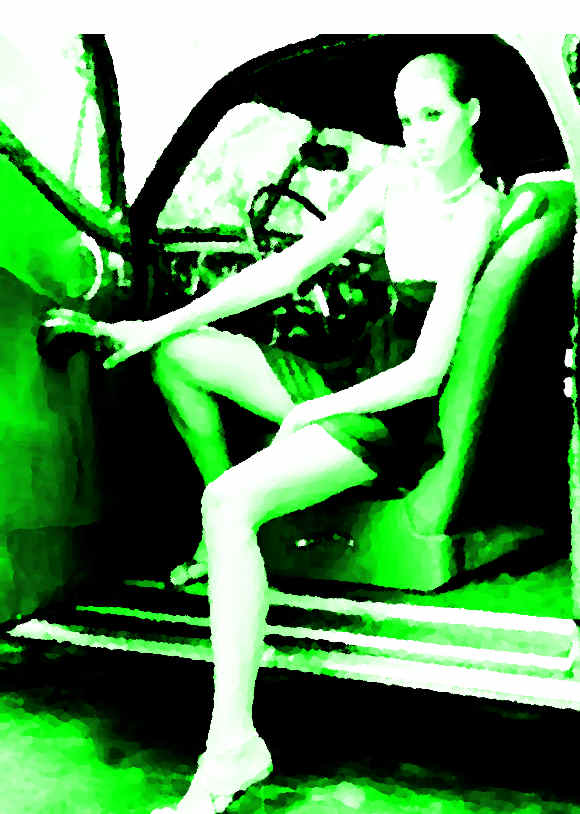
 The first-hand elcars of the 21st century,
simple to fix, with safe huge batteries,
can be made, with ample sound generators,
along the squarish symmetry lines -- such as
in this original computer rendering of an
image of a Lincoln Continental Mark IV from 1974,
by Aristo Tacoma. These articles are made in the
spirit of accomodating what is sensed to be a
quest for first-hand eco-economy also.
The first-hand elcars of the 21st century,
simple to fix, with safe huge batteries,
can be made, with ample sound generators,
along the squarish symmetry lines -- such as
in this original computer rendering of an
image of a Lincoln Continental Mark IV from 1974,
by Aristo Tacoma. These articles are made in the
spirit of accomodating what is sensed to be a
quest for first-hand eco-economy also.
 Original computer rendering of classic HM fashion
photo, by Aristo Tacoma
Original computer rendering of classic HM fashion
photo, by Aristo Tacoma
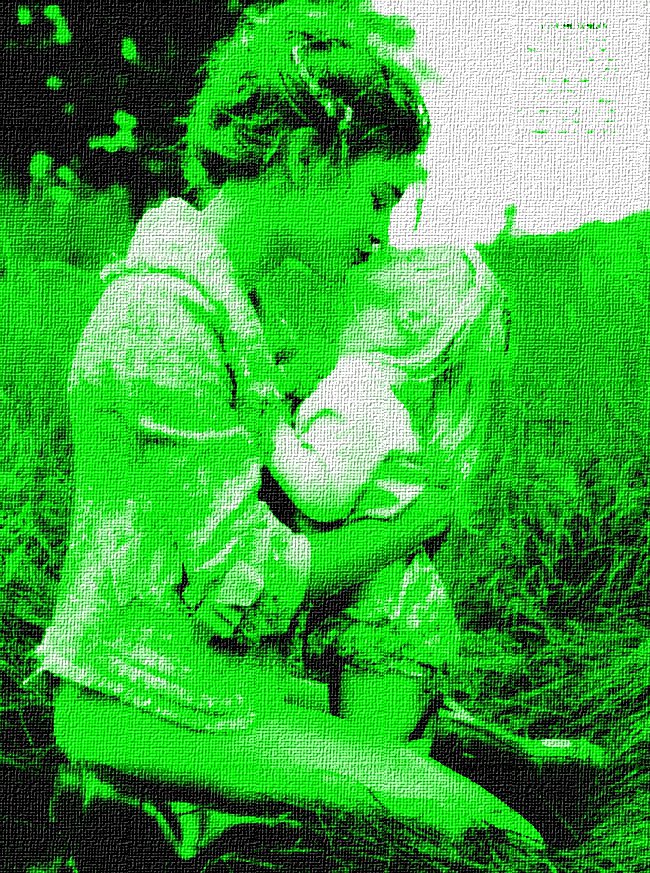 Original computer rendering of classic Vogue photo
(November '08) with Natalia Vodianova, by Aristo
Tacoma
A TIP ON HOW TO PAY SAFELY ACROSS INTERNET:
Use cash cards -- with impersonal data -- that you
buy for each buy or round of buys, when the sum is
moderate; and Swift bank transfer or another type
of suitable bank transfer for higher sums and/or
when cash cards aren't suitable. Use cash whenever
possible for 1st hand connection to the transaction,
and use personal credit or debet (debit) cards only
when required. See also:
http://yoga6d.org/a_tip_on_how_to_pay_safely.htm
HOW TO CHOOSE BETWEEN LINXUXES
[[[Note: the linux world has changed at several points
and the updated information you find at, or linked to
from, http://www.norskesites.org/fic3/fic3inf3.htm]]]
How to choose between linuxes such as
Ubuntu, Xubuntu, CentOS, and OpenSuse:
First, Ubuntu is usually the one that works on the
most PCs, more so than derivatives of Ubuntu.
Xubuntu is more easy to configure but slightly
more requiring of technical skills than Ubuntu.
OpenSuse is a different branch altogether --
especially if you choose the socalled KDE option
during installation -- and has a tendency to work
on very many machines like Ubuntu, but it requires
a lot more technical skill & patience to do any
such thing as getting mp3 music play (we'll explain
how here, in next paragrap). CentOS is the choice
when you know everything about Linux from inside out
and back and upside down and from bottom up --
it ASSUMES that you know a lot lot and the docs
are more sparse with CentOS than with OpenSUSE,
whereas information that applies to Ubuntu will in
many cases also apply to Xubuntu and Ubuntu is
really well documented.
NOTES ABOUT OPENSUSE, FROM OPENSUSE.ORG, A
POWERFUL, LARGE LINUX ALTERNATIVE:
Opensuse mp3 playing:
First, get the Opensuse to work. It will typically
say various things that indicate that something is
wrong but usually these messages can be ignored --
that's part of the approach you must take with
much of OpenSuse.
Then with the browser go to http://opensuse-community.org/
and click on the KDE Codecs (or another one if
you didn't choose KDE as the variant of your
OpenSuse). Allow installation to begin, answer
with password and so on. It will then come with
one of the error messages again. In this case,
it will offer a list, [1] fix it by doing so and
so, and you should go through that list and click
in front of the [1] option for all that comes up.
Any OTHER type error message, just click skip or
ignore. Eventually, it should say Installation is
Successful.
Then you open Terminal. There, type cnf xmms
and it will tell you what to type to install xmms,
which is a very tiny and very powerful little mp3
player which has existed for as long as linux has
existed. It will draw on the Codecs you installed,
as will some other programs. When you type in the
thing it asks you to type in, and password and
so on, it will probably again give some kind of
error message and ask whether it's okay to ignore,
and that you confirm. Then, having installed it,
type xmms and by clicking on the tiny little thingy
you should be able to play mp3 on the computer, if
OpenSuse made sense of that computer! ;-)
After you have done some installations of software
through the software.opensuse.org (in browser) or looked
at answers to questions in forums.opensuse.org and THEN
installed software.opensuse.org, and also done the Codecs
above, then usually you can get software if you know the exact
name by the cnf xxxxx trick. There is a set of packages
that will make things work more smoothly, such as allowing
editors to be open from the adminitrator su mode, and allowing
new pathways to new programs to be more neatly installed.
So you should probably do a lot with the software.opensuse.org
before you do a lot with cnf on the command line to install
things. If you on a rather 'bare' OpenSUSE do something like
cnf kedit
you will get a command for how to install it. But to run it,
you may have to either type /opt/kde3/bin/kedit instead of
just kedit unless you have a properly expanded OpenSUSE by
means of the graphical ways of installing things; and it will
only open in the local user mode, not in administrator mode.
But in administrator mode, you can make it easier by typing
e.g. cp /opt/kde3/bin/kedit /usr/bin -i
so that next time you can type just kedit
to start it.
In short, this is for people who like using screwdrivers
and decarbonising the plugs themselves. Don't expect that the
software.opensuse.org behaves anything like the
Software Center in Ubuntu or Xubuntu. Installing software
by means of software.opensuse.org is like hunting after
wild animals in a big forest. Software Center in Ubuntu
is, in contrast, to shoot tame animals while hovering over
a zoo containing them all, in a helicopter -- if you accept
the metaphor. In other words, most installations from
software.opensuse.org are unlikely to work out entirely
on their own. For instance, you may there find an 'audacious'
package that's able to play .wav but not necessarily .mp3
without additional tweaking which for sure is stated somewhere
around in the forums. But the benefit of knowing OpenSuse is that
once you get something to work in it, it is splendidly
built, and both solid and configurable.
When you plug in a flashdisk, by the way, and let file
manager open it, it will be /var/run/media/USERNAME/
rather than just /media/USERNAME if you wish to find
the files via terminal (at least that's one way).
You should also be aware that there are things that
cannot be done with 'sudo -i' but which CAN be done
using the command 'su'. In other words, the 'sudo -i'
inside Ubuntu and Xubuntu matches the command 'su' in
OpenSuse a bit more than it matches the command 'sudo -i'
in OpenSuse.
UBUNTU: A GOOD STANDARD UNIVERSAL PLATFORM FOR LINUX
ON YOUR PC, PC LAPTOP, PC NOTEBOOK, AND OTHER
DEVICES AS WELL
Ubuntu comes in a range of 'flavours'. I emphasize
the standard platform because of the wide compatibility
with hardware and software all over the place (for
concrete links, see also norskesites/fic3 when it
comes to listing which laptops etc have been especially
tested with it). Of the official flavours, Xubuntu.org
appeals in many ways, cfr
www.norskesites.org/fic3
for notes about how to fine-tune a mouse in such an
X Windows platform so as to be optimal for art sketching.
The notes that are at that link should be considered
carefully in addition to what is next said, because it
has valuable updated information on pendisks and boot
options and such. Be aware that on some PCs, there are
hardware differences between the USB plugin-ports, so
that not all may be equally well suited for an
installation procedure. You have to be willing to
spend some time and have the good gumption of doing
some intuitive variation when you install various
platforms on various PCs, though sometimes it works
smoothly without any hitch at once.
Some notes which may be useful:
To install it, go to the standard version (not beta,
unless you're particular interested as a developer)
as indicated on front page ubuntu.com.
Have a pen disk ready if you are going to do
the 'install from pen disk' option. Follow notes
also given at the install page at ubuntu.com for
this.
I advice you to regularly install a totally fresh
operating system on any machine that you use regularly,
rather than merely selecting upgrades. But do get all
the security updates so you have some degree of
protection against data viruses.
Select 64-bit Ubuntu for the widest hardware
compatibility when it comes to machines of 2013 make
and later, and 32-bit Ubuntu for mostly all earlier
machines and for a selection of also newer machines
if they are dedicated in hardware to open standards.
When you buy a PC that already has Ubuntu
in it, it makes things simpler; but when you buy one
with the sponsored commercial messy platform MsWindows
in it, you have to tweak it a little bit -- and consult
frontpage norskesites.org/fic3 as for the alternative
Xubuntu.org that we use much, and various questions
concerning how to install, also some updated after
this list was written!
Press ESC continuously or repeatedly at the moment
you push the power-on button, or (next time, if it
didn't work), F1, F2, Del, Ins or even such as
Ctr-Alt-Ins to get Setup before you install. To
call off a reboot in process, hold the power button
in for ca 10 seconds, so you can try again. When you
are at the setup, for the normal independent PC user
with normal security requirements (or consult security
experts in your company) enable Legacy Boot and Legacy
this and that the most and disable such as EFI and UEFI;
have a look at Boot and see if USB Pen disk appears
there. On some, it will appear a boot menu if you
power-on with the pen disk inserted, and at the same
time click ESC during power-on, so that you use arrows
to select the pen disk from the Boot menu.
THE MOST STABLE WAY TO INSTALL UBUNTU OR XUBUNTU
* I find that, on many computers, it works the best
to select the option of Trying Ubuntu first, rather
than Install at once. And also, some of the USB
sockets on your computer may be more adapted to
working both with high-speed cameras and with USB
boot-pendisks than others, so you have to be a
bit in the experimentative mood sometimes to get
these things working out neatly.
* I also find that the computer tends to run the best
with the greatest variety of software if it has the
U.S. English keyboard and the New York time zone --
because this is the standard values in the hardware.
This is the standard if you boot Ubuntu .iso install
without having Internet connected. I find that this
is usually the way to do it. If you choose to use
the UNetbootin package to make USB disks -- see also
moscowsites.org/fic3 or norskesites.org/fic3 for
how to erase a USB disk previoiusly used with such
USB-boot programs -- it may offer a version number
that isn't matching the version you're going to work
with. Try then to fiind a version number most similar
to the product you have, and choose the most normal
standard harddisk .iso options you can find in usual
cases.
* So you try Ubuntu, see that it seems to work
on your machine, and then you select from the icon menu
Install Ubuntu. It will then install on a broader
range of computers than if you go straight ahead to
select install. This has to do with tiny but
significant variations in how an operating system
ought to initialise the hardware.
If you install something like Xubuntu, you get
a wider range of possibilities to adjust the
desktop, but along with these possibilities come
extra responsibility, for it is easy to make
the platform come into a state where the best
way to fix it is to reinstall it. Also, Ubuntu
in its standard form may perform better on some
PCs because it has been tested on more PCs than
some of its flavours or derivatives. In general,
the newest of the new PCs, unless specifically
announced to cohere with classical standards,
perform best with the newest of the new and
best-financed linxues. As soon as a PC is about
two or three years old, the spectre of
distributions that can be used with it widen,
and in a certain sense, then, the value of this
PC actually increases, like a good currency bet.
* The cleanest feeling, as said elsewhere also, is
in maintaining a full set of backup of files on
pendisks, and actually erasing everything on harddisk
and install a clean new version. This is also a way
of ensuring far more than any other method that you
aren't peddling computer viruses around, especially
if you have had good control over the pendrive used
and the .iso of the new operating system.
* Interesting lightweight laptops such as somewhat
more expensive Asus have in them in the Setup menu
the option to run Turbo. Only do this if you also
fit a fan under and/or beside the computer (and have
air under it), and this might be interesting to do
esp. when installing, so installation will go really
fast. But check the heat of a computer: if it once
overheats enormously, it is like a car, it can do
something to the core of it.
FORMATTING A PENDISK THAT WON'T FORMAT IN THE UTILITY
THAT COMES UP WHEN YOU WRITE 'DISK' AT UBUNTU DASH:
***Improved: SEE www.norskesites.org/fic3,
where a link to a place shows the solution -- to use the
program 'fdisk' prior to the use of mkfs, where all
the partitions of the pendisk is deleted by using
its command d, followed by the command w for write;
it seems then that the umount command will be
effective and mkfs will consistently work! ***
If you have trouble with formatting the pendisk,
and you have an Ubuntu (earlier version, perhaps)
already running, do this:
[1] click CTR-ALT-F3 to switch to a text mode
linux. Type your user name, and your normal password.
Then type sudo -i and again give your normal
password. Be sure you have an empty directory named
such as the letter a in the disk. If not, type
mkdir /a
[2] insert the pendisk that you wish to totally
erase and prepare for being a startup pendisk. Be
sure you really have backup of absolutely everything
on this pendisk. If you are sure, note which letter
series that comes up, such as sdb. It can be sdc etc.
We need a number after this letter series. It may be
1, such as sdb1, or sdc1. We need this to be right
so we erase the right disk. So try type
mount /dev/sdb1 /a
or whatever that comes up of letter sequence. Use
number 2 or 3 if 1 doesn't work. Then type
l /a
(lowercase letter l) and you should get up a list of
present content on the disk. If this is the pendisk,
do the format, if not, try more or do
umount /a and unplug the pendisk, then
type exit and exit and
press CTR-ALT-F7 to return to your normal graphics.
When you know which letter sequence xxxx is the pendisk
for sure (and not your harddisk!) then type
umount /a
unplug the pendisk, wait half a minute, insert it again,
and type
mkfs -t vfat xxxx
where you substitute the letter sequence for xxxx so you
format the right thing.
Then unplug the pendisk, type exit and press
lineshift, exit again, and press CTR-ALT-F7 to
go back to main graphics screen.
Some pendisks don't allow so easily the STARTUP
DISK CREATOR (as the program is called if you search
for it in the Dash in Ubuntu) to implant its startup
.iso on it, when you have got the newest .iso from
such as www.ubuntu.com. You may have to try it a
bit back and forth, and see what happens: a trick
can be to use an earlier version of the platform
for some pendisks, or a different PC with the same
version of the platform.
ADJUSTING BIOS SETTINGS
The easiest use of such as a laptop, maybe an ultra-
light laptop (or notebook), is to clear away any
residue of a commercial platform in it, and assert
as much as possible of 'Legacy' book and legacy install
and such in the System Setup that usually are available
the first half-second after power-on by clicking ESC,
F1, F2, DEL, INS or the like (it usually will say,
very briefly at least).
For good use of laptops and notebooks and ultralight
PC's, you may want to ensure that the functionkeys
have real F1..F12 functions, where that is possible.
At the moment you have switched it on (click many times
at ESC or F1 or F10 or F12 or DEL or INS to open BIOS)
and inside BIOS SETUP you can select something
about functionkeys ('Disable Action Keys' I think
the phrase sometimes is). In this way, you will be
able to get the functionkeys to function normally,
while when you need to adjust e.g. screen intensity
you will THEN use the Fn key. This is more pleasing
for anyone who uses the computer in a naturally
advanced way, where functionkeys can be actively
used by a program.
USING THE TEXT TERMINAL IN ADMINISTRATOR MODE
* When you often need the sudo -i command typed,
you can open the menu Edit -> Profile Preferences
on top of the screen (moving mouse pointer there will
show the menu line, usually). In there, select
'Title and Command', click on 'Run a custom command
instead of my shell', and type the sudo -i
in the line that is to right of 'Custom command.'
* I suggest you use the sudo -i version also
for the next work, but be aware that you should keep
watch over how many licenses you are giving to programs
to access your disk and your laptop and internet
when you use the sudo -i a lot.
On Fedora-like approaches, one must avoid this phrase
sudo -i before one has typed su. When one types su, one
will be prompted for root password. Then one types sudo -i
to get the proper Terminal for it.
*****SOME PLATFORMS OFFER A LOT POSSIBILITIES OF TURNING
OFF AND ON VARIOUS UPDATES AND SUCH: ONLY THAT MOST OF
THESE BUTTONS MAY HAVE VARIOUS ISSUES WITH THEM. For
instance, in Ubuntu 13 for 64-bit, if you turn off all
updates of all kinds, and then re-activate them -- using
the Settings menu -- this re-activation doesn't automatically
propagate into the software center. As a result, it will
prompt again and again, and do so while taking many pauses
while it is not clear what the computer is doing, for
access to the updates. It will come with numerous panels
which says 'Extra downloads necessary. [OK] [Repair]'
which have to be clicked on again and again. This will
probably improve in later Ubuntu's, but, in any case,
installing even such as the MP3 extras in Ubuntu Extras
may be almost impossible after turning off and then on
again what sources the platform is to get its software
from. But without these extras there may be all sorts of
things from Flash to CD burner that won't properly work
if installed later. As a result, it may be best to let
some machines be installed without any barriers, so to
speak -- letting all net be open to all updates to to
a point, at least, where you have got all software in
place, and where the only settings you changed where the
important things -- the things about recording all your
documents and so on in 'Security and Privacy' settings.
But machines which have been installed in such a
massively nonfiltered way are likely to be heavy with
software you have no insight into, there's likely going
to be all sorts of things about the platform you don't
get info into, even if it is priniciple open source.
Besides, these updates don't always come along with source
and they don't always come along with a guarantee that the
source is matching one-to-one any binary that comes with it.
So that's where lighter-weight platforms come in -- where
you installed the barest minimum in order to get exactly
what you want to run.
This is an 'afterthought', with some repetitions
relative to what is said just above and just beneath
here, in this section of Yoga6d EcoNomy column that
deals with Ubuntu. Some of it may apply for later
versions; some of it concers other products such as
Firefox:
HOW TO ERASE A USB-FLASHDISK, PUT NEWEST UBUNTU 15.05
TO IT, AND HOW TO FIX THE FONTS-ISSUE WITH THE NEWEST
WINE WINDOWS-COMPATIBILITY INSIDE UBUNTU; and some
words on what new PC's to buy in the shop, and
why not to use wireless connections; and some notes
on browsers and privacy
First, congratulations to Canonical, Inc, for their
work with GNU/Linux of the Debian branch to elevate it
into something that affects the world more deeply than
any other Linux -- in a combination of fierce idealism
by the founder of Canonical, Mark Shutterworth, with
the business attitudes that make things professional
to the core. Ubuntu is extremely compatible. When you
select 'install all extras' during installation, it
comes with Mozilla that runs flash at once; you can
then go to the program called 'Ubuntu Software
Center' and install Audacious, which is an excellent
easy-to-use no-nonsense music player for mp3 and wav
and all that. There are literally millions of features
to GNU/Linux Ubuntu and to the various ways setting it
all up. We must hope that this standard XWindows
Linux always comes in this high-standard way and
able to run in the classical 32-bit standard always
(I do not regard any Linux that only comes in 64-bit
as serious; 64-bit is rife with privacy issues and
clutterings which stop classical programs from
running smoothly, because 64-bit CPU's are elephants
which do nothing elegant inside them.).
So, again, congratulations to Canonical for Ubuntu,
and keep on the good work. For those who want to get
some dirt under their nails, and who are not afraid
of typing in lines which have technical words,
I have some suggestions in the follows; and close
this little note by some general comments about PC
choice, and everybody should prefer cables to
wireless solutions, and such:
So, I have just tried the new versions of Linux from
Ubuntu.com in their standard flavour -- there are
other flavours, fancy in different ways -- but there
is something rugged and robust about the standard
that the main Ubuntu is setting across the world,
and with its flavours, including Xubuntu, Ubuntu
shores up interest in all other forms of Linux
as well, such as OpenSuse.
I will tell how to erase a used Flashdisk and
put in the newest large Ubuntu .iso using the
excellently made freeware for Linux and Windows
called UNETBOOTIN in this paragraph -- though there
are many other ways of getting Ubuntu into a machine,
this has become one that those who want to have extra
know-how should have a grip on. I link to
UNETBOOTIN source-site and have other comments there
at the G15 PMN programming language source location,
at norskesites.org/fic3, and, by the way, the G15 PMN
programming language works fine with 32-bit Ubuntu in the
newest form, and it also has a 64-bit version that works
for the newest Ubuntu. The very same versions also
work with most Linuxes of the past decade including
such as Xubuntu, OpenSuse and CentOS, one can even get
it to run perfectly on CentOS 5.5; and there is a
high-compatible version for Firth, FreeDOS and DOSBox
provided as a 'service pack' of the G15 PMN programming
language -- so this new and elegant novel stack-based
language can be used in a variety of ways.
But first, a comment for those who already have
Ubuntu in their PC, and want to run some Windows
programs on it as well, by the Wine package:
One would have thought that the producers of the
Wine Windows-compatibility package, in how they
tweak it for the world's largest Linux, could have
solved an issue that has been with it for a good
while: how to get the fonts properly installed.
I thought I had solved it, put an answer to
askubuntu.com about it, only to see that the more
complete solution was already given on the same page,
but without perhaps the little extra words that makes
one try it. So I put the correct solution here.
First, go to Ubuntu Software Center and select
the installation of Wine (choose the one that says
something about Wine .. Meta-package).
This will work, and at least in many countries,
maybe everyone, the Ubuntu Software Center will gray
out and stop and after some hours, you'll quit it,
reboot the machine, and do something like the following
to repair it. You can copy and paste each line into
a Terminal which opens by Ctrl-Alt-T in Ubuntu, but
you must use right-click of the mouse to paste into
the Terminal each time, rather than Ctrl-C. The
second line is not necessary if you already have
a backup folder (you can use any temporary folder)
and in such a case you change the cd /backup1 to
whatever you like:
sudo -i
mkdir /backup1
cd /backup1
apt-get update --fix-missing
dpkg --configure -a
wget downloads.sourceforge.net/corefonts/andale32.exe
wine andale32
After the first line, you type your password. You wait
while the Wine installation completes itself. After the
final line just above, you confirm that you want to
install these fonts.
Next, go to Mozilla, and open up this source place:
ftp.de.debian.org/debian/pool/contrib/m
In that page, click on 'msttcorefonts', and in that
new page, click on the newest package at bottom of
the page, which presently is the one which ends with
"..3.6_all.deb". Mozilla will ask you what to do with
it, and suggest that it is to be opened with Ubuntu
Software Center, do accept that. Acknowledgements for
the debian.org link is in
askubuntu.com/questions/543673/mscorefonts-problems
(where I tried to edit in these extra comments about the
above solution from debian.org, after I realised that
my initial text I put in there wasn't fully curing all
aspects of the issue; but I don't do logins with passwords
because I hate logins except when absolutely necessary and
so I'm not sure my qualification of my own first answer
there was accepted -- that's how it is when one doesn't
do logins! ;-) ). It may still be that some irritating
error message will arise after this point, though --
this seems to be a feature with every platform all across
the planet, and Ubuntu has its share still. Still an
issue with the fonts? The best bet then is to repeat
some part of the above after first doing
apt-get remove --purge ttf-mscorefonts-installer
In any case!
Let us hope that this way of getting the fonts into
Wine becomes automatic inside the Ubuntu Wine package
before too long. It will increase the popularity of
Ubuntu further.
Java has become even more irrelevant than ever
lately as most banks etc have moved away from relying
on Java for particular logins.
To rinse a USB-flash-disk. Say, you have a 16 GB
pendisk or something like that (shouldn't normally
be bigger than 32 GB for these purposes, due to how
it is supposed to be formatted!), and you have already
downloaded the newest 32-bit (or, if you absolutely
think it is necessary, 64-bit, but 64-bit is always
more problematic in subtle ways and should be avoided
unless there are strong reasons to use it -- in my
own highly personal opinion!) .iso file, named
ubuntu-something-something.iso
You have also installed UNETBOOTIN eg from Ubuntu
Software Center in a previous Ubuntu. This program
was created by Geza Kovacs, released as open
source under GNU GPL. You have a flashdisk, and you
want it to be a tabula rasa, a blank open space, to
be formatted by UNETBOOTIN. So, you plug it in, start
up a terminal, type the sudo -i to get into
Administrator mode, and type
fdisk -l
then it will probably show up on the list as having
its code-name as /dev/sdb1. This you can test by
unplugging it again (selecting eject of it), and doing
a new fdisk -l. If /dev/sdb1 (or /dev/sdc1, or /dev/sdb2,
or whatever it tells) then has vanished, and you are
absolutely confident without the slightest doubt that
this does indeed refer to that pendisk, then -- and
don't do the next step unless you are sure, and only
on your own responsiblity, you type, erasing all on
the specified domain without any possibility of
retrieving it back
fdisk /dev/xxxx
where instead of xxxx you type that code you just
worked out with such certainty.
Here, you delete all its partitions. Normally, for
any flashdisk previously formatted by Unetbootin
(e.g, last year), it will require these letter-commands
and lineshift after each:
d4
d3
d2
d
w
Then type, with equal care, as this does irreversible
formatting of the disk specified
umount /dev/xxxx
mkfs -t vfat /dev/xxxx
And unplug it, and reboot. Then you plug it in, and
exit the window to it that automatically opens.
Start up UNETBOOTIN. It took me a long time to discover
that the word 'or' is in the toptext there. UNETBOOTIN
says, then, that either you select which version you
want to select, OR you specify that you have the iso
already. So you go straight to selecting the iso that
you have downloaded. Mozilla probably tucked it to
/home/YOUR-USER-NAME/downloads
and you have to click a little bit to find it in
UNETBOOTIN.
Also, specify 500MB (probably ten times too much,
but that's fine) in the line that says something about
'Ubuntu only'. Check that UNETBOOTIN has recognised
the existence of the /dev/sdb1 or whatever the name
was of your pendisk. Then click ok and it will produce
a workable pendisk which you next can boot a PC with,
when you click e.g. ESC or something and select that
it is to be booted with it. (If UNETBOOTIN gives
mysterious messages, repeat the process but with
greater attention to the fdisk and the mkfs process;
and be again sure that you DO NOT answer the first
question that UNETBOOTIN asks, namely which Linux
and which version you wish to install -- ONLY
specify your .iso file and you should be fine!)
Exit the Terminal's administrator mode by
typing exit and repeat by typing exit once
more. If you are uncertain about the security of
doing things this way with Ubuntu, type 'sudo' before
each line instead, there will be some more password
prompts then. (In some other Linux types you can log
in as root instead or use the command su which
works when the Linux is set up in a different way;
this concerns eg OpenSuse and Fedora.)
WHICH PC'S CAN RUN LINUX? Microsoft is constantly
trying to prevent Linux, in their ignoble agenda
to make computing less fun in the world. So DO NOT
BUY A PC IN THE SHOP WITHOUT TAKING SUCH A PENDISK
WITH YOU AND SEE THAT YOU CAN BOOT IT. In particular,
you must check that you can, the moment after boot,
e.g. by clicking ESC or something, get into the
systems settings for the machine and switch on
LEGACY BOOT. If you cannot, the machine is dirt,
and go for a more well-made machine, perhaps a
somewhat more expensive one. Ask for a PC with Ubuntu
preinstalled, why not? More and more people prefer it
and such magazines as PC World are recommending it,
and the main alternative to Microsoft. However, if
you have a dirty PC which cannot do legacy boot,
and which has Windows on it, UBUNTU MAY BE ABLE TO
RUN ON IT EVEN SO -- then one must use the
64-bit version, and perhaps install it by going
via Windows, using an Ubuntu installer which you
fetch via a Windows net browser. This is all due to
intense work by Ubuntu, Debian and other folks in
the Linux communities, so that hardware remains
hardware and software remains software, despite
the attempts, for narrow-minded self-centered
commercial reasons by some companies to blur the
distinction in such as the misnamed 'secure boot'
element put into place on some PC's. If you very
carefully consult all the links from Ubuntu's frontpage,
you'll find ways to search up which laptops and such
that give the best results. If you buy a laptop,
buy a mouse and a keyboard inexpensively made,
perhaps, for plugging into the machine via standard
USB, so that you get real function key functionality
and can do speed typing and have an easy time doing
artistic and also technically precise use of a mouse.
Tablets are not serious products in many people's
opinions. As for mobile phone mini-mini-PC's, these
are approaching normal PC standards and so serious
people should program PC's and handle PC's because
in the future, any mobile phone will be just a tiny
PC without a proper screen and keyboard, with a
phone-electronics device added to it. It is not
worth learning Android/Java-nonsense or other such
temporary approaches unless your job today is tied
up to today's phone-computers, if you want to be
in good control of the technology of tomorrow. That's
all going to be PC and all going to be Linux, with
a sprinkling of the jails-made-stylish called Apple
(not my phrase). Both Apple and Android are forms of
the very same platform Unix-style stuff, it is just
that the coating is different, and there are more
commercial parameters which make things less fun.
By the way, laptops are typically very good choices
when it comes to PC desktop solutions, when equipped
with keyboard and mouse -- but remember that despite
the name, they end their life if they are put on cozy
places like sofa's or bed's, out of a heat that the
CPU cannot stand. I always have something like
an usused ashtrey or a stone or the like underneath
the laptop to allow air to pass better through it,
and try to avoid putting it on anything soft -- a
hard table or at the floor (if you do futon-like
zen programming ;), or something; and in some cases,
the laptops have had it and can only keep on
functioning, if at all, with a fan placed BESIDE
(or under, in a laptop-fan-plate) them, while they
are also raised up a little from the table. Take care
of the heat issue, it is no joke: plenty of money
to save in that way!
WIRELESS OR CABLE? Always avoid wireless in every
form unless you absolutely have to use it. It is
insecure, doesn't have privacy, and, like any use
of nano-technology and microfiber in clothing and
cleanliness products, we need half a century more
research on the actual effects on the health of
human beings and on the environment before engaging
in it. Always switch off Bluetooth on these machines;
always use cables; refuse to approve of use of wireless
in work situations; and build mobile as well as internet
free zones in every house in order to have less
distractions and more good work there.
BROWSERS AND PRIVACY SETTINGS. By the way, good idea
to at once go into Settings of Ubuntu and select
Privacy. I don't want unplanned transmissions between
my PC and the net, and so I turn off all automatic
crash reports, and naturally I do not want logging
of file use stored on the PC. Also, Mozilla Firefox
is kind enough to offer privacy solutions by means of
extra plug-ins, as indicated on the front-page which
not only links to the G15 PMN 'free hashing' search
engine I've made, but which also links to the two
top privacy plugins there, at Yoga6d.org/look. By going into the
settings of the Firefox by the right-hand button
on the screen with the horisontal lines, you can
assert that Firefox isn't going to store cookies
after exit, and that cookies are 'Never' going to
be accepted from third-parties, and that Mozilla,
while it should prevent automatic installations
and warn about these things, it shouldn't itself
censor which websites that should come up, in my
opinion. It can only censor it if somebody has an
absolutely objective list of which websites to block,
and when this list comes from such agencies in the
world as the Google behemoth, it isn't objective and
that's that; beside I don't want to have Mozilla
consult a list each time I go into the net. So I
turn some of the settings there off, although in some
connections, it may be of value to have them on.
Mozilla is a REAL browser, and will continue to be
so, as long as they don't disable more of the possibilities
of turning javascript off. They have catered to pressures
from commercial groups by making it impossible without
pressing Ctrl-U to fetch images when certain settings
are given, such as on the copyright-infringing Google
Books pages, where fetching Google's stolen pages
of other people's books isn't in any way easy (the
moral of that: we're google, we don't care). Ubuntu's
own upcoming browser is also real, but in 15.05 it
isn't a full browser yet. Opera used to be a real
alternative, but the core is now Google Chrome, and
as long as the source for the core is as complex as
it is, it isn't in any true sense 'open' anymore,
even though technically the source code is open. Opera,
and the new Vivaldi browsers, are, then, as far as I
can tell, merely shells around Google's productions
-- and they may be well-made shells, but like search
engines which merely re-portray Google's or Bing's
result in other frames, they aren't real search
engines. Midori is a light-weight browser that has
something about it that makes it its own thing. But
it isn't making most of the things that Mozilla makes
complicated more easy. Last time I tested Midori, I
found that I had to spend more time with it to do
simple natural things which any creative person does
when exploring the net. Still, it is to be honored as
an alternative which is not just a shell around a
cluttered product from a corporate behemoth. There are
more browsers as well, and GNU.org are good at avoiding
the c.b.'s and it's worth noting what they come up with
in this regard.
Let me add that Mozilla Firefox has an idealistic
enterprise aspect to them, favouring privacy. Recently,
they urged U.S. citizens to sign up for less mass
surveillance. Great! But we need to realise that we
must consciously talk about WORLD CITIZENSHIP when it
comes to privacy issues. If we do not specify this,
the old laws will still apply -- that 'foreigners' do
not have privacy rights. And those old laws do not make
sense in an internet era. Mozilla-folks, do you hear?
You must make global worldwide privacy rights a concern
also for U.S. citizens, not just U.S. privacy rights a
concern for U.S. citizens -- this is important for the
future of the Internet, as USA is the founding father
element of the core layout of the Internet.
GETTING XUBUNTU TO WORK ON PC'S THAT DON'T QUITE SUPPORT IT
-- Some well-known tricks, explained
{next is a little essay we had in our column above, which
aimed, and -- we think, successfully -- to give the
attention to xubuntu a boost; it also explained how one
can make the bootup more smooth where xubuntu don't quite
boot rightly, and this is an important thing to know about,
as xubuntu don't boot quite as many pc's as ubuntu does.}
Xubuntu -- from www.xubuntu.org -- has got it all.
It has got the coolest name of the ..ubuntu lot. It is the
DANGEROUS Ubuntu, x-rated. It is small and exotic. You can
make it look what you want, except that it won't imitate
plastic and bubbles apple-style, but who really, in their
most fully awakened self, can honestly say that they think
Apple computers are really well-designed? They are FANCY.
That's something else. They have a certain level of kid-
appeal. That's also something else. But well-designed?
Artistically well-done? No. Fancy.
Xubuntu is not only cool, but it also has the full
support of the Ubuntu community with the Ubuntu Software
Center. Now that's something else than merely making it
more or less compatible with this software center. Xubuntu
is actually a form of Ubuntu -- yet radically different,
and not at all wedded to any orientation towards the Mir
that again is oriented towards phone mini-pc's and, as
far as I can tell, phone mini-pc's might be commercially
important and all that, but they are very rarely COOL.
They are practical, for some, economical, for some, but
not cool. Come on.
Xubuntu can be your cool slave. You can configure it
far more than it can survive. You can configure it to
pieces. You can make of it a non-performable Linux.
This means that the responsibility is your own. Where
Ubuntu leads you by the hand, Xubuntu says: your merest
whisper is my absolute law!
Where Microsoft and Google platforms resembles a
stalinist soviet union with forms in quadruplicate
and nothing taken for granted -- one must negotiate,
even plead with the platform to change -- Xubuntu
simply obeys. Like a tractor. Or a Formula One car.
It also has niceties like the pavucontrol advanced
volume interceptor needed by Audacity audio editing
already as part of its neat light package -- as well
as SDL.
However, where Ubuntu works on just about anything,
Xubuntu is sometimes more tricky to get to work. For
instance, Ubuntu can overtake a mini-PC, the tinest
notebook PCs, and do so quite well, where Xubuntu
simply won't get anywhere near even a test-install.
If it's that serious, then there aren't all that many
tricks I know of, not simple ones anyhow.
But sometimes, on the newest laptops, even the more
expensive ones, there are some messing-about with things
due to the infernal monstrous company Microsoft and
their secret contracts with the hardware makers, aiming
at preventing the computer being used as a computer,
rather than as a slave to their mainframe clouds,
-- and this might strike most Linux down, and leave
Ubuntu the sole winner, if even Ubuntu can master it.
Usually, Ubuntu gets it going first, then others
gradually pick up the idea of how to rule over these
Microsoft-infested beasts.
Xubuntu might not work in a test-install, but it
might appear to install well -- if you choose, e.g.
in Unetbootin, the option of Installing Without Testing
First. On powerful laptops a year or, better, three years
old, it will usually give a sure feeling of success at
once. But on some PCs, it may not work at all, even if
you start it with Internet cable connected and assert
that you want it to bring all the extra software along
with it at once.
Number one trick: see if it works if you choose
Advanced Options --> Recover mode, and it may indeed
work with correct 1366 x 768 on a widescreen laptop,
for instance, even if higher resolution is gone.
For those who are interested in Deep and True Coolness,
they don't want higher resolution than that, however.
Number two trick: supposing it does start up that
way, get all the updates you can, and Xubuntu extensions,
and try again.
Number three trick: if you have to make the Rescue
Mode the standard option there's a really bad, but
fully good working way, to do that. Get the gedit
editor into it from the Ubuntu Software Center.
Open a terminal. Do this nonsense, and don't tell
anybody, after you type sudo -i and type your
password. And, by the way, be sure you have backup
for the PC is only moderately likely to boot at all
after this neat change:
cd /boot/grub
cp *.cfg original-config.txt
gedit *.cfg
Here you get up a big file called DO NOT EDIT. You begin,
arrogantly, by taking out that line. It is now editable.
Next, somewhere it says ...default="0"... on a line.
This number is the number of the menu that is the standard
startup option, if you don't press on lineshift. 0 means
the first item, 1 the second, and so on. If you have
nothing but Xubuntu on a machine, you will have four lines
and we're gonna make a fifth, and that corresponds to
number 4. So put it to 4 instead of 0. If you have, as
you should, Firth prior installed, then this will stand
there as the option number 5. It may be called something
different {if so, now you have the opportunity to get
the menu text for Firth right, it is right in this file},
but it will, at any rate as version 14.04 of Xubuntu
goes, 32-bit, which is the best, always performing more
fluidly than 64-bit in ANY platform type, in our opinion --
it will stand there as the fifth. Now we're going to
add then in case a sixth option, which means that you
can set default="5". You work it out.
Then you find the texts, quoted in 'single quotes'
for the first two menu options -- these we ditch, put
in 'aaa' and 'aaaaa' there.
Next we're gonna trash that submenu and make it go
straight to the Recovery mode option. This is the trashy
way of trashing it: Copy the line that begins with sth like
this:
menuentry 'Ubuntu .. -generic (recovery mode)'
and the next dozen lines until you see something like this
initrd /boot/..
and be sure to get the completing
}
also. All those dozen lines you copy -- ctr-c will do.
Move onwards in the list, which I'm sure includes your
Firth partition, all the way until you see this stuff --
talking now of version 14.04 of Xubuntu:
set timeout_style=menu
and simply paste it right before that line. Fix on the
text so it says menuentry 'Xubuntu' instead. Save it if
you have as much spunk as I think you have. This is such
a lovely bad of messing about with the code -- replete
with neat errormessages during pre-startup -- that either the
PC won't start anything at all before you reformat the
disk, or it will start beautifully -- just two simple
lineshifts are required after you switch it on and let
it get into its new standard option, and the Xubuntu is
working.
Could it be easier? It could. That's why Xubuntu has the
Wow!-factor resident in itself. It is what it is, damn it.
P.S. Did it work? If so, you can improve it, by ditching
the rest of the Recover menu which requires the two extra
lineshifts this way:
cd /lib/recovery-mode
gedit recovery-menu
These two commands (as before within text terminal after
the normal sudo -i which gives you administrator rights
in a relaxed way) gives you option to change the recovery
menu. Here's how to change it:
At line two in the menu, put in the word exit
and there won't be any recovery menu. It will continue
straight away resuming full boot, but with the feature
of loading a more generally compatible video driver
approach rather than any specialised video drive attempt.
*****The open source Gimp program was good in Red Hat 8.0, it
is different, better in some ways, worse in some ways, in
Centos 5.5 -- both these free versions of early Linuxes are still
freely available at our Yoga6dOrg set of sites -- but after this,
Gimp got the good stuff cleansed more and more out of it. Why? Probably
because they got too greedy, they wanted to outmaneuver
commercial alternatives like the shoddy Photoshop. As a result,
Gimp's file conversion capacities became degenerated, and things
which ought to have become simpler was made sometimes even more
complicated. While in the earliest forms of Gimp, we have had
much use of Gimp, we have had to stop any much use of it and stop
advising people to use it except as a stepstone away from Photoshop;
and when we use it, we try to go for only the earliest versions.
Fortunately, unlike the case for browsers, there can be no
hotheaded argument in favour of only using the latest versions.
The G15 Gem for small-size monochrome images should do.
*****The Wine Windows program performer package is having
inside it packages to log all activity that goes on. As often
has been pointed out by R Stallmann and others, open source can
be tailor-made to provide a viewing of what people is doing.
Google's open source is often like this also. The main reason
is, of course, that open source, like any thick book, may be
full of things that aren't easily decoded. They are decodable,
for sure, but they may be too opaque that this is done in
praxis by most.
CONVERTING .WMA TO .MP3 AND STARTING USING WINE
* When you have .wma or other MsWindows audio files
(or stuff like that) to be converted into the far more
standard audio types like .wav or .mp3, then you can
in Ubuntu go to Software Center (on the launchpad),
type Wine and install the Microsoft Windows Compatibility
Layer -- it takes time so have a good internet line --
and then you go to e.g. nch.com.au/switch if it
is .wma => .mp3 conversion you seek, or some other
software like that at e.g. download.com or at
sourceforge.net which is for (a not too recent version
of) Windows. You then open up Terminal, type wine whatever.exe
where 'whatever' is replaced with the proper program
name. The conversion program will then install,
with a lot of waiting and a lot of messages that
you can ignore from the Wine background package.
You can then convert the files, also expect a lot
of waiting and a lot of background messages that
can be ignored.
When you did this by sudo -i you will find
that /root has the resulting .mp3 files if you didn't
change the storing location, and that the program
itself is stored at, so you can start the properly
installed version, around here:
cd /root/.wine
l
cd drive_c
l
cd P*
This gives you Program Files directory in 32-bit Linux.
If you have 64-bit Linux there are two Program Files
folders, one for the classical 32-bit, marked (x86),
and another. You will have to type dir or ll
and work it out. In order to quickly switch to a
directory with x86 inside its name, you can type
something like cd *86*
For the NCH program switch.exe, you will then type
something like this to start it later on:
cd NCH*
cd Switch
wine switch.exe
* Important, as for Wine: make a note of what folder
you have a program in, and check whether it has an
uninstall option -- like 'uninst.exe' or the like,
because some Windows programs get confused by being
performed within Wine, and they may have to be
uninstalled and reinstalled in order to clear up their
stuff and get'em working again. This might be the case
for MetaTrader4.exe. It might, in some cases, not
be enough to uninstall the program, if it stores some
cache data in other places than that which is
uninstalled. Be sure, after uninstall, to delete the
correct program folder if it is not already deleted;
then try reinstall and be tolerant of Wine, tks!!!
PRINTERS IN LINUX
* As for printers, Brother printers -- but I think
some HP printers are getting on well, also --
have always had maximum Linux compatibility.
With luck, you don't even have to do any install
of extra drivers, as Ubuntu folks have done good
works -- just plug it in, look for messages. E.g.
HL5250DN from Brother is like this.
Note that the most cheap printers may be the
least cross-platform compatible, sometimes.
* Plugging in such as USB pendisks usually gives you
the option of accessing them by text terminal, if you
type l /media/USERNAME you may find there the disk
name of the USB pendisk. On some Linux you drop
the /USERNAME thing. This really refers to another
more peculiar-named part of Linux, such as /dev/sda1
or /dev/sdb1.
But suppose the /media/USERNAME thingy works, and
that the first letter of your pendisk
of it is P, and that nothing else is plugged in.
Then you can e.g. look into the files of a subfolder
named newest_updates by such a command as this,
and then you can safely un-mount the pendrive by
the following command -- here, username is
patricia:
l /media/patricia/P*/newest_updates
umount /media/patricia/P*
Be sure you don't use umount together with an
asterix if you have more things plugged into the
machine, unless you are sure that you specify
an unambigious reference to just the device you
seek to unmount -- so you don't get more unplugged
than that which you want to.
* Most webcams can be activated by Webcam programs
such as -- a particularly compatible one at present --
"Cheese"; explore this in the shopping-bag like
icon which is the Ubuntu Software Center for also
free programs.
* On many touchpads as part of laptop keyboards,
go a.f.a.p. into the Settings menu and select
to get away the option of 'switching off touchpad
while typing', as this switching off may lead some
laptops not to get the touchpad reactivated again.
* On Mini-PC's go into Settings and ensure that
"Workspaces" or what it is called is enabled; this
allows access to the bottom part of the screen
when the screen is too short to reach the "OK" button
and similar important stuff in some contexts, by
means of a four-screen selection icon in the left-side
menu bar.
* The program Audacious and also Rhythmbox make
sense after you have installed the Ubuntu mp3 extra
stuff, to give playing of such as .mp3 files.
(There are various ways of getting the mp3 extras;
the way that involves the least IcedTea Java, so
as to preserve compatibilities for some bank account
login sites with Oracle Java when Oracle Java has
been installed -- elsewhere on this page -- is
to go to a page which plays mp3 with Mozilla and
let Mozilla install that single plugin.)
* The program Audacity enables recording of what
takes place in your loadspeaker at your Linux computer.
Go to the Terminal (also ctr-altgr-T) and type pavucontrol
and get that extra sound-preferences panel going. If it
is not installed, and you have something like an
up-to-date Xubuntu or a flavour of it, up will come a
text you can type to get it installed. When run together
with the Audacity installed by the Ubuntu Software
Center, you can eg record house or chill out at radio.de
played by Mozilla to mp3 and also edit sound files with
great ease (honor copyrights when you do). Start recording
(or activate monitor of input by clicking once on the
volume control for input at Audacity and adjust the
pavucontrol so that it allows 'monitor of pc speakers'
(note that there is a similar-named option that doesn't
provide input for Audacity, so you sometimes have to
experiment a little with pavucontrol to get it right).
Then start recording and export it as .mp3 or what you
want. Do a test, first, though, to check quality.
If there isn't proper recording all of a sudden,
but a crappy sound, you can reset Audacity by this
trick when in Terminal in administrator mode:
cd /home/your-user-name
rm .audacity-data -fr
Then reboot. Next time you start up Audacity it will
usually be as first time install; but be sure that
microphones are not active in the recording as we
want no interference from them when recording straight
from the pc speaker into sth like Audacity. Sound editing is
after all complex for any PC because it must handle
things relative to milliseconds clock all the time,
and it isn't always easy for the software and the
sound chips to collaborate. Be sure that you start
each recording only after doing several tests. Be sure
also that you switch off microphone input -- volume of
microphone input to zero, for instance -- and that you
don't have too many programs open at one time. Be ready
to reboot in order to refresh soundcards and software
properly before each recording effort, and adjust
carefully the available volume controls and such.
Sometimes there are a bit hidden errors in some parts
of the software relative to the hardware of the PC or
relative to the platform, whether it's a commercial
or a free platform, and you must experiment with
getting it right.
* You can start a blending of sound file playing by
typing audacious & at Terminal. Such blending
is mind-stimulating when done well. However doing
this may easily, after several hours at least,
cause the computer to slow maybe stop with over-loaded
things, esp if you also run e.g. Mozilla at the same
time. To reboot:
CTR-ALT-F3
and hold then CTR-ALT-DEL in for a good good while
(or log in there and type reboot or type shutdown -h now
and it will reboot nicely). Or else, press on-off button
for 10 seconds or more, but that's not leading to a
full clean-up of partially saved files.
Theorem (cfr MYWEBOOK.TXT linked to at
yoga4d.org frontpage by this author
created in 2003 and formally delievered
then, discussed also in News Archive
pages and in several other publications;
MYWEBOOK.TXT is printed verbatim and
published, also for sales, in 2011):
The collection of all numbers beginning
with 1, 2, 3, 4, 5, 6 and continuing
indefinitely has a quantity shown by the
vertical size of this diagram next, and
each member has a size shown by the
horisontal size of each line in this
diagram as it grows -- in a symmetry
which is perfectly aligned. This is
the diagram:
.
.
.
******
*****
****
***
**
*
The members of this group -- once you
grant that this group is entirely and
clearly and in a key important sense
infinite in its quantity, and that you
also realise the full and undimished
extent of the above-mentioned fact of
symmetry between the two aspects of
the horisontal and the vertical -- includes,
in a way which cannot be excluded though
in a way which has to be looked at,
infinite members. This group, in particular
those infinite members, was named by this
writer in 2003 as "the essence numbers".
(In addition to my MYWEBOOK, consult also
text about essence numbers inside one of
the booklets linked to at yoga4d.org/talks,
from before 2010.) This is stated here
because though apparently simple, it
bears repetition for this proof and its
implications have so much beautiful
subtlety in it (one of those things are
indeed the whole Lisa GJ2 FIC3 language;
another involves the physics of super-
model theory, both by this writer. Cfr
the sites mentioned at ../updated.htm).
Everything clear so far? ;) -- A.T.
Original computer rendering of classic Vogue photo
(November '08) with Natalia Vodianova, by Aristo
Tacoma
A TIP ON HOW TO PAY SAFELY ACROSS INTERNET:
Use cash cards -- with impersonal data -- that you
buy for each buy or round of buys, when the sum is
moderate; and Swift bank transfer or another type
of suitable bank transfer for higher sums and/or
when cash cards aren't suitable. Use cash whenever
possible for 1st hand connection to the transaction,
and use personal credit or debet (debit) cards only
when required. See also:
http://yoga6d.org/a_tip_on_how_to_pay_safely.htm
HOW TO CHOOSE BETWEEN LINXUXES
[[[Note: the linux world has changed at several points
and the updated information you find at, or linked to
from, http://www.norskesites.org/fic3/fic3inf3.htm]]]
How to choose between linuxes such as
Ubuntu, Xubuntu, CentOS, and OpenSuse:
First, Ubuntu is usually the one that works on the
most PCs, more so than derivatives of Ubuntu.
Xubuntu is more easy to configure but slightly
more requiring of technical skills than Ubuntu.
OpenSuse is a different branch altogether --
especially if you choose the socalled KDE option
during installation -- and has a tendency to work
on very many machines like Ubuntu, but it requires
a lot more technical skill & patience to do any
such thing as getting mp3 music play (we'll explain
how here, in next paragrap). CentOS is the choice
when you know everything about Linux from inside out
and back and upside down and from bottom up --
it ASSUMES that you know a lot lot and the docs
are more sparse with CentOS than with OpenSUSE,
whereas information that applies to Ubuntu will in
many cases also apply to Xubuntu and Ubuntu is
really well documented.
NOTES ABOUT OPENSUSE, FROM OPENSUSE.ORG, A
POWERFUL, LARGE LINUX ALTERNATIVE:
Opensuse mp3 playing:
First, get the Opensuse to work. It will typically
say various things that indicate that something is
wrong but usually these messages can be ignored --
that's part of the approach you must take with
much of OpenSuse.
Then with the browser go to http://opensuse-community.org/
and click on the KDE Codecs (or another one if
you didn't choose KDE as the variant of your
OpenSuse). Allow installation to begin, answer
with password and so on. It will then come with
one of the error messages again. In this case,
it will offer a list, [1] fix it by doing so and
so, and you should go through that list and click
in front of the [1] option for all that comes up.
Any OTHER type error message, just click skip or
ignore. Eventually, it should say Installation is
Successful.
Then you open Terminal. There, type cnf xmms
and it will tell you what to type to install xmms,
which is a very tiny and very powerful little mp3
player which has existed for as long as linux has
existed. It will draw on the Codecs you installed,
as will some other programs. When you type in the
thing it asks you to type in, and password and
so on, it will probably again give some kind of
error message and ask whether it's okay to ignore,
and that you confirm. Then, having installed it,
type xmms and by clicking on the tiny little thingy
you should be able to play mp3 on the computer, if
OpenSuse made sense of that computer! ;-)
After you have done some installations of software
through the software.opensuse.org (in browser) or looked
at answers to questions in forums.opensuse.org and THEN
installed software.opensuse.org, and also done the Codecs
above, then usually you can get software if you know the exact
name by the cnf xxxxx trick. There is a set of packages
that will make things work more smoothly, such as allowing
editors to be open from the adminitrator su mode, and allowing
new pathways to new programs to be more neatly installed.
So you should probably do a lot with the software.opensuse.org
before you do a lot with cnf on the command line to install
things. If you on a rather 'bare' OpenSUSE do something like
cnf kedit
you will get a command for how to install it. But to run it,
you may have to either type /opt/kde3/bin/kedit instead of
just kedit unless you have a properly expanded OpenSUSE by
means of the graphical ways of installing things; and it will
only open in the local user mode, not in administrator mode.
But in administrator mode, you can make it easier by typing
e.g. cp /opt/kde3/bin/kedit /usr/bin -i
so that next time you can type just kedit
to start it.
In short, this is for people who like using screwdrivers
and decarbonising the plugs themselves. Don't expect that the
software.opensuse.org behaves anything like the
Software Center in Ubuntu or Xubuntu. Installing software
by means of software.opensuse.org is like hunting after
wild animals in a big forest. Software Center in Ubuntu
is, in contrast, to shoot tame animals while hovering over
a zoo containing them all, in a helicopter -- if you accept
the metaphor. In other words, most installations from
software.opensuse.org are unlikely to work out entirely
on their own. For instance, you may there find an 'audacious'
package that's able to play .wav but not necessarily .mp3
without additional tweaking which for sure is stated somewhere
around in the forums. But the benefit of knowing OpenSuse is that
once you get something to work in it, it is splendidly
built, and both solid and configurable.
When you plug in a flashdisk, by the way, and let file
manager open it, it will be /var/run/media/USERNAME/
rather than just /media/USERNAME if you wish to find
the files via terminal (at least that's one way).
You should also be aware that there are things that
cannot be done with 'sudo -i' but which CAN be done
using the command 'su'. In other words, the 'sudo -i'
inside Ubuntu and Xubuntu matches the command 'su' in
OpenSuse a bit more than it matches the command 'sudo -i'
in OpenSuse.
UBUNTU: A GOOD STANDARD UNIVERSAL PLATFORM FOR LINUX
ON YOUR PC, PC LAPTOP, PC NOTEBOOK, AND OTHER
DEVICES AS WELL
Ubuntu comes in a range of 'flavours'. I emphasize
the standard platform because of the wide compatibility
with hardware and software all over the place (for
concrete links, see also norskesites/fic3 when it
comes to listing which laptops etc have been especially
tested with it). Of the official flavours, Xubuntu.org
appeals in many ways, cfr
www.norskesites.org/fic3
for notes about how to fine-tune a mouse in such an
X Windows platform so as to be optimal for art sketching.
The notes that are at that link should be considered
carefully in addition to what is next said, because it
has valuable updated information on pendisks and boot
options and such. Be aware that on some PCs, there are
hardware differences between the USB plugin-ports, so
that not all may be equally well suited for an
installation procedure. You have to be willing to
spend some time and have the good gumption of doing
some intuitive variation when you install various
platforms on various PCs, though sometimes it works
smoothly without any hitch at once.
Some notes which may be useful:
To install it, go to the standard version (not beta,
unless you're particular interested as a developer)
as indicated on front page ubuntu.com.
Have a pen disk ready if you are going to do
the 'install from pen disk' option. Follow notes
also given at the install page at ubuntu.com for
this.
I advice you to regularly install a totally fresh
operating system on any machine that you use regularly,
rather than merely selecting upgrades. But do get all
the security updates so you have some degree of
protection against data viruses.
Select 64-bit Ubuntu for the widest hardware
compatibility when it comes to machines of 2013 make
and later, and 32-bit Ubuntu for mostly all earlier
machines and for a selection of also newer machines
if they are dedicated in hardware to open standards.
When you buy a PC that already has Ubuntu
in it, it makes things simpler; but when you buy one
with the sponsored commercial messy platform MsWindows
in it, you have to tweak it a little bit -- and consult
frontpage norskesites.org/fic3 as for the alternative
Xubuntu.org that we use much, and various questions
concerning how to install, also some updated after
this list was written!
Press ESC continuously or repeatedly at the moment
you push the power-on button, or (next time, if it
didn't work), F1, F2, Del, Ins or even such as
Ctr-Alt-Ins to get Setup before you install. To
call off a reboot in process, hold the power button
in for ca 10 seconds, so you can try again. When you
are at the setup, for the normal independent PC user
with normal security requirements (or consult security
experts in your company) enable Legacy Boot and Legacy
this and that the most and disable such as EFI and UEFI;
have a look at Boot and see if USB Pen disk appears
there. On some, it will appear a boot menu if you
power-on with the pen disk inserted, and at the same
time click ESC during power-on, so that you use arrows
to select the pen disk from the Boot menu.
THE MOST STABLE WAY TO INSTALL UBUNTU OR XUBUNTU
* I find that, on many computers, it works the best
to select the option of Trying Ubuntu first, rather
than Install at once. And also, some of the USB
sockets on your computer may be more adapted to
working both with high-speed cameras and with USB
boot-pendisks than others, so you have to be a
bit in the experimentative mood sometimes to get
these things working out neatly.
* I also find that the computer tends to run the best
with the greatest variety of software if it has the
U.S. English keyboard and the New York time zone --
because this is the standard values in the hardware.
This is the standard if you boot Ubuntu .iso install
without having Internet connected. I find that this
is usually the way to do it. If you choose to use
the UNetbootin package to make USB disks -- see also
moscowsites.org/fic3 or norskesites.org/fic3 for
how to erase a USB disk previoiusly used with such
USB-boot programs -- it may offer a version number
that isn't matching the version you're going to work
with. Try then to fiind a version number most similar
to the product you have, and choose the most normal
standard harddisk .iso options you can find in usual
cases.
* So you try Ubuntu, see that it seems to work
on your machine, and then you select from the icon menu
Install Ubuntu. It will then install on a broader
range of computers than if you go straight ahead to
select install. This has to do with tiny but
significant variations in how an operating system
ought to initialise the hardware.
If you install something like Xubuntu, you get
a wider range of possibilities to adjust the
desktop, but along with these possibilities come
extra responsibility, for it is easy to make
the platform come into a state where the best
way to fix it is to reinstall it. Also, Ubuntu
in its standard form may perform better on some
PCs because it has been tested on more PCs than
some of its flavours or derivatives. In general,
the newest of the new PCs, unless specifically
announced to cohere with classical standards,
perform best with the newest of the new and
best-financed linxues. As soon as a PC is about
two or three years old, the spectre of
distributions that can be used with it widen,
and in a certain sense, then, the value of this
PC actually increases, like a good currency bet.
* The cleanest feeling, as said elsewhere also, is
in maintaining a full set of backup of files on
pendisks, and actually erasing everything on harddisk
and install a clean new version. This is also a way
of ensuring far more than any other method that you
aren't peddling computer viruses around, especially
if you have had good control over the pendrive used
and the .iso of the new operating system.
* Interesting lightweight laptops such as somewhat
more expensive Asus have in them in the Setup menu
the option to run Turbo. Only do this if you also
fit a fan under and/or beside the computer (and have
air under it), and this might be interesting to do
esp. when installing, so installation will go really
fast. But check the heat of a computer: if it once
overheats enormously, it is like a car, it can do
something to the core of it.
FORMATTING A PENDISK THAT WON'T FORMAT IN THE UTILITY
THAT COMES UP WHEN YOU WRITE 'DISK' AT UBUNTU DASH:
***Improved: SEE www.norskesites.org/fic3,
where a link to a place shows the solution -- to use the
program 'fdisk' prior to the use of mkfs, where all
the partitions of the pendisk is deleted by using
its command d, followed by the command w for write;
it seems then that the umount command will be
effective and mkfs will consistently work! ***
If you have trouble with formatting the pendisk,
and you have an Ubuntu (earlier version, perhaps)
already running, do this:
[1] click CTR-ALT-F3 to switch to a text mode
linux. Type your user name, and your normal password.
Then type sudo -i and again give your normal
password. Be sure you have an empty directory named
such as the letter a in the disk. If not, type
mkdir /a
[2] insert the pendisk that you wish to totally
erase and prepare for being a startup pendisk. Be
sure you really have backup of absolutely everything
on this pendisk. If you are sure, note which letter
series that comes up, such as sdb. It can be sdc etc.
We need a number after this letter series. It may be
1, such as sdb1, or sdc1. We need this to be right
so we erase the right disk. So try type
mount /dev/sdb1 /a
or whatever that comes up of letter sequence. Use
number 2 or 3 if 1 doesn't work. Then type
l /a
(lowercase letter l) and you should get up a list of
present content on the disk. If this is the pendisk,
do the format, if not, try more or do
umount /a and unplug the pendisk, then
type exit and exit and
press CTR-ALT-F7 to return to your normal graphics.
When you know which letter sequence xxxx is the pendisk
for sure (and not your harddisk!) then type
umount /a
unplug the pendisk, wait half a minute, insert it again,
and type
mkfs -t vfat xxxx
where you substitute the letter sequence for xxxx so you
format the right thing.
Then unplug the pendisk, type exit and press
lineshift, exit again, and press CTR-ALT-F7 to
go back to main graphics screen.
Some pendisks don't allow so easily the STARTUP
DISK CREATOR (as the program is called if you search
for it in the Dash in Ubuntu) to implant its startup
.iso on it, when you have got the newest .iso from
such as www.ubuntu.com. You may have to try it a
bit back and forth, and see what happens: a trick
can be to use an earlier version of the platform
for some pendisks, or a different PC with the same
version of the platform.
ADJUSTING BIOS SETTINGS
The easiest use of such as a laptop, maybe an ultra-
light laptop (or notebook), is to clear away any
residue of a commercial platform in it, and assert
as much as possible of 'Legacy' book and legacy install
and such in the System Setup that usually are available
the first half-second after power-on by clicking ESC,
F1, F2, DEL, INS or the like (it usually will say,
very briefly at least).
For good use of laptops and notebooks and ultralight
PC's, you may want to ensure that the functionkeys
have real F1..F12 functions, where that is possible.
At the moment you have switched it on (click many times
at ESC or F1 or F10 or F12 or DEL or INS to open BIOS)
and inside BIOS SETUP you can select something
about functionkeys ('Disable Action Keys' I think
the phrase sometimes is). In this way, you will be
able to get the functionkeys to function normally,
while when you need to adjust e.g. screen intensity
you will THEN use the Fn key. This is more pleasing
for anyone who uses the computer in a naturally
advanced way, where functionkeys can be actively
used by a program.
USING THE TEXT TERMINAL IN ADMINISTRATOR MODE
* When you often need the sudo -i command typed,
you can open the menu Edit -> Profile Preferences
on top of the screen (moving mouse pointer there will
show the menu line, usually). In there, select
'Title and Command', click on 'Run a custom command
instead of my shell', and type the sudo -i
in the line that is to right of 'Custom command.'
* I suggest you use the sudo -i version also
for the next work, but be aware that you should keep
watch over how many licenses you are giving to programs
to access your disk and your laptop and internet
when you use the sudo -i a lot.
On Fedora-like approaches, one must avoid this phrase
sudo -i before one has typed su. When one types su, one
will be prompted for root password. Then one types sudo -i
to get the proper Terminal for it.
*****SOME PLATFORMS OFFER A LOT POSSIBILITIES OF TURNING
OFF AND ON VARIOUS UPDATES AND SUCH: ONLY THAT MOST OF
THESE BUTTONS MAY HAVE VARIOUS ISSUES WITH THEM. For
instance, in Ubuntu 13 for 64-bit, if you turn off all
updates of all kinds, and then re-activate them -- using
the Settings menu -- this re-activation doesn't automatically
propagate into the software center. As a result, it will
prompt again and again, and do so while taking many pauses
while it is not clear what the computer is doing, for
access to the updates. It will come with numerous panels
which says 'Extra downloads necessary. [OK] [Repair]'
which have to be clicked on again and again. This will
probably improve in later Ubuntu's, but, in any case,
installing even such as the MP3 extras in Ubuntu Extras
may be almost impossible after turning off and then on
again what sources the platform is to get its software
from. But without these extras there may be all sorts of
things from Flash to CD burner that won't properly work
if installed later. As a result, it may be best to let
some machines be installed without any barriers, so to
speak -- letting all net be open to all updates to to
a point, at least, where you have got all software in
place, and where the only settings you changed where the
important things -- the things about recording all your
documents and so on in 'Security and Privacy' settings.
But machines which have been installed in such a
massively nonfiltered way are likely to be heavy with
software you have no insight into, there's likely going
to be all sorts of things about the platform you don't
get info into, even if it is priniciple open source.
Besides, these updates don't always come along with source
and they don't always come along with a guarantee that the
source is matching one-to-one any binary that comes with it.
So that's where lighter-weight platforms come in -- where
you installed the barest minimum in order to get exactly
what you want to run.
This is an 'afterthought', with some repetitions
relative to what is said just above and just beneath
here, in this section of Yoga6d EcoNomy column that
deals with Ubuntu. Some of it may apply for later
versions; some of it concers other products such as
Firefox:
HOW TO ERASE A USB-FLASHDISK, PUT NEWEST UBUNTU 15.05
TO IT, AND HOW TO FIX THE FONTS-ISSUE WITH THE NEWEST
WINE WINDOWS-COMPATIBILITY INSIDE UBUNTU; and some
words on what new PC's to buy in the shop, and
why not to use wireless connections; and some notes
on browsers and privacy
First, congratulations to Canonical, Inc, for their
work with GNU/Linux of the Debian branch to elevate it
into something that affects the world more deeply than
any other Linux -- in a combination of fierce idealism
by the founder of Canonical, Mark Shutterworth, with
the business attitudes that make things professional
to the core. Ubuntu is extremely compatible. When you
select 'install all extras' during installation, it
comes with Mozilla that runs flash at once; you can
then go to the program called 'Ubuntu Software
Center' and install Audacious, which is an excellent
easy-to-use no-nonsense music player for mp3 and wav
and all that. There are literally millions of features
to GNU/Linux Ubuntu and to the various ways setting it
all up. We must hope that this standard XWindows
Linux always comes in this high-standard way and
able to run in the classical 32-bit standard always
(I do not regard any Linux that only comes in 64-bit
as serious; 64-bit is rife with privacy issues and
clutterings which stop classical programs from
running smoothly, because 64-bit CPU's are elephants
which do nothing elegant inside them.).
So, again, congratulations to Canonical for Ubuntu,
and keep on the good work. For those who want to get
some dirt under their nails, and who are not afraid
of typing in lines which have technical words,
I have some suggestions in the follows; and close
this little note by some general comments about PC
choice, and everybody should prefer cables to
wireless solutions, and such:
So, I have just tried the new versions of Linux from
Ubuntu.com in their standard flavour -- there are
other flavours, fancy in different ways -- but there
is something rugged and robust about the standard
that the main Ubuntu is setting across the world,
and with its flavours, including Xubuntu, Ubuntu
shores up interest in all other forms of Linux
as well, such as OpenSuse.
I will tell how to erase a used Flashdisk and
put in the newest large Ubuntu .iso using the
excellently made freeware for Linux and Windows
called UNETBOOTIN in this paragraph -- though there
are many other ways of getting Ubuntu into a machine,
this has become one that those who want to have extra
know-how should have a grip on. I link to
UNETBOOTIN source-site and have other comments there
at the G15 PMN programming language source location,
at norskesites.org/fic3, and, by the way, the G15 PMN
programming language works fine with 32-bit Ubuntu in the
newest form, and it also has a 64-bit version that works
for the newest Ubuntu. The very same versions also
work with most Linuxes of the past decade including
such as Xubuntu, OpenSuse and CentOS, one can even get
it to run perfectly on CentOS 5.5; and there is a
high-compatible version for Firth, FreeDOS and DOSBox
provided as a 'service pack' of the G15 PMN programming
language -- so this new and elegant novel stack-based
language can be used in a variety of ways.
But first, a comment for those who already have
Ubuntu in their PC, and want to run some Windows
programs on it as well, by the Wine package:
One would have thought that the producers of the
Wine Windows-compatibility package, in how they
tweak it for the world's largest Linux, could have
solved an issue that has been with it for a good
while: how to get the fonts properly installed.
I thought I had solved it, put an answer to
askubuntu.com about it, only to see that the more
complete solution was already given on the same page,
but without perhaps the little extra words that makes
one try it. So I put the correct solution here.
First, go to Ubuntu Software Center and select
the installation of Wine (choose the one that says
something about Wine .. Meta-package).
This will work, and at least in many countries,
maybe everyone, the Ubuntu Software Center will gray
out and stop and after some hours, you'll quit it,
reboot the machine, and do something like the following
to repair it. You can copy and paste each line into
a Terminal which opens by Ctrl-Alt-T in Ubuntu, but
you must use right-click of the mouse to paste into
the Terminal each time, rather than Ctrl-C. The
second line is not necessary if you already have
a backup folder (you can use any temporary folder)
and in such a case you change the cd /backup1 to
whatever you like:
sudo -i
mkdir /backup1
cd /backup1
apt-get update --fix-missing
dpkg --configure -a
wget downloads.sourceforge.net/corefonts/andale32.exe
wine andale32
After the first line, you type your password. You wait
while the Wine installation completes itself. After the
final line just above, you confirm that you want to
install these fonts.
Next, go to Mozilla, and open up this source place:
ftp.de.debian.org/debian/pool/contrib/m
In that page, click on 'msttcorefonts', and in that
new page, click on the newest package at bottom of
the page, which presently is the one which ends with
"..3.6_all.deb". Mozilla will ask you what to do with
it, and suggest that it is to be opened with Ubuntu
Software Center, do accept that. Acknowledgements for
the debian.org link is in
askubuntu.com/questions/543673/mscorefonts-problems
(where I tried to edit in these extra comments about the
above solution from debian.org, after I realised that
my initial text I put in there wasn't fully curing all
aspects of the issue; but I don't do logins with passwords
because I hate logins except when absolutely necessary and
so I'm not sure my qualification of my own first answer
there was accepted -- that's how it is when one doesn't
do logins! ;-) ). It may still be that some irritating
error message will arise after this point, though --
this seems to be a feature with every platform all across
the planet, and Ubuntu has its share still. Still an
issue with the fonts? The best bet then is to repeat
some part of the above after first doing
apt-get remove --purge ttf-mscorefonts-installer
In any case!
Let us hope that this way of getting the fonts into
Wine becomes automatic inside the Ubuntu Wine package
before too long. It will increase the popularity of
Ubuntu further.
Java has become even more irrelevant than ever
lately as most banks etc have moved away from relying
on Java for particular logins.
To rinse a USB-flash-disk. Say, you have a 16 GB
pendisk or something like that (shouldn't normally
be bigger than 32 GB for these purposes, due to how
it is supposed to be formatted!), and you have already
downloaded the newest 32-bit (or, if you absolutely
think it is necessary, 64-bit, but 64-bit is always
more problematic in subtle ways and should be avoided
unless there are strong reasons to use it -- in my
own highly personal opinion!) .iso file, named
ubuntu-something-something.iso
You have also installed UNETBOOTIN eg from Ubuntu
Software Center in a previous Ubuntu. This program
was created by Geza Kovacs, released as open
source under GNU GPL. You have a flashdisk, and you
want it to be a tabula rasa, a blank open space, to
be formatted by UNETBOOTIN. So, you plug it in, start
up a terminal, type the sudo -i to get into
Administrator mode, and type
fdisk -l
then it will probably show up on the list as having
its code-name as /dev/sdb1. This you can test by
unplugging it again (selecting eject of it), and doing
a new fdisk -l. If /dev/sdb1 (or /dev/sdc1, or /dev/sdb2,
or whatever it tells) then has vanished, and you are
absolutely confident without the slightest doubt that
this does indeed refer to that pendisk, then -- and
don't do the next step unless you are sure, and only
on your own responsiblity, you type, erasing all on
the specified domain without any possibility of
retrieving it back
fdisk /dev/xxxx
where instead of xxxx you type that code you just
worked out with such certainty.
Here, you delete all its partitions. Normally, for
any flashdisk previously formatted by Unetbootin
(e.g, last year), it will require these letter-commands
and lineshift after each:
d4
d3
d2
d
w
Then type, with equal care, as this does irreversible
formatting of the disk specified
umount /dev/xxxx
mkfs -t vfat /dev/xxxx
And unplug it, and reboot. Then you plug it in, and
exit the window to it that automatically opens.
Start up UNETBOOTIN. It took me a long time to discover
that the word 'or' is in the toptext there. UNETBOOTIN
says, then, that either you select which version you
want to select, OR you specify that you have the iso
already. So you go straight to selecting the iso that
you have downloaded. Mozilla probably tucked it to
/home/YOUR-USER-NAME/downloads
and you have to click a little bit to find it in
UNETBOOTIN.
Also, specify 500MB (probably ten times too much,
but that's fine) in the line that says something about
'Ubuntu only'. Check that UNETBOOTIN has recognised
the existence of the /dev/sdb1 or whatever the name
was of your pendisk. Then click ok and it will produce
a workable pendisk which you next can boot a PC with,
when you click e.g. ESC or something and select that
it is to be booted with it. (If UNETBOOTIN gives
mysterious messages, repeat the process but with
greater attention to the fdisk and the mkfs process;
and be again sure that you DO NOT answer the first
question that UNETBOOTIN asks, namely which Linux
and which version you wish to install -- ONLY
specify your .iso file and you should be fine!)
Exit the Terminal's administrator mode by
typing exit and repeat by typing exit once
more. If you are uncertain about the security of
doing things this way with Ubuntu, type 'sudo' before
each line instead, there will be some more password
prompts then. (In some other Linux types you can log
in as root instead or use the command su which
works when the Linux is set up in a different way;
this concerns eg OpenSuse and Fedora.)
WHICH PC'S CAN RUN LINUX? Microsoft is constantly
trying to prevent Linux, in their ignoble agenda
to make computing less fun in the world. So DO NOT
BUY A PC IN THE SHOP WITHOUT TAKING SUCH A PENDISK
WITH YOU AND SEE THAT YOU CAN BOOT IT. In particular,
you must check that you can, the moment after boot,
e.g. by clicking ESC or something, get into the
systems settings for the machine and switch on
LEGACY BOOT. If you cannot, the machine is dirt,
and go for a more well-made machine, perhaps a
somewhat more expensive one. Ask for a PC with Ubuntu
preinstalled, why not? More and more people prefer it
and such magazines as PC World are recommending it,
and the main alternative to Microsoft. However, if
you have a dirty PC which cannot do legacy boot,
and which has Windows on it, UBUNTU MAY BE ABLE TO
RUN ON IT EVEN SO -- then one must use the
64-bit version, and perhaps install it by going
via Windows, using an Ubuntu installer which you
fetch via a Windows net browser. This is all due to
intense work by Ubuntu, Debian and other folks in
the Linux communities, so that hardware remains
hardware and software remains software, despite
the attempts, for narrow-minded self-centered
commercial reasons by some companies to blur the
distinction in such as the misnamed 'secure boot'
element put into place on some PC's. If you very
carefully consult all the links from Ubuntu's frontpage,
you'll find ways to search up which laptops and such
that give the best results. If you buy a laptop,
buy a mouse and a keyboard inexpensively made,
perhaps, for plugging into the machine via standard
USB, so that you get real function key functionality
and can do speed typing and have an easy time doing
artistic and also technically precise use of a mouse.
Tablets are not serious products in many people's
opinions. As for mobile phone mini-mini-PC's, these
are approaching normal PC standards and so serious
people should program PC's and handle PC's because
in the future, any mobile phone will be just a tiny
PC without a proper screen and keyboard, with a
phone-electronics device added to it. It is not
worth learning Android/Java-nonsense or other such
temporary approaches unless your job today is tied
up to today's phone-computers, if you want to be
in good control of the technology of tomorrow. That's
all going to be PC and all going to be Linux, with
a sprinkling of the jails-made-stylish called Apple
(not my phrase). Both Apple and Android are forms of
the very same platform Unix-style stuff, it is just
that the coating is different, and there are more
commercial parameters which make things less fun.
By the way, laptops are typically very good choices
when it comes to PC desktop solutions, when equipped
with keyboard and mouse -- but remember that despite
the name, they end their life if they are put on cozy
places like sofa's or bed's, out of a heat that the
CPU cannot stand. I always have something like
an usused ashtrey or a stone or the like underneath
the laptop to allow air to pass better through it,
and try to avoid putting it on anything soft -- a
hard table or at the floor (if you do futon-like
zen programming ;), or something; and in some cases,
the laptops have had it and can only keep on
functioning, if at all, with a fan placed BESIDE
(or under, in a laptop-fan-plate) them, while they
are also raised up a little from the table. Take care
of the heat issue, it is no joke: plenty of money
to save in that way!
WIRELESS OR CABLE? Always avoid wireless in every
form unless you absolutely have to use it. It is
insecure, doesn't have privacy, and, like any use
of nano-technology and microfiber in clothing and
cleanliness products, we need half a century more
research on the actual effects on the health of
human beings and on the environment before engaging
in it. Always switch off Bluetooth on these machines;
always use cables; refuse to approve of use of wireless
in work situations; and build mobile as well as internet
free zones in every house in order to have less
distractions and more good work there.
BROWSERS AND PRIVACY SETTINGS. By the way, good idea
to at once go into Settings of Ubuntu and select
Privacy. I don't want unplanned transmissions between
my PC and the net, and so I turn off all automatic
crash reports, and naturally I do not want logging
of file use stored on the PC. Also, Mozilla Firefox
is kind enough to offer privacy solutions by means of
extra plug-ins, as indicated on the front-page which
not only links to the G15 PMN 'free hashing' search
engine I've made, but which also links to the two
top privacy plugins there, at Yoga6d.org/look. By going into the
settings of the Firefox by the right-hand button
on the screen with the horisontal lines, you can
assert that Firefox isn't going to store cookies
after exit, and that cookies are 'Never' going to
be accepted from third-parties, and that Mozilla,
while it should prevent automatic installations
and warn about these things, it shouldn't itself
censor which websites that should come up, in my
opinion. It can only censor it if somebody has an
absolutely objective list of which websites to block,
and when this list comes from such agencies in the
world as the Google behemoth, it isn't objective and
that's that; beside I don't want to have Mozilla
consult a list each time I go into the net. So I
turn some of the settings there off, although in some
connections, it may be of value to have them on.
Mozilla is a REAL browser, and will continue to be
so, as long as they don't disable more of the possibilities
of turning javascript off. They have catered to pressures
from commercial groups by making it impossible without
pressing Ctrl-U to fetch images when certain settings
are given, such as on the copyright-infringing Google
Books pages, where fetching Google's stolen pages
of other people's books isn't in any way easy (the
moral of that: we're google, we don't care). Ubuntu's
own upcoming browser is also real, but in 15.05 it
isn't a full browser yet. Opera used to be a real
alternative, but the core is now Google Chrome, and
as long as the source for the core is as complex as
it is, it isn't in any true sense 'open' anymore,
even though technically the source code is open. Opera,
and the new Vivaldi browsers, are, then, as far as I
can tell, merely shells around Google's productions
-- and they may be well-made shells, but like search
engines which merely re-portray Google's or Bing's
result in other frames, they aren't real search
engines. Midori is a light-weight browser that has
something about it that makes it its own thing. But
it isn't making most of the things that Mozilla makes
complicated more easy. Last time I tested Midori, I
found that I had to spend more time with it to do
simple natural things which any creative person does
when exploring the net. Still, it is to be honored as
an alternative which is not just a shell around a
cluttered product from a corporate behemoth. There are
more browsers as well, and GNU.org are good at avoiding
the c.b.'s and it's worth noting what they come up with
in this regard.
Let me add that Mozilla Firefox has an idealistic
enterprise aspect to them, favouring privacy. Recently,
they urged U.S. citizens to sign up for less mass
surveillance. Great! But we need to realise that we
must consciously talk about WORLD CITIZENSHIP when it
comes to privacy issues. If we do not specify this,
the old laws will still apply -- that 'foreigners' do
not have privacy rights. And those old laws do not make
sense in an internet era. Mozilla-folks, do you hear?
You must make global worldwide privacy rights a concern
also for U.S. citizens, not just U.S. privacy rights a
concern for U.S. citizens -- this is important for the
future of the Internet, as USA is the founding father
element of the core layout of the Internet.
GETTING XUBUNTU TO WORK ON PC'S THAT DON'T QUITE SUPPORT IT
-- Some well-known tricks, explained
{next is a little essay we had in our column above, which
aimed, and -- we think, successfully -- to give the
attention to xubuntu a boost; it also explained how one
can make the bootup more smooth where xubuntu don't quite
boot rightly, and this is an important thing to know about,
as xubuntu don't boot quite as many pc's as ubuntu does.}
Xubuntu -- from www.xubuntu.org -- has got it all.
It has got the coolest name of the ..ubuntu lot. It is the
DANGEROUS Ubuntu, x-rated. It is small and exotic. You can
make it look what you want, except that it won't imitate
plastic and bubbles apple-style, but who really, in their
most fully awakened self, can honestly say that they think
Apple computers are really well-designed? They are FANCY.
That's something else. They have a certain level of kid-
appeal. That's also something else. But well-designed?
Artistically well-done? No. Fancy.
Xubuntu is not only cool, but it also has the full
support of the Ubuntu community with the Ubuntu Software
Center. Now that's something else than merely making it
more or less compatible with this software center. Xubuntu
is actually a form of Ubuntu -- yet radically different,
and not at all wedded to any orientation towards the Mir
that again is oriented towards phone mini-pc's and, as
far as I can tell, phone mini-pc's might be commercially
important and all that, but they are very rarely COOL.
They are practical, for some, economical, for some, but
not cool. Come on.
Xubuntu can be your cool slave. You can configure it
far more than it can survive. You can configure it to
pieces. You can make of it a non-performable Linux.
This means that the responsibility is your own. Where
Ubuntu leads you by the hand, Xubuntu says: your merest
whisper is my absolute law!
Where Microsoft and Google platforms resembles a
stalinist soviet union with forms in quadruplicate
and nothing taken for granted -- one must negotiate,
even plead with the platform to change -- Xubuntu
simply obeys. Like a tractor. Or a Formula One car.
It also has niceties like the pavucontrol advanced
volume interceptor needed by Audacity audio editing
already as part of its neat light package -- as well
as SDL.
However, where Ubuntu works on just about anything,
Xubuntu is sometimes more tricky to get to work. For
instance, Ubuntu can overtake a mini-PC, the tinest
notebook PCs, and do so quite well, where Xubuntu
simply won't get anywhere near even a test-install.
If it's that serious, then there aren't all that many
tricks I know of, not simple ones anyhow.
But sometimes, on the newest laptops, even the more
expensive ones, there are some messing-about with things
due to the infernal monstrous company Microsoft and
their secret contracts with the hardware makers, aiming
at preventing the computer being used as a computer,
rather than as a slave to their mainframe clouds,
-- and this might strike most Linux down, and leave
Ubuntu the sole winner, if even Ubuntu can master it.
Usually, Ubuntu gets it going first, then others
gradually pick up the idea of how to rule over these
Microsoft-infested beasts.
Xubuntu might not work in a test-install, but it
might appear to install well -- if you choose, e.g.
in Unetbootin, the option of Installing Without Testing
First. On powerful laptops a year or, better, three years
old, it will usually give a sure feeling of success at
once. But on some PCs, it may not work at all, even if
you start it with Internet cable connected and assert
that you want it to bring all the extra software along
with it at once.
Number one trick: see if it works if you choose
Advanced Options --> Recover mode, and it may indeed
work with correct 1366 x 768 on a widescreen laptop,
for instance, even if higher resolution is gone.
For those who are interested in Deep and True Coolness,
they don't want higher resolution than that, however.
Number two trick: supposing it does start up that
way, get all the updates you can, and Xubuntu extensions,
and try again.
Number three trick: if you have to make the Rescue
Mode the standard option there's a really bad, but
fully good working way, to do that. Get the gedit
editor into it from the Ubuntu Software Center.
Open a terminal. Do this nonsense, and don't tell
anybody, after you type sudo -i and type your
password. And, by the way, be sure you have backup
for the PC is only moderately likely to boot at all
after this neat change:
cd /boot/grub
cp *.cfg original-config.txt
gedit *.cfg
Here you get up a big file called DO NOT EDIT. You begin,
arrogantly, by taking out that line. It is now editable.
Next, somewhere it says ...default="0"... on a line.
This number is the number of the menu that is the standard
startup option, if you don't press on lineshift. 0 means
the first item, 1 the second, and so on. If you have
nothing but Xubuntu on a machine, you will have four lines
and we're gonna make a fifth, and that corresponds to
number 4. So put it to 4 instead of 0. If you have, as
you should, Firth prior installed, then this will stand
there as the option number 5. It may be called something
different {if so, now you have the opportunity to get
the menu text for Firth right, it is right in this file},
but it will, at any rate as version 14.04 of Xubuntu
goes, 32-bit, which is the best, always performing more
fluidly than 64-bit in ANY platform type, in our opinion --
it will stand there as the fifth. Now we're going to
add then in case a sixth option, which means that you
can set default="5". You work it out.
Then you find the texts, quoted in 'single quotes'
for the first two menu options -- these we ditch, put
in 'aaa' and 'aaaaa' there.
Next we're gonna trash that submenu and make it go
straight to the Recovery mode option. This is the trashy
way of trashing it: Copy the line that begins with sth like
this:
menuentry 'Ubuntu .. -generic (recovery mode)'
and the next dozen lines until you see something like this
initrd /boot/..
and be sure to get the completing
}
also. All those dozen lines you copy -- ctr-c will do.
Move onwards in the list, which I'm sure includes your
Firth partition, all the way until you see this stuff --
talking now of version 14.04 of Xubuntu:
set timeout_style=menu
and simply paste it right before that line. Fix on the
text so it says menuentry 'Xubuntu' instead. Save it if
you have as much spunk as I think you have. This is such
a lovely bad of messing about with the code -- replete
with neat errormessages during pre-startup -- that either the
PC won't start anything at all before you reformat the
disk, or it will start beautifully -- just two simple
lineshifts are required after you switch it on and let
it get into its new standard option, and the Xubuntu is
working.
Could it be easier? It could. That's why Xubuntu has the
Wow!-factor resident in itself. It is what it is, damn it.
P.S. Did it work? If so, you can improve it, by ditching
the rest of the Recover menu which requires the two extra
lineshifts this way:
cd /lib/recovery-mode
gedit recovery-menu
These two commands (as before within text terminal after
the normal sudo -i which gives you administrator rights
in a relaxed way) gives you option to change the recovery
menu. Here's how to change it:
At line two in the menu, put in the word exit
and there won't be any recovery menu. It will continue
straight away resuming full boot, but with the feature
of loading a more generally compatible video driver
approach rather than any specialised video drive attempt.
*****The open source Gimp program was good in Red Hat 8.0, it
is different, better in some ways, worse in some ways, in
Centos 5.5 -- both these free versions of early Linuxes are still
freely available at our Yoga6dOrg set of sites -- but after this,
Gimp got the good stuff cleansed more and more out of it. Why? Probably
because they got too greedy, they wanted to outmaneuver
commercial alternatives like the shoddy Photoshop. As a result,
Gimp's file conversion capacities became degenerated, and things
which ought to have become simpler was made sometimes even more
complicated. While in the earliest forms of Gimp, we have had
much use of Gimp, we have had to stop any much use of it and stop
advising people to use it except as a stepstone away from Photoshop;
and when we use it, we try to go for only the earliest versions.
Fortunately, unlike the case for browsers, there can be no
hotheaded argument in favour of only using the latest versions.
The G15 Gem for small-size monochrome images should do.
*****The Wine Windows program performer package is having
inside it packages to log all activity that goes on. As often
has been pointed out by R Stallmann and others, open source can
be tailor-made to provide a viewing of what people is doing.
Google's open source is often like this also. The main reason
is, of course, that open source, like any thick book, may be
full of things that aren't easily decoded. They are decodable,
for sure, but they may be too opaque that this is done in
praxis by most.
CONVERTING .WMA TO .MP3 AND STARTING USING WINE
* When you have .wma or other MsWindows audio files
(or stuff like that) to be converted into the far more
standard audio types like .wav or .mp3, then you can
in Ubuntu go to Software Center (on the launchpad),
type Wine and install the Microsoft Windows Compatibility
Layer -- it takes time so have a good internet line --
and then you go to e.g. nch.com.au/switch if it
is .wma => .mp3 conversion you seek, or some other
software like that at e.g. download.com or at
sourceforge.net which is for (a not too recent version
of) Windows. You then open up Terminal, type wine whatever.exe
where 'whatever' is replaced with the proper program
name. The conversion program will then install,
with a lot of waiting and a lot of messages that
you can ignore from the Wine background package.
You can then convert the files, also expect a lot
of waiting and a lot of background messages that
can be ignored.
When you did this by sudo -i you will find
that /root has the resulting .mp3 files if you didn't
change the storing location, and that the program
itself is stored at, so you can start the properly
installed version, around here:
cd /root/.wine
l
cd drive_c
l
cd P*
This gives you Program Files directory in 32-bit Linux.
If you have 64-bit Linux there are two Program Files
folders, one for the classical 32-bit, marked (x86),
and another. You will have to type dir or ll
and work it out. In order to quickly switch to a
directory with x86 inside its name, you can type
something like cd *86*
For the NCH program switch.exe, you will then type
something like this to start it later on:
cd NCH*
cd Switch
wine switch.exe
* Important, as for Wine: make a note of what folder
you have a program in, and check whether it has an
uninstall option -- like 'uninst.exe' or the like,
because some Windows programs get confused by being
performed within Wine, and they may have to be
uninstalled and reinstalled in order to clear up their
stuff and get'em working again. This might be the case
for MetaTrader4.exe. It might, in some cases, not
be enough to uninstall the program, if it stores some
cache data in other places than that which is
uninstalled. Be sure, after uninstall, to delete the
correct program folder if it is not already deleted;
then try reinstall and be tolerant of Wine, tks!!!
PRINTERS IN LINUX
* As for printers, Brother printers -- but I think
some HP printers are getting on well, also --
have always had maximum Linux compatibility.
With luck, you don't even have to do any install
of extra drivers, as Ubuntu folks have done good
works -- just plug it in, look for messages. E.g.
HL5250DN from Brother is like this.
Note that the most cheap printers may be the
least cross-platform compatible, sometimes.
* Plugging in such as USB pendisks usually gives you
the option of accessing them by text terminal, if you
type l /media/USERNAME you may find there the disk
name of the USB pendisk. On some Linux you drop
the /USERNAME thing. This really refers to another
more peculiar-named part of Linux, such as /dev/sda1
or /dev/sdb1.
But suppose the /media/USERNAME thingy works, and
that the first letter of your pendisk
of it is P, and that nothing else is plugged in.
Then you can e.g. look into the files of a subfolder
named newest_updates by such a command as this,
and then you can safely un-mount the pendrive by
the following command -- here, username is
patricia:
l /media/patricia/P*/newest_updates
umount /media/patricia/P*
Be sure you don't use umount together with an
asterix if you have more things plugged into the
machine, unless you are sure that you specify
an unambigious reference to just the device you
seek to unmount -- so you don't get more unplugged
than that which you want to.
* Most webcams can be activated by Webcam programs
such as -- a particularly compatible one at present --
"Cheese"; explore this in the shopping-bag like
icon which is the Ubuntu Software Center for also
free programs.
* On many touchpads as part of laptop keyboards,
go a.f.a.p. into the Settings menu and select
to get away the option of 'switching off touchpad
while typing', as this switching off may lead some
laptops not to get the touchpad reactivated again.
* On Mini-PC's go into Settings and ensure that
"Workspaces" or what it is called is enabled; this
allows access to the bottom part of the screen
when the screen is too short to reach the "OK" button
and similar important stuff in some contexts, by
means of a four-screen selection icon in the left-side
menu bar.
* The program Audacious and also Rhythmbox make
sense after you have installed the Ubuntu mp3 extra
stuff, to give playing of such as .mp3 files.
(There are various ways of getting the mp3 extras;
the way that involves the least IcedTea Java, so
as to preserve compatibilities for some bank account
login sites with Oracle Java when Oracle Java has
been installed -- elsewhere on this page -- is
to go to a page which plays mp3 with Mozilla and
let Mozilla install that single plugin.)
* The program Audacity enables recording of what
takes place in your loadspeaker at your Linux computer.
Go to the Terminal (also ctr-altgr-T) and type pavucontrol
and get that extra sound-preferences panel going. If it
is not installed, and you have something like an
up-to-date Xubuntu or a flavour of it, up will come a
text you can type to get it installed. When run together
with the Audacity installed by the Ubuntu Software
Center, you can eg record house or chill out at radio.de
played by Mozilla to mp3 and also edit sound files with
great ease (honor copyrights when you do). Start recording
(or activate monitor of input by clicking once on the
volume control for input at Audacity and adjust the
pavucontrol so that it allows 'monitor of pc speakers'
(note that there is a similar-named option that doesn't
provide input for Audacity, so you sometimes have to
experiment a little with pavucontrol to get it right).
Then start recording and export it as .mp3 or what you
want. Do a test, first, though, to check quality.
If there isn't proper recording all of a sudden,
but a crappy sound, you can reset Audacity by this
trick when in Terminal in administrator mode:
cd /home/your-user-name
rm .audacity-data -fr
Then reboot. Next time you start up Audacity it will
usually be as first time install; but be sure that
microphones are not active in the recording as we
want no interference from them when recording straight
from the pc speaker into sth like Audacity. Sound editing is
after all complex for any PC because it must handle
things relative to milliseconds clock all the time,
and it isn't always easy for the software and the
sound chips to collaborate. Be sure that you start
each recording only after doing several tests. Be sure
also that you switch off microphone input -- volume of
microphone input to zero, for instance -- and that you
don't have too many programs open at one time. Be ready
to reboot in order to refresh soundcards and software
properly before each recording effort, and adjust
carefully the available volume controls and such.
Sometimes there are a bit hidden errors in some parts
of the software relative to the hardware of the PC or
relative to the platform, whether it's a commercial
or a free platform, and you must experiment with
getting it right.
* You can start a blending of sound file playing by
typing audacious & at Terminal. Such blending
is mind-stimulating when done well. However doing
this may easily, after several hours at least,
cause the computer to slow maybe stop with over-loaded
things, esp if you also run e.g. Mozilla at the same
time. To reboot:
CTR-ALT-F3
and hold then CTR-ALT-DEL in for a good good while
(or log in there and type reboot or type shutdown -h now
and it will reboot nicely). Or else, press on-off button
for 10 seconds or more, but that's not leading to a
full clean-up of partially saved files.
Theorem (cfr MYWEBOOK.TXT linked to at
yoga4d.org frontpage by this author
created in 2003 and formally delievered
then, discussed also in News Archive
pages and in several other publications;
MYWEBOOK.TXT is printed verbatim and
published, also for sales, in 2011):
The collection of all numbers beginning
with 1, 2, 3, 4, 5, 6 and continuing
indefinitely has a quantity shown by the
vertical size of this diagram next, and
each member has a size shown by the
horisontal size of each line in this
diagram as it grows -- in a symmetry
which is perfectly aligned. This is
the diagram:
.
.
.
******
*****
****
***
**
*
The members of this group -- once you
grant that this group is entirely and
clearly and in a key important sense
infinite in its quantity, and that you
also realise the full and undimished
extent of the above-mentioned fact of
symmetry between the two aspects of
the horisontal and the vertical -- includes,
in a way which cannot be excluded though
in a way which has to be looked at,
infinite members. This group, in particular
those infinite members, was named by this
writer in 2003 as "the essence numbers".
(In addition to my MYWEBOOK, consult also
text about essence numbers inside one of
the booklets linked to at yoga4d.org/talks,
from before 2010.) This is stated here
because though apparently simple, it
bears repetition for this proof and its
implications have so much beautiful
subtlety in it (one of those things are
indeed the whole Lisa GJ2 FIC3 language;
another involves the physics of super-
model theory, both by this writer. Cfr
the sites mentioned at ../updated.htm).
Everything clear so far? ;) -- A.T.
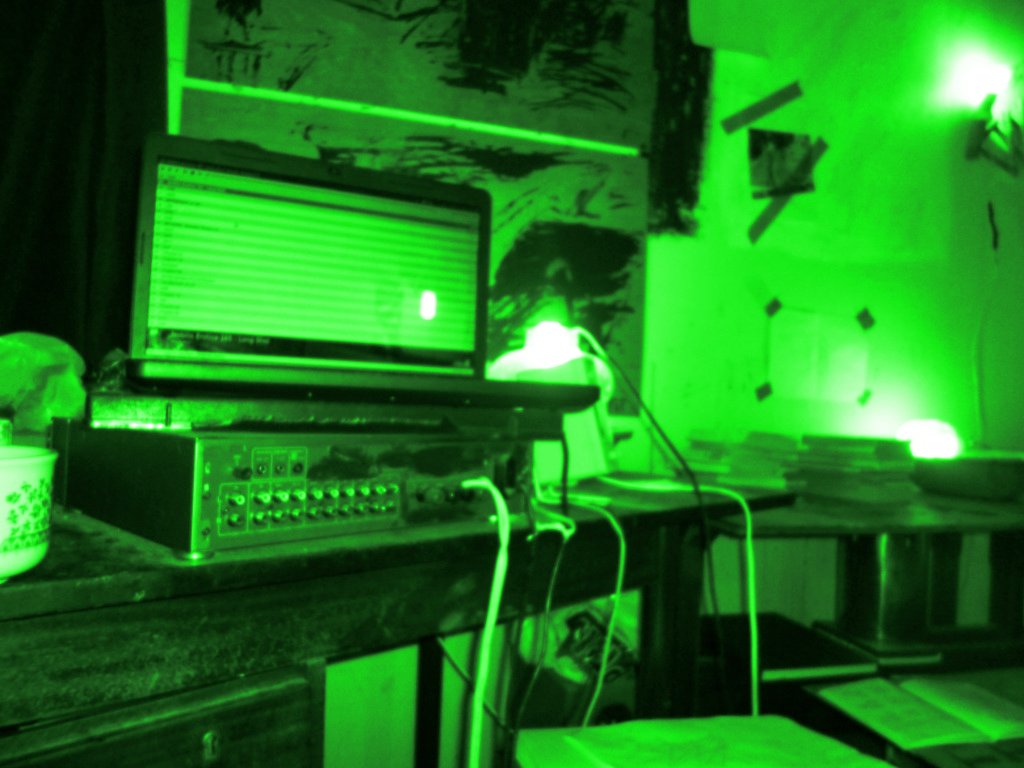
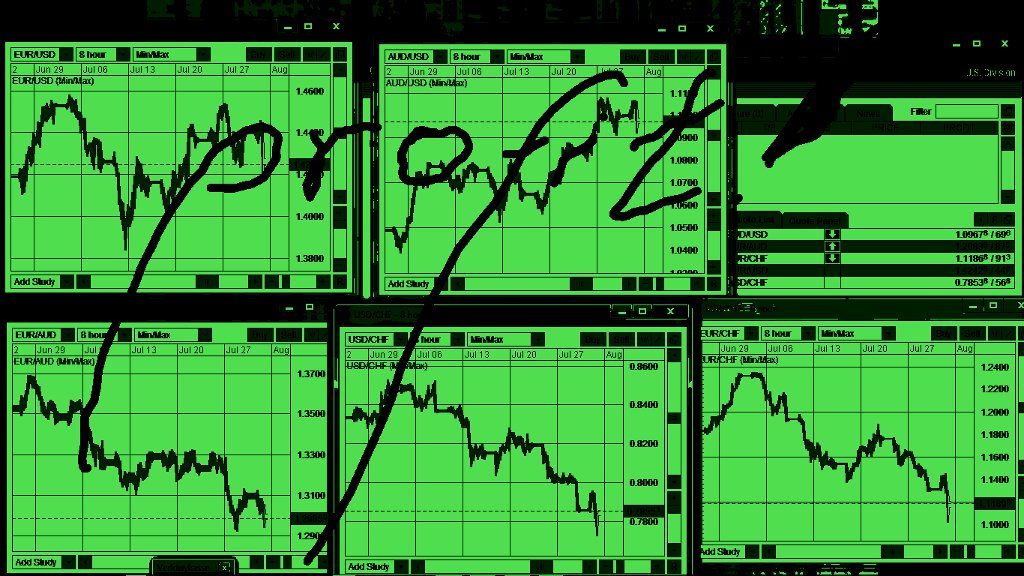 THE FUTURE OF CURRENCY TRADING
-- An attempt to teach it to beginners, and to make a
worthwhile prediction
[[[Note: While these notes are written at a later stage
than the front page yoga4d.org CT notes, and so are
founded on more real experience with real money, there
is an important addition labelled 'important addition'
after the two parts of this intro to CT.]]]
In healthy economical circumstances, if you swap
something like one hundred aussie dollars, AUD$100
into e.g. swiss franc, also denoted CHF, and then
swap it back, you get approximately the same amount
back, minus the exchange fees -- which are big percentages
when it comes to paper cash. Let us imagine a situation
where you have hardly any exchange fees to speak of.
That is realistic -- you get it with most currency
trading (CT, as I call it) institutions for popular
currencies.
There is a little bit difference in price each time
which means that a fraction of a percentage goes to the
broker, or bank, or whatever the institution is called.
A bank is more heavily regulated and must live up to a
number of state-set criterions. Banks are sometimes
offering CT but brokers are typically the way in today's
world.
So, in any case, if we disregard that minimalistic fee
a good CT broker charges you, by going AUD => CHF => AUD
you get, if you start with $100, either a little more or
little less than $100 after this piece of work, which we
broadly can call a 'CT transaction'.
In healthy economical circumstances, it is typically
so that after a couple of minutes, the changes are quite
minute. After a couple of days, however, it may be that
the changes are starting to get a bit bigger.
Imagine that you start with $1000 and that after some
days you have either $984.2 or $1015.8. Okay, that's
maybe not so much of increase of your prosperity, but
if you were able to get a AVERAGE PROFIT of $15.8 out
of your $1000 on the average something like 20 weeks
pr year (this average meaning that we calculate in
losses so as to nullify a certain amount of the profit
CTs), we are talking 20 times 15.8 or $316 in increase,
meaning that by this simplest, purest currency trading
transaction entirely without any much "leverage"
(which is to get a temporary loan from the broker to
scale up the income or scale up the loss -- remember it
can go both ways) -- by this very simple, pure CT action,
we are talking of possibilities of getting an increase
of $1000 to $1316 during 12 months. This is to say,
above 30 percent gain. This 30 percent gain would also
be 30 percent if you traded with $10,000 or $100,000.
Take into consideration that intuitive action is not
a matter of hours of contemplation and hard work.
Doing a CT can take very much less than five minutes.
It is zen. You log in, click it, look at the sum
-- that it fits with what you intuitively worked out,
and with the analysis of how much of your account
you should trade with these days, and that the pair
selected is the right one and that you are doing the
'buy' or 'sell' that you wanted and not the other
way around -- and then you click the accept button.
Then you check once in a while the prices in the
upcoming days. When it is time to reap in the cash
to your account, or cut the losses, you log in and
click on the completion of the trade button. Then
your CT account will EITHER have more money in it
OR less, and this is the whole CT transaction
completed. If you like, you can then order a motion
of some of the money to a regular bank account, from
which you can cash it out. This is perhaps done
professionally though only seasonwise, and then only
after you have had some seasons doing the a bit of
clumsy stuff before you straightened the dance steps
out.
I'd say a week gets more fun for KNOWING that you
are doing CT in it. It is an enhanced state of
awareness and I'm not kidding.
Now, the first thing any earthian 20-century bound
stock trader would rush to tell you is that it is simply
no way to tell whatever way a currency goes, relative
to another.
But a safe bet as for stocks is that they ain't gonna
go much up except in some phases -- just look at the
averages over the past couple of years -- and that it
may be preferrable to stick to gigantic curves
dominating the foundation of the world's trade -- namely
the very value of money units relative to one another --
rather than trying to bet on largerly gossip-driven
stock values.
Also, I would say that it is an item of good luck to
engage in trading which is consistently nondestructive.
All the time the world's exchange of money between the
main money units the world has is vastly greater, in
sum, than the sums you are trading with, you are
ethically like a swimmer relative to the ocean. However
an affluent person can easily wreck a company by buying
most of it, if that person is wrong for the company.
So stock trading is something a wise world will do
fantastically well without. Those who work in a company
are its natural owners, nobody else.
However, trading -- day-trading, week-trading,
minute-trading, or a bit longer -- month-trading -- with
currencies is a fun option for everyone. Done with
surplus money only, one might loose but one might gain,
and it is a way to test one's intuition and a very pure
way at that.
If you have leverage 50 set on a CT account, trade
with a fiftieth part of the sum you have put into it, in
order to nullify the effect of the leverage, if you want
that.
THE FUTURE OF CURRENCY TRADING
-- An attempt to teach it to beginners, and to make a
worthwhile prediction
[[[Note: While these notes are written at a later stage
than the front page yoga4d.org CT notes, and so are
founded on more real experience with real money, there
is an important addition labelled 'important addition'
after the two parts of this intro to CT.]]]
In healthy economical circumstances, if you swap
something like one hundred aussie dollars, AUD$100
into e.g. swiss franc, also denoted CHF, and then
swap it back, you get approximately the same amount
back, minus the exchange fees -- which are big percentages
when it comes to paper cash. Let us imagine a situation
where you have hardly any exchange fees to speak of.
That is realistic -- you get it with most currency
trading (CT, as I call it) institutions for popular
currencies.
There is a little bit difference in price each time
which means that a fraction of a percentage goes to the
broker, or bank, or whatever the institution is called.
A bank is more heavily regulated and must live up to a
number of state-set criterions. Banks are sometimes
offering CT but brokers are typically the way in today's
world.
So, in any case, if we disregard that minimalistic fee
a good CT broker charges you, by going AUD => CHF => AUD
you get, if you start with $100, either a little more or
little less than $100 after this piece of work, which we
broadly can call a 'CT transaction'.
In healthy economical circumstances, it is typically
so that after a couple of minutes, the changes are quite
minute. After a couple of days, however, it may be that
the changes are starting to get a bit bigger.
Imagine that you start with $1000 and that after some
days you have either $984.2 or $1015.8. Okay, that's
maybe not so much of increase of your prosperity, but
if you were able to get a AVERAGE PROFIT of $15.8 out
of your $1000 on the average something like 20 weeks
pr year (this average meaning that we calculate in
losses so as to nullify a certain amount of the profit
CTs), we are talking 20 times 15.8 or $316 in increase,
meaning that by this simplest, purest currency trading
transaction entirely without any much "leverage"
(which is to get a temporary loan from the broker to
scale up the income or scale up the loss -- remember it
can go both ways) -- by this very simple, pure CT action,
we are talking of possibilities of getting an increase
of $1000 to $1316 during 12 months. This is to say,
above 30 percent gain. This 30 percent gain would also
be 30 percent if you traded with $10,000 or $100,000.
Take into consideration that intuitive action is not
a matter of hours of contemplation and hard work.
Doing a CT can take very much less than five minutes.
It is zen. You log in, click it, look at the sum
-- that it fits with what you intuitively worked out,
and with the analysis of how much of your account
you should trade with these days, and that the pair
selected is the right one and that you are doing the
'buy' or 'sell' that you wanted and not the other
way around -- and then you click the accept button.
Then you check once in a while the prices in the
upcoming days. When it is time to reap in the cash
to your account, or cut the losses, you log in and
click on the completion of the trade button. Then
your CT account will EITHER have more money in it
OR less, and this is the whole CT transaction
completed. If you like, you can then order a motion
of some of the money to a regular bank account, from
which you can cash it out. This is perhaps done
professionally though only seasonwise, and then only
after you have had some seasons doing the a bit of
clumsy stuff before you straightened the dance steps
out.
I'd say a week gets more fun for KNOWING that you
are doing CT in it. It is an enhanced state of
awareness and I'm not kidding.
Now, the first thing any earthian 20-century bound
stock trader would rush to tell you is that it is simply
no way to tell whatever way a currency goes, relative
to another.
But a safe bet as for stocks is that they ain't gonna
go much up except in some phases -- just look at the
averages over the past couple of years -- and that it
may be preferrable to stick to gigantic curves
dominating the foundation of the world's trade -- namely
the very value of money units relative to one another --
rather than trying to bet on largerly gossip-driven
stock values.
Also, I would say that it is an item of good luck to
engage in trading which is consistently nondestructive.
All the time the world's exchange of money between the
main money units the world has is vastly greater, in
sum, than the sums you are trading with, you are
ethically like a swimmer relative to the ocean. However
an affluent person can easily wreck a company by buying
most of it, if that person is wrong for the company.
So stock trading is something a wise world will do
fantastically well without. Those who work in a company
are its natural owners, nobody else.
However, trading -- day-trading, week-trading,
minute-trading, or a bit longer -- month-trading -- with
currencies is a fun option for everyone. Done with
surplus money only, one might loose but one might gain,
and it is a way to test one's intuition and a very pure
way at that.
If you have leverage 50 set on a CT account, trade
with a fiftieth part of the sum you have put into it, in
order to nullify the effect of the leverage, if you want
that.
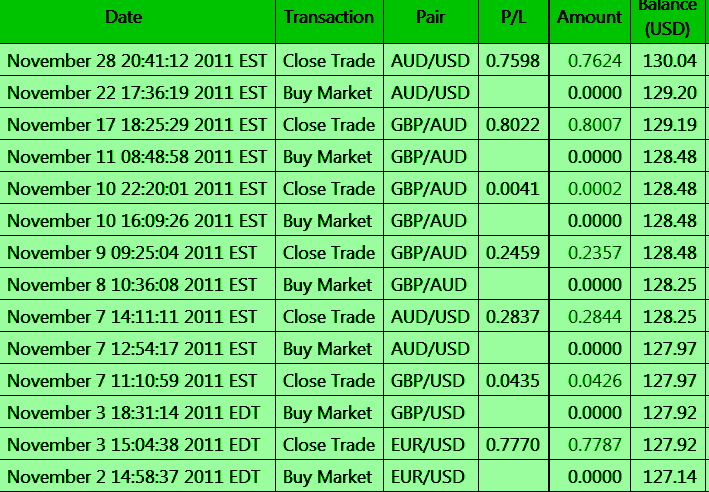 However much you trade with, the quest is to find a
balance between how much is in your account and how much
of it you trade with so that you can handle
fluctuations. Perhaps your intuition that such and such
going to happen entirely right -- say, on the scale of
five days. You may be so right it would do your CT
account good to go for the bet. If you bet that CHF is
going up as seen from the foundation of AUD dollars,
then you are doing a kind of AUD=>CHF movement, which
is called 'doing a buy or a long bet on CHFAUD pair'
or 'doing a sell or a short bet on AUDCHF pair'. For many
practical CT purposes you can treat them as symmetrical.
You have to remember that "buy"="long" whereas "sell"=
"short" and essentially regard them as mere conventions
(whereas in stock trading, they aren't as symmetrical).
When you see CHFAUD you see the price of CHF written in
terms of AUD. If CHFAUD goes up, then buy it. If CHFAUD
goes the other way, then sell it. So, put simply, the
digital question, you must put to your intuition, is
whether the ideal thing is to go such as CHF => AUD or
AUD => CHF. One or the other way.
There is a slight extra margin (called 'swap') which
is noticable when trade positions are kept open for a
good while and which relates to the swinging of the
currency graphs.
To memorise such peculiar economical jargon is only
possible by staring it it, playing with it, writing it
backwards and forwards and making your own mnemonics,
you way of dramatising it, perhaps by sexual metaphors.
This is best done in connection with an actual trading
program that uses imagined, or virtual money, a
so-called 'praxis account' or 'game account'. This
account may however use actual prices. These prices
take a holiday when banks have a holiday.
Learning all this may seem to some to be boring. But
attempt to realise it is the start of a journey to be
able to magically create movement in the direction
of profit out of nothing but a pure sum as foundation
money.
Now, back to the intuition aspect, and fluctuations.
Think of flirting with strangers at a cafe or flirting
with an aim to sexual seduction direct at a fiest. You
do something and it has an intent towards, say, a beauty
profit, a social profit, a sexual profit. If you have
any stamina and self-confidence at all, you pick up the
signs but you are not getting at once all goomy and
desolate even if it doesn't look like working at all.
Rather, you have the smile and dance within and remember
that anything that comes too easily, may not come as
well when it does come. It is about mutuality, and
timing -- duration -- and also, naturally, teasing. To
indicate one thing while intending, maybe, another
thing.
If you have made what you are comfortable about as a
good bet, then in healthy economical circumstances and
with a scaling of the trade sum relative to how much you
have and how much leverage, if any, which is set on your
CT account, then you can allow the curves to sway.
Here, graphical curves are very helpful indeed. Also,
instead of trying to memorise the exact price you were
trading on, look for the first four digits of where you
want, in rounded figures, the price of the trading pair
to go. For one combination of currencies you may want it
to 'go nearer to, or even above, 1500'. Perhaps eg you
did a trading of the 'buy' type on a pair which had a
price something like 1.419. Then you want to cash it in,
submit a completition on the trade, when it is nearer
1.5 and less near 1.3. But 1.5 sounds so petty. Let us
rather say nearer 1500. There are other ways of speaking
about it -- points, pips, and such, but these are not
entirely orderly, as they look like percentages while
being something entirely different and they tell not the
full story of the price development in terms of
percentages at all. (For instance, the difference
between 1.100 and 1.000 is 'one hundred points' but so is
the difference between 8.100 and 8.000 but these 'points'
in this case are vastly different in terms of percentage.
{ercentage is what matters when it comes to making a
profit on your account with currency trading. So never
indulge in talking about such 'points' connected to CT.)
Just how much you can trade with is of great
importance. There may be a rule set by state or the
broker as to automatically closing your trade if it has
an overall loss of more than n (5?) percent. But if you
are about to earn by waiting out a negative fluctuation,
you certainly don't want to have it autoclosed on a bad
price! And so you must scale the amount you trade with
so that you can handle TYPICAL fluctuations really well.
But what, indeed, is a typical fluctuation? That is
where 'healthy economical circumstances' come in -- that
the fluctuations from one week to the next have a bit of
smoothness about them, and that the maximum differences
between prices from one trading minute to the next and
from one week, or so, to the next, are very stable
indeed. In fact, this is the case only when we are
talking currencies that are big and handled by a kind of
dancing dynamics.
In an economical environment where the distinction
from one week to the next as to even the major
currencies are so minute that the $1000 wouldn't
change more than, say, a quarter of a dollar after
a week, then you would naturally ask the broker to
do leverage: which is to say, you are willing to
risk that the loss is n times as high, because the
profit also gets n times as high -- typically one
shouldn't go higher than 50 and even that is very
much -- and because the fluctuations from one week
to the next are so extremely minute compared to the
full hundred percent of money on your account that
even with a multiplication factor, you will still
easilly handle negative fluctuations (e.g., those
that go in the 'long' direction when you have just
done a 'short trade' or those that go in the 'short'
direction when you have just done a 'long trade').
So leverage is to increase profit-potential but
also risk-possibility. The wise person is willing
to earn one percent during a week instead of
ten percent during the same week because one
doesn't want to risk an auto-close of the trade
at a negative temporary five percent.
Then, the prediction. I have already hinted
at it. I write this in an economical climate where
all the financial news agencies are regularly
reporting turmoil, turmoil, turmoil, and every
single CT for week after week after week I have
done in the same period has been profit.
The prediction is this: in every millenia in the
future there will be CT, there will be currency pairs
involving some four richly beautiful, greatly used
currencies -- used in all senses, for all sorts of
private enterprises, private buying, and so on, with
all sorts of normal transactions for the purpose of
buying and selling wares and services. These currencies
will IN ADDITION be used for the benefit of individuals
doing a moderate CT trading also as a fine-tuning of
their intuitive capacities.
CT also teaches human beings that their intuition
is relative: that their understanding is never
absolute. No human being can do CT without having
a regular amount of loss-CTs. The challenge, which
is entirely realistic, is to have a greater amount
of gain-CTs than loss-CTs, and that the sizes of
these gain-CTs are comparative to the less-CTs so
that the overall account will show a gain, from
month to month. It is EXACTLY the fact that intuition
is so superbly and clearly called for in the land of
lovely CT work that makes it such a laboratory for,
indeed, also enlightenment, and freedom from overly
much identification with the results of one's
action. The very participation in the world of
monetary energies is itself a peak of natural being.
This, then, belongs to ALL the future. CT, certainly,
is what any righteous person must consider as much
blessed as wild beaches and dancing and flirting
and sex and other things involving rich fluctuations.
GOOD LUCK WITH CT!!!
Note added ca. one month later: What we can define as
"rapid CT" is the principle above engaged on a real
strong leverage like 50 and on the premise of trading
within something like half an hour. This is only
advisable to those who have a particularly well-tuned
intuition and then only with the most intense care
and pre-meditation possible, knowing what one is
doing and being already expert at this. When I did this
on the above sum, the increases were, indeed, some
thirty or fifty times bigger. Remember that when
you get an income to your account, the next time
you trade, the percentage earned will be a percentage
of this new sum, meaning that in a sense it is not
entirely impossible with exponential income. A small
sum to begin with -- after a period of learning over
some seasons, all the time with small sums, can then
in principle give vast wealth -- whatever that means,
within the context and regulations of our present
society.
However much you trade with, the quest is to find a
balance between how much is in your account and how much
of it you trade with so that you can handle
fluctuations. Perhaps your intuition that such and such
going to happen entirely right -- say, on the scale of
five days. You may be so right it would do your CT
account good to go for the bet. If you bet that CHF is
going up as seen from the foundation of AUD dollars,
then you are doing a kind of AUD=>CHF movement, which
is called 'doing a buy or a long bet on CHFAUD pair'
or 'doing a sell or a short bet on AUDCHF pair'. For many
practical CT purposes you can treat them as symmetrical.
You have to remember that "buy"="long" whereas "sell"=
"short" and essentially regard them as mere conventions
(whereas in stock trading, they aren't as symmetrical).
When you see CHFAUD you see the price of CHF written in
terms of AUD. If CHFAUD goes up, then buy it. If CHFAUD
goes the other way, then sell it. So, put simply, the
digital question, you must put to your intuition, is
whether the ideal thing is to go such as CHF => AUD or
AUD => CHF. One or the other way.
There is a slight extra margin (called 'swap') which
is noticable when trade positions are kept open for a
good while and which relates to the swinging of the
currency graphs.
To memorise such peculiar economical jargon is only
possible by staring it it, playing with it, writing it
backwards and forwards and making your own mnemonics,
you way of dramatising it, perhaps by sexual metaphors.
This is best done in connection with an actual trading
program that uses imagined, or virtual money, a
so-called 'praxis account' or 'game account'. This
account may however use actual prices. These prices
take a holiday when banks have a holiday.
Learning all this may seem to some to be boring. But
attempt to realise it is the start of a journey to be
able to magically create movement in the direction
of profit out of nothing but a pure sum as foundation
money.
Now, back to the intuition aspect, and fluctuations.
Think of flirting with strangers at a cafe or flirting
with an aim to sexual seduction direct at a fiest. You
do something and it has an intent towards, say, a beauty
profit, a social profit, a sexual profit. If you have
any stamina and self-confidence at all, you pick up the
signs but you are not getting at once all goomy and
desolate even if it doesn't look like working at all.
Rather, you have the smile and dance within and remember
that anything that comes too easily, may not come as
well when it does come. It is about mutuality, and
timing -- duration -- and also, naturally, teasing. To
indicate one thing while intending, maybe, another
thing.
If you have made what you are comfortable about as a
good bet, then in healthy economical circumstances and
with a scaling of the trade sum relative to how much you
have and how much leverage, if any, which is set on your
CT account, then you can allow the curves to sway.
Here, graphical curves are very helpful indeed. Also,
instead of trying to memorise the exact price you were
trading on, look for the first four digits of where you
want, in rounded figures, the price of the trading pair
to go. For one combination of currencies you may want it
to 'go nearer to, or even above, 1500'. Perhaps eg you
did a trading of the 'buy' type on a pair which had a
price something like 1.419. Then you want to cash it in,
submit a completition on the trade, when it is nearer
1.5 and less near 1.3. But 1.5 sounds so petty. Let us
rather say nearer 1500. There are other ways of speaking
about it -- points, pips, and such, but these are not
entirely orderly, as they look like percentages while
being something entirely different and they tell not the
full story of the price development in terms of
percentages at all. (For instance, the difference
between 1.100 and 1.000 is 'one hundred points' but so is
the difference between 8.100 and 8.000 but these 'points'
in this case are vastly different in terms of percentage.
{ercentage is what matters when it comes to making a
profit on your account with currency trading. So never
indulge in talking about such 'points' connected to CT.)
Just how much you can trade with is of great
importance. There may be a rule set by state or the
broker as to automatically closing your trade if it has
an overall loss of more than n (5?) percent. But if you
are about to earn by waiting out a negative fluctuation,
you certainly don't want to have it autoclosed on a bad
price! And so you must scale the amount you trade with
so that you can handle TYPICAL fluctuations really well.
But what, indeed, is a typical fluctuation? That is
where 'healthy economical circumstances' come in -- that
the fluctuations from one week to the next have a bit of
smoothness about them, and that the maximum differences
between prices from one trading minute to the next and
from one week, or so, to the next, are very stable
indeed. In fact, this is the case only when we are
talking currencies that are big and handled by a kind of
dancing dynamics.
In an economical environment where the distinction
from one week to the next as to even the major
currencies are so minute that the $1000 wouldn't
change more than, say, a quarter of a dollar after
a week, then you would naturally ask the broker to
do leverage: which is to say, you are willing to
risk that the loss is n times as high, because the
profit also gets n times as high -- typically one
shouldn't go higher than 50 and even that is very
much -- and because the fluctuations from one week
to the next are so extremely minute compared to the
full hundred percent of money on your account that
even with a multiplication factor, you will still
easilly handle negative fluctuations (e.g., those
that go in the 'long' direction when you have just
done a 'short trade' or those that go in the 'short'
direction when you have just done a 'long trade').
So leverage is to increase profit-potential but
also risk-possibility. The wise person is willing
to earn one percent during a week instead of
ten percent during the same week because one
doesn't want to risk an auto-close of the trade
at a negative temporary five percent.
Then, the prediction. I have already hinted
at it. I write this in an economical climate where
all the financial news agencies are regularly
reporting turmoil, turmoil, turmoil, and every
single CT for week after week after week I have
done in the same period has been profit.
The prediction is this: in every millenia in the
future there will be CT, there will be currency pairs
involving some four richly beautiful, greatly used
currencies -- used in all senses, for all sorts of
private enterprises, private buying, and so on, with
all sorts of normal transactions for the purpose of
buying and selling wares and services. These currencies
will IN ADDITION be used for the benefit of individuals
doing a moderate CT trading also as a fine-tuning of
their intuitive capacities.
CT also teaches human beings that their intuition
is relative: that their understanding is never
absolute. No human being can do CT without having
a regular amount of loss-CTs. The challenge, which
is entirely realistic, is to have a greater amount
of gain-CTs than loss-CTs, and that the sizes of
these gain-CTs are comparative to the less-CTs so
that the overall account will show a gain, from
month to month. It is EXACTLY the fact that intuition
is so superbly and clearly called for in the land of
lovely CT work that makes it such a laboratory for,
indeed, also enlightenment, and freedom from overly
much identification with the results of one's
action. The very participation in the world of
monetary energies is itself a peak of natural being.
This, then, belongs to ALL the future. CT, certainly,
is what any righteous person must consider as much
blessed as wild beaches and dancing and flirting
and sex and other things involving rich fluctuations.
GOOD LUCK WITH CT!!!
Note added ca. one month later: What we can define as
"rapid CT" is the principle above engaged on a real
strong leverage like 50 and on the premise of trading
within something like half an hour. This is only
advisable to those who have a particularly well-tuned
intuition and then only with the most intense care
and pre-meditation possible, knowing what one is
doing and being already expert at this. When I did this
on the above sum, the increases were, indeed, some
thirty or fifty times bigger. Remember that when
you get an income to your account, the next time
you trade, the percentage earned will be a percentage
of this new sum, meaning that in a sense it is not
entirely impossible with exponential income. A small
sum to begin with -- after a period of learning over
some seasons, all the time with small sums, can then
in principle give vast wealth -- whatever that means,
within the context and regulations of our present
society.
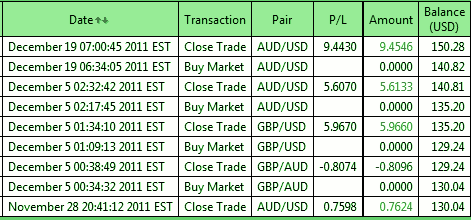 This and the similar matrix higher above are actual
account summaries, unredacted, from Aristo Tacoma's
experimentative CT account with a broker. To select
a proper broker, you must find one that is intuitive-
intellectually satisfying for your effortless
needs in honest realtime price-flows: be aware that
conscious or unintended 'noise' may creep into a
broker's approach to currency day- and hour-trading
in a variety of ways, -- some are very cunning. You
have got to sleep on it, and see the statistics over
how you are doing it -- not just with a practise
account, but also with real money, where the prices
do matter (that the prices are the same in the practise
and real account is only a bit of the required proof
to say of a broker that the broker represents an
entirely honest business corporation as for CT).
IMPORTANT ADDITION to the above currency trading info
=====================================================
With yet more experience -- fortunately, consistently
positive -- with CT or what some call FX or FOREX --
day-trading with fluctuations of currency pairs in
order to increase the amount of money you have --
I have some important additions. These are founded
on a combination of analysis and intuition as well
as on coherent luck, earning on the average quite
significantly, month by month:
[1] In the above, not all types of programs and
trading approaches were taken into consideration
when speaking of leverage relative to what you trade
with.
In a typical approach (similar to the MT4 program,
which runs well in linux Wine if you install it as
indicated elsewhere on the page), which I have got
much more experience with now, the relationship
between leverage and what you trade with is simply
this: the leverage multiplied by the amount dollars
on your account sets the upper limit for what
you can trade with. Since MT4 has an orientation
towards "lots", where 1 standard lot (in the biggest
account) is 100.000 of the first of the two in a
currency pair XXXYYY, and its smallest size for
trading is 0.01, it means that with leverage 50,
you should have around $250 as a minimum to trade
with a XXXYYY pair with the XXX circa equal to US
dollars (but better start with $10.000 when you
know your way around and have consistently had
luck with demonstration account and small sum
account also), in order to be free not only to
put in a trade bet, but also have some extra on
the account when it is done.
You MUST have enough extra on the account that
you can stand some sligthly stormy winds without
having the account tip too much towards zero or
anything like that.
[2] After experience, my absolutely clear
recommendation is that you use no app and no applet
and no script-oriented approach but ONLY an
installed application -- a real program -- on your
own computer. This is enormously important and
critical for your own intuition to have a chance
to build up resonance with the whole.
It can be MT performed under Wine. Wine is merely
an access port from Linux to Windows programs, not
really any emulator. And so the programs run in
a very clean way, -- suitable for intuition also.
[3] If possible to adjust colors, set it to green
curves ('candelight' type or any type that shows
broader lines when the ask/bid price difference is
big) against black as this gives a peak of luck.
[4] If possible to adjust positions of graphs,
align all of the pairs that play on the currencies
of your choice so that the program shows all of
them at the same time rather than one by one,
as soon as you start up the program -- but
not necessarily strictly ordered, for you want to
have a sense of the arrythmic into it perhaps.
If you have good security on your computer, let
the program store the user id and the password,
so it goes straight in. This enables resonance-
building for your intuition. Remember that there is
always a necessary component of luck in any good
trading and stay out from using copyist strategies.
[5] Do the rapid CT like horse race betting:
You plug in your bet and sixty minutes, plus minus
one minute, you close the bet. You only do this
on days when your intuition and analysis indicate
that there is not stormy weather as for the graphs,
but you do it from within, not really looking at
the graphs while making up your mind -- this you
do before you even start up the program, looking
only at the abstract relationships eg on paper.
You do this without any auto-adjustment of the
trade.
[6] Put in one or at most two trades each day
within the three hour period that is most active
as for currency trading on the planet, and only
on days with normal full business activity.
[7] Don't sneak-look at the trade. Don't even
look at the value before you close it. Your
intuition needs a fixed parameter -- a fixed method
of trading -- in order to help you.
[8] Trade with about four times the amount on
your account. If you have 50000 then four times
that is 2 lots. This presupposes what we can call
a normal currency trading fluctuation level. If
the fluctuations are bigger, use a smaller size.
And learn to relish in the joy when you have done
a bet that worked out right, and be relaxed and
cool about it when it didn't work out -- looking
then to the month's average instead. This joy,
this self-congratulation, acts as a magnet for
doing right decisions where you can have as it
were a premonition of the joy you come into.
And, one more thing: BEGIN the session by a
meditation and prayer where you not only affirm
noble generous deeds you want to spend the earnings
on, but also that you clearly to yourself affirm
the attention of big ct profits, blessing rapid ct.
Psychologically, you will then be able to gather
your intuitive powers connected to the relevant
end-goal, rather than be frustrated or focussed too
much on the pathway to the relevant end-goal.
The pathway involves the dance of proper action
in a good mood. If you wander in your mind and
find that the meditation is not able to come up
with its usual strength and coherence you will take
that as a sign that the curves are too fluctuating
(or too little fluctuating) to allow suitable
trading just then. Not doing a trade is also part
of trading, when it is a decision that comes from
within, as instinct or hypnosis GOOD LUCK!!!! !
FINDING THE RIGHT CURRENCY TRADING BROKER FOR YOU
AND AVOIDING COMPANIES THAT ARE FRAUDULENT
Some people of a criminal bent can engage in any
type of business, obviously, and they can be very
clever, up to a point, as to concealing what they
are up to. It is your own responsibility that
you make the decisions that are right for you.
Some points along the lines of 'rules of thumb'
that we offer here are these:
* Is the company saying that they have been
offered medals, first prices and awards by
prestigious institutions and journals? Well,
then, EXPLORE. Is it really so? Is the institution
or journal really existing? Is it really
independent? Some companies sell awards, some
companies make fake videos of 'being awarded
such-and-such'. Some companies even make fake
journals to give themselves words towards good
credit.
* Is the company owned in a big and robust and
wealthy and democratic company, and is it so that
the company, also its holding company, must answer
to laws in such a big, robust, wealthy and
democratic country? Find out; companies are
rarely better than the judicial aspect of a country.
Companies are rarely more stable that the average
stability of the country. Nondemocracies are
nearly always based on fakes -- that doesn't
mean that every company in a nondemocracy is a
fake, but on the average, it easily becomes so,
for even the most robust of people may get
overwhelmed by the corruption in a country.
* Is the company offering an enormous
variety of trading alternatives and platforms?
Well, then, why? How come it is really possible
to do so, and at the same time follow up all
these approaches with the maximum possible
integrity?
* Is the company bad at emails then drop them
no matter how convincing they sound at the phone
or over the textual chatline or through a social
website. For emails are stronger when it comes
to presenting a case, an argument relative to
the company years later. You are interested in
earning considerable sums and that must be done
on the foundation that the company is a high-
integrity company that has the perhaps modest
but real ambition to earn money WITH you, rather
than OFF you. But then you must be able to build
a trusting relationship by means of email before
you even become a customer, where you save every
email in an archive. Chatlines may be operated
by other companies that merely access their FAQ's.
Chatlines may not be valid documentation for a
conversation with the company, where the company
promised something. Chatlines may provide useful
information about how big the leverage is set to
as a standard, and such, but the person operating
the chatline may have no powers at all to do
anything concretely than affect your business with
the company. Chatlines are merely informative.
But even if you are able to carry out a good
email conversation with the company, don't get
hypnotised about it. After all, clever people
with a cunning mind and a lot of starting money
behind them can hire an email-answering staff
that knows nothing of the deeper motives of the
company.
* Is the owner or owners of the company on
an egotrip, boasting over their own prominence?
Unlikely, then, that the company has high
integrity in its software.
* Is the company ONLY willing to use own
software, or has it enrolled in the MT4 db also?
If ONLY own software, perhaps this software is
made so as to tweak money from rich customers
at crucial moments by delaying sell/buy completions,
or by subtle, not-easily-seen shifting of currency
values.
* Do the company connect only to other good
companies on their website, or are all their
comrades a sleezy group?
* Are they profoundly in favour of credit cards?
No high-integrity company is profoundly in favour
of credit cards. They usually must collaborate
with them. But they must ALWAYS allow bank wire and
international money transfer by Swift bank wire.
* Is the company website speaking more about your
'depositing' of money with them, than your 'withdrawal'
of money from them? Is the company speaking more
about how clever they are, and how fun it is to
trade, rather than how significant it is that YOU
earn money, you yourself?
* Is the company asking you insulting questions
when they want information from you concerning
setting up an account? Suppose, for instance, a
company asks you, 'What is your net worth?' THAT
is insulting, in anyone's language, because it is
coupling you-as-person with entirely monetary
terms. Rather, if they don't have a sensitivity
along the lines of asking instead, 'Could you
indicate (optionally) what your net income was
last year and/or what your net fortune is?',
then considering seriously ditching them.
* Is the company logo ugly? Is the company name
evoking distasteful associations? Do you get a
feeling that there is not really a person behind
the emails answering you, but rather a wall of
fear and uncertainty and premade speeches, with
strange or fake names? Do you have to wait a
long time for each email? Are there many different
email addresses with no responsibility by the
company to answer them all? Do they call you
without asking for permission, in writing, to
call you? DON'T BE FOOLED, PLEASE.
Currency trading, and rapid CT as I call it, in
the form described above, is a wonderful opportunity
for earning money, possibly much money given a large
startup sum, given hard work, very hard work indeed.
You must find a partner company, not a company that
works against you. You must try their virtual account
for three months and print out the trading statistics
and watch over it. You must PROVE to yourself that
at least with virtual money you can make big bucks.
Then you start moderately, opening a live account,
and your luck is supposed to carry over. Only after
such a very careful start, increase the foundational
amount that you trade with, in successive steps.
Regularly do some withdrawal of money, to keep the
bank wire lines hot in both directions, and be
familiar with the process, the fees, this and that.
Be aware of possible changes in the company --
they may get bought by another company with an
entirely different approach, or they may get
a single powerful bad programmer where before
there were only good programmers, or the leader
may decline in integrity and start skewing things.
You must have the right intuition about the
company in order to have right intuitions about
currencies.
Added article here:
MORE ABOUT HOW TO SELECT A GOOD CURRENCY TRADING BROKER
-- Navigating around in the vast wilderness of offers of
all kinds, here's some advice which could make sense
* Added note: be sure to check, and doublecheck, that your
preferred method of transferring money both TO and also
FROM the broker indeed is accepted by the broker company.
They may be willing to accept money in more ways than
they may be willing to part with them! Check the criterions,
the fees, what limits there are, if any, to the sums that
can be sent -- and withdrawn. And check the transfer both
ways before you get into dealing with bigger sums.
* Added note: most short-term currency trading,
over shorter term than let's say two or three days, is
highly dependent on the pricing the company gives you --
the distinction between the 'sell' and 'buy' prices of
currency pairs. This pricing varies between account
types, between broker companies, and indeed also between
times of the day and week. Trade at high-trade hours
to get the best prices, and watch out for sudden large
jumps between 'buy' and 'sell' price for some pairs
before you do anything with them.
* Added note: some trading servers simply
don't work at some times during the week for some
companies, and they may not even acknowledge this:
do check out also such things before you get serious
with currency trading. In few other domains of net
interaction is full 24-7 reponse time for the machinery
of the currency servers of such key significance. If
the server is not up when you wish to finish a trade,
that is equivalent to a possible loss, and the company
ought to explain why the server isn't up and what it
is doing to improve the uptime records for the future.
If they don't feel that they have the capacity to
provide such info, then you may want to pick another
broker.
* Added note: Even if you have picked a broker that is good,
they may get desperate about making money and that may make
them corrupt at some later stage: you must carefully
scrutinize the broker company each season and judge
whether to go to another. Be lightfooted. The smallest
companies as well as the biggest ones may be made of
crooks, and there has been many fines also to big banks
for their manipulation of benchmarks of currencies
behind the scenes when they appear to do humble servicing
for for such as big state funds.
My early ct essay begins here:
******************************
For those interested in getting going with currency trading
or CT (or FOREX as it is very often called, bringing together
the words FOReign and EXchange), esp. currency trading of a
relatively short-term kind -- minutes,hours, days -- there's
a lot of things to learn, and a lot of background political
and general financial information to gauge, and then in
addition intuition must be the final hand in affirming what
trades you must do.
The foundation, in practical terms, is that you have found
a service offering currency trading that you are at ease
with, and which works without problems on the computers you
typically use.
(Elsewhere on this economy column -- yoga6d.org/economy.htm
-- there are other notes on the same theme. This is an update,
with some additional notes which may be of value.)
The notion of a 'broker' is that most big banks that do
offer currency trading rather want to do it with great stacks
of cash such as billions, so that to get going with sums of
mere millions ;) or even a mere couple of hundred of dollars
we would want to go THROUGH a company that itself is a client
of an interbank firm.
The notion of 'spreads' (and an associated concept called
'pips') is essentially that of a way for a broker to earn
money on each individual trades you do, in a way that is
scaled naturally to the size of money you trade with. You
put in a bet, say, that USD relative to some other currency
is going to go a bit up, and you assert a leverage, say,
of fifty or a hundred. That means that the little bit
difference of USD value will be multiplied by a fifty or
a hundred by a temporary implicit loan given to you by the
broker backed up by the norms of the relative stability of
the overall currency fluctuations, fluctations even when
multiplied by such a factor of fifty will be well within the
capacity of your account with them can handle no matter which
way it goes. To see the notion of 'spreads', imagine that
you put in a bet on such a currency pair and at once closed
that trade, finished it, got out of it. The spread is then
the difference between the 'buy' of that pair and the
'sell' of that pair, a minute percentage. If you trade with
ten thousand dollars, it is ten times more profit to the
broker than if you trade with a thousand dollars, because
of this margin.
That is to say, this is the ideal, good, noble case, what
we want in the situation of what we call Honesty in Business.
We want the broker to earn money by such relatively
fixed spreads, and optionally by trading alongside with you
if you have proven a remarkable person in typically on
betting on winning horses. Here, you may know that there is
a concept called Straight Through Processing, or STP.
<<[..] STP brokers makes their profit only through the spreads
that they provide. [..] Generally, STP brokers never trade
against their clients and therefore they add small pips to
the spread quote. All the orders are then routed through
liquidity providers as per the original spread quote provided
by those providers while STP brokers make money from the extra
money that they earn as markups. [..] STP brokers are good
because they send their clients order directly from clients
to liquidity providers which are usually banks and financial
companies.>>
[An early quote I found at a ct website once -- hymoofx.com].
You must combine analysis with what you can muster of
intuition, and you must test your luck and regularly check
both on your luck, and on what limits you put to your trading
esp when trading doesn't go as you've hoped, and also be
willing to change to another broker if something isn't sensed
to be right about them, in your gut. See how they are about
email information, also: it's sometimes quite a probe!
(Whereas chatlines may be just a licensed outsider who, at best,
is willing to quote something from a manual.)
MT4 has key components needed to do direct, intuitive trading
on the safest, most stable currencies, and which (consult notes
elsewhere in this economy column) starts relatively ease with
the Wine Windows compatibility layer in eg Xubuntu.org (especially
when one sometimes spend a little time with the Tools/setup
frame, so as to assist the MT4 program to reset itself when
you go from a virtual account to a real account).
Let me say that when you initially get to work with a
virtual account, so as to learn and then see that you have
got the knack of earning money on this, you have to put up,
perhaps, with a level of customer relationship which is
tuned to the fact that currency trading is hugely interesting
for many and that somebody who has signed up for a virtual
account is not yet a real customer. Usually, it is possible
to build a relationship on a personal email-conversation
foundation if you have the patience to connect beyond the
level where the answers are little but copy-and-paste from
the FAQ of the website; but it is to me far more important
that the broker is an honest one that they are answering
every email promptly and deeply. I think the chances that
they are honest and have good integrity are increased if
they are using an independent trading program like MT4
or later versions, and that they do not promise too many
forms of alternative trading approaches but keep it somewhat
simple, like a good bank should do.
Also, let's agree that people who are trying to earn
money selling 'sure ways of success' may in fact be trying
to get success, their first success, by selling just that
recipe -- which may be a recipe that they have never tried
themselves with any success. In contrast, those who really
have great success may have a sense of a bit of protection
as to just how they do it. Also, they do not need that
extra little bit of money it is in selling success
recipies.
As for the question of likelihood as for CT earning, I
regard it as likely that a person who -- as Warren Buffet
(3rd richest on the planet) says -- 'doesn't too easily get
excited about what people says, but who looks at the
facts' -- and where, in the business world, 'temperament
is more important than IQ' -- can indeed earn with CT. But
it requires a great gift of coolness about it, a sureness
about your intuition, and a willingness to be flexible
(perhaps more flexible than I indicated in my earlier
summary with a focus on hour-long trades). I think,
further, intuition works best with a sense of focus on
one currency pair at a time. Rather than putting in a
lot of trades so as to 'spread the risk', I would suggest
trading only with money that definitely can be said to be
surplus money. The reduction of risk is a challenge that
means learning to listen to the heat of gut feeling and
setting petty emotions aside, not to be in a rush. Or,
as Robert Pirsig pointed out: the word GUMPTION has a
lot to it; it should be stated first in all maintenance
manuals that you need GUMPTION before working on the
nuts and bolts.
To complete this note, I'll say it affirmatively:
SUCCESS FOR YOU WITH CT!!!!!
This and the similar matrix higher above are actual
account summaries, unredacted, from Aristo Tacoma's
experimentative CT account with a broker. To select
a proper broker, you must find one that is intuitive-
intellectually satisfying for your effortless
needs in honest realtime price-flows: be aware that
conscious or unintended 'noise' may creep into a
broker's approach to currency day- and hour-trading
in a variety of ways, -- some are very cunning. You
have got to sleep on it, and see the statistics over
how you are doing it -- not just with a practise
account, but also with real money, where the prices
do matter (that the prices are the same in the practise
and real account is only a bit of the required proof
to say of a broker that the broker represents an
entirely honest business corporation as for CT).
IMPORTANT ADDITION to the above currency trading info
=====================================================
With yet more experience -- fortunately, consistently
positive -- with CT or what some call FX or FOREX --
day-trading with fluctuations of currency pairs in
order to increase the amount of money you have --
I have some important additions. These are founded
on a combination of analysis and intuition as well
as on coherent luck, earning on the average quite
significantly, month by month:
[1] In the above, not all types of programs and
trading approaches were taken into consideration
when speaking of leverage relative to what you trade
with.
In a typical approach (similar to the MT4 program,
which runs well in linux Wine if you install it as
indicated elsewhere on the page), which I have got
much more experience with now, the relationship
between leverage and what you trade with is simply
this: the leverage multiplied by the amount dollars
on your account sets the upper limit for what
you can trade with. Since MT4 has an orientation
towards "lots", where 1 standard lot (in the biggest
account) is 100.000 of the first of the two in a
currency pair XXXYYY, and its smallest size for
trading is 0.01, it means that with leverage 50,
you should have around $250 as a minimum to trade
with a XXXYYY pair with the XXX circa equal to US
dollars (but better start with $10.000 when you
know your way around and have consistently had
luck with demonstration account and small sum
account also), in order to be free not only to
put in a trade bet, but also have some extra on
the account when it is done.
You MUST have enough extra on the account that
you can stand some sligthly stormy winds without
having the account tip too much towards zero or
anything like that.
[2] After experience, my absolutely clear
recommendation is that you use no app and no applet
and no script-oriented approach but ONLY an
installed application -- a real program -- on your
own computer. This is enormously important and
critical for your own intuition to have a chance
to build up resonance with the whole.
It can be MT performed under Wine. Wine is merely
an access port from Linux to Windows programs, not
really any emulator. And so the programs run in
a very clean way, -- suitable for intuition also.
[3] If possible to adjust colors, set it to green
curves ('candelight' type or any type that shows
broader lines when the ask/bid price difference is
big) against black as this gives a peak of luck.
[4] If possible to adjust positions of graphs,
align all of the pairs that play on the currencies
of your choice so that the program shows all of
them at the same time rather than one by one,
as soon as you start up the program -- but
not necessarily strictly ordered, for you want to
have a sense of the arrythmic into it perhaps.
If you have good security on your computer, let
the program store the user id and the password,
so it goes straight in. This enables resonance-
building for your intuition. Remember that there is
always a necessary component of luck in any good
trading and stay out from using copyist strategies.
[5] Do the rapid CT like horse race betting:
You plug in your bet and sixty minutes, plus minus
one minute, you close the bet. You only do this
on days when your intuition and analysis indicate
that there is not stormy weather as for the graphs,
but you do it from within, not really looking at
the graphs while making up your mind -- this you
do before you even start up the program, looking
only at the abstract relationships eg on paper.
You do this without any auto-adjustment of the
trade.
[6] Put in one or at most two trades each day
within the three hour period that is most active
as for currency trading on the planet, and only
on days with normal full business activity.
[7] Don't sneak-look at the trade. Don't even
look at the value before you close it. Your
intuition needs a fixed parameter -- a fixed method
of trading -- in order to help you.
[8] Trade with about four times the amount on
your account. If you have 50000 then four times
that is 2 lots. This presupposes what we can call
a normal currency trading fluctuation level. If
the fluctuations are bigger, use a smaller size.
And learn to relish in the joy when you have done
a bet that worked out right, and be relaxed and
cool about it when it didn't work out -- looking
then to the month's average instead. This joy,
this self-congratulation, acts as a magnet for
doing right decisions where you can have as it
were a premonition of the joy you come into.
And, one more thing: BEGIN the session by a
meditation and prayer where you not only affirm
noble generous deeds you want to spend the earnings
on, but also that you clearly to yourself affirm
the attention of big ct profits, blessing rapid ct.
Psychologically, you will then be able to gather
your intuitive powers connected to the relevant
end-goal, rather than be frustrated or focussed too
much on the pathway to the relevant end-goal.
The pathway involves the dance of proper action
in a good mood. If you wander in your mind and
find that the meditation is not able to come up
with its usual strength and coherence you will take
that as a sign that the curves are too fluctuating
(or too little fluctuating) to allow suitable
trading just then. Not doing a trade is also part
of trading, when it is a decision that comes from
within, as instinct or hypnosis GOOD LUCK!!!! !
FINDING THE RIGHT CURRENCY TRADING BROKER FOR YOU
AND AVOIDING COMPANIES THAT ARE FRAUDULENT
Some people of a criminal bent can engage in any
type of business, obviously, and they can be very
clever, up to a point, as to concealing what they
are up to. It is your own responsibility that
you make the decisions that are right for you.
Some points along the lines of 'rules of thumb'
that we offer here are these:
* Is the company saying that they have been
offered medals, first prices and awards by
prestigious institutions and journals? Well,
then, EXPLORE. Is it really so? Is the institution
or journal really existing? Is it really
independent? Some companies sell awards, some
companies make fake videos of 'being awarded
such-and-such'. Some companies even make fake
journals to give themselves words towards good
credit.
* Is the company owned in a big and robust and
wealthy and democratic company, and is it so that
the company, also its holding company, must answer
to laws in such a big, robust, wealthy and
democratic country? Find out; companies are
rarely better than the judicial aspect of a country.
Companies are rarely more stable that the average
stability of the country. Nondemocracies are
nearly always based on fakes -- that doesn't
mean that every company in a nondemocracy is a
fake, but on the average, it easily becomes so,
for even the most robust of people may get
overwhelmed by the corruption in a country.
* Is the company offering an enormous
variety of trading alternatives and platforms?
Well, then, why? How come it is really possible
to do so, and at the same time follow up all
these approaches with the maximum possible
integrity?
* Is the company bad at emails then drop them
no matter how convincing they sound at the phone
or over the textual chatline or through a social
website. For emails are stronger when it comes
to presenting a case, an argument relative to
the company years later. You are interested in
earning considerable sums and that must be done
on the foundation that the company is a high-
integrity company that has the perhaps modest
but real ambition to earn money WITH you, rather
than OFF you. But then you must be able to build
a trusting relationship by means of email before
you even become a customer, where you save every
email in an archive. Chatlines may be operated
by other companies that merely access their FAQ's.
Chatlines may not be valid documentation for a
conversation with the company, where the company
promised something. Chatlines may provide useful
information about how big the leverage is set to
as a standard, and such, but the person operating
the chatline may have no powers at all to do
anything concretely than affect your business with
the company. Chatlines are merely informative.
But even if you are able to carry out a good
email conversation with the company, don't get
hypnotised about it. After all, clever people
with a cunning mind and a lot of starting money
behind them can hire an email-answering staff
that knows nothing of the deeper motives of the
company.
* Is the owner or owners of the company on
an egotrip, boasting over their own prominence?
Unlikely, then, that the company has high
integrity in its software.
* Is the company ONLY willing to use own
software, or has it enrolled in the MT4 db also?
If ONLY own software, perhaps this software is
made so as to tweak money from rich customers
at crucial moments by delaying sell/buy completions,
or by subtle, not-easily-seen shifting of currency
values.
* Do the company connect only to other good
companies on their website, or are all their
comrades a sleezy group?
* Are they profoundly in favour of credit cards?
No high-integrity company is profoundly in favour
of credit cards. They usually must collaborate
with them. But they must ALWAYS allow bank wire and
international money transfer by Swift bank wire.
* Is the company website speaking more about your
'depositing' of money with them, than your 'withdrawal'
of money from them? Is the company speaking more
about how clever they are, and how fun it is to
trade, rather than how significant it is that YOU
earn money, you yourself?
* Is the company asking you insulting questions
when they want information from you concerning
setting up an account? Suppose, for instance, a
company asks you, 'What is your net worth?' THAT
is insulting, in anyone's language, because it is
coupling you-as-person with entirely monetary
terms. Rather, if they don't have a sensitivity
along the lines of asking instead, 'Could you
indicate (optionally) what your net income was
last year and/or what your net fortune is?',
then considering seriously ditching them.
* Is the company logo ugly? Is the company name
evoking distasteful associations? Do you get a
feeling that there is not really a person behind
the emails answering you, but rather a wall of
fear and uncertainty and premade speeches, with
strange or fake names? Do you have to wait a
long time for each email? Are there many different
email addresses with no responsibility by the
company to answer them all? Do they call you
without asking for permission, in writing, to
call you? DON'T BE FOOLED, PLEASE.
Currency trading, and rapid CT as I call it, in
the form described above, is a wonderful opportunity
for earning money, possibly much money given a large
startup sum, given hard work, very hard work indeed.
You must find a partner company, not a company that
works against you. You must try their virtual account
for three months and print out the trading statistics
and watch over it. You must PROVE to yourself that
at least with virtual money you can make big bucks.
Then you start moderately, opening a live account,
and your luck is supposed to carry over. Only after
such a very careful start, increase the foundational
amount that you trade with, in successive steps.
Regularly do some withdrawal of money, to keep the
bank wire lines hot in both directions, and be
familiar with the process, the fees, this and that.
Be aware of possible changes in the company --
they may get bought by another company with an
entirely different approach, or they may get
a single powerful bad programmer where before
there were only good programmers, or the leader
may decline in integrity and start skewing things.
You must have the right intuition about the
company in order to have right intuitions about
currencies.
Added article here:
MORE ABOUT HOW TO SELECT A GOOD CURRENCY TRADING BROKER
-- Navigating around in the vast wilderness of offers of
all kinds, here's some advice which could make sense
* Added note: be sure to check, and doublecheck, that your
preferred method of transferring money both TO and also
FROM the broker indeed is accepted by the broker company.
They may be willing to accept money in more ways than
they may be willing to part with them! Check the criterions,
the fees, what limits there are, if any, to the sums that
can be sent -- and withdrawn. And check the transfer both
ways before you get into dealing with bigger sums.
* Added note: most short-term currency trading,
over shorter term than let's say two or three days, is
highly dependent on the pricing the company gives you --
the distinction between the 'sell' and 'buy' prices of
currency pairs. This pricing varies between account
types, between broker companies, and indeed also between
times of the day and week. Trade at high-trade hours
to get the best prices, and watch out for sudden large
jumps between 'buy' and 'sell' price for some pairs
before you do anything with them.
* Added note: some trading servers simply
don't work at some times during the week for some
companies, and they may not even acknowledge this:
do check out also such things before you get serious
with currency trading. In few other domains of net
interaction is full 24-7 reponse time for the machinery
of the currency servers of such key significance. If
the server is not up when you wish to finish a trade,
that is equivalent to a possible loss, and the company
ought to explain why the server isn't up and what it
is doing to improve the uptime records for the future.
If they don't feel that they have the capacity to
provide such info, then you may want to pick another
broker.
* Added note: Even if you have picked a broker that is good,
they may get desperate about making money and that may make
them corrupt at some later stage: you must carefully
scrutinize the broker company each season and judge
whether to go to another. Be lightfooted. The smallest
companies as well as the biggest ones may be made of
crooks, and there has been many fines also to big banks
for their manipulation of benchmarks of currencies
behind the scenes when they appear to do humble servicing
for for such as big state funds.
My early ct essay begins here:
******************************
For those interested in getting going with currency trading
or CT (or FOREX as it is very often called, bringing together
the words FOReign and EXchange), esp. currency trading of a
relatively short-term kind -- minutes,hours, days -- there's
a lot of things to learn, and a lot of background political
and general financial information to gauge, and then in
addition intuition must be the final hand in affirming what
trades you must do.
The foundation, in practical terms, is that you have found
a service offering currency trading that you are at ease
with, and which works without problems on the computers you
typically use.
(Elsewhere on this economy column -- yoga6d.org/economy.htm
-- there are other notes on the same theme. This is an update,
with some additional notes which may be of value.)
The notion of a 'broker' is that most big banks that do
offer currency trading rather want to do it with great stacks
of cash such as billions, so that to get going with sums of
mere millions ;) or even a mere couple of hundred of dollars
we would want to go THROUGH a company that itself is a client
of an interbank firm.
The notion of 'spreads' (and an associated concept called
'pips') is essentially that of a way for a broker to earn
money on each individual trades you do, in a way that is
scaled naturally to the size of money you trade with. You
put in a bet, say, that USD relative to some other currency
is going to go a bit up, and you assert a leverage, say,
of fifty or a hundred. That means that the little bit
difference of USD value will be multiplied by a fifty or
a hundred by a temporary implicit loan given to you by the
broker backed up by the norms of the relative stability of
the overall currency fluctuations, fluctations even when
multiplied by such a factor of fifty will be well within the
capacity of your account with them can handle no matter which
way it goes. To see the notion of 'spreads', imagine that
you put in a bet on such a currency pair and at once closed
that trade, finished it, got out of it. The spread is then
the difference between the 'buy' of that pair and the
'sell' of that pair, a minute percentage. If you trade with
ten thousand dollars, it is ten times more profit to the
broker than if you trade with a thousand dollars, because
of this margin.
That is to say, this is the ideal, good, noble case, what
we want in the situation of what we call Honesty in Business.
We want the broker to earn money by such relatively
fixed spreads, and optionally by trading alongside with you
if you have proven a remarkable person in typically on
betting on winning horses. Here, you may know that there is
a concept called Straight Through Processing, or STP.
<<[..] STP brokers makes their profit only through the spreads
that they provide. [..] Generally, STP brokers never trade
against their clients and therefore they add small pips to
the spread quote. All the orders are then routed through
liquidity providers as per the original spread quote provided
by those providers while STP brokers make money from the extra
money that they earn as markups. [..] STP brokers are good
because they send their clients order directly from clients
to liquidity providers which are usually banks and financial
companies.>>
[An early quote I found at a ct website once -- hymoofx.com].
You must combine analysis with what you can muster of
intuition, and you must test your luck and regularly check
both on your luck, and on what limits you put to your trading
esp when trading doesn't go as you've hoped, and also be
willing to change to another broker if something isn't sensed
to be right about them, in your gut. See how they are about
email information, also: it's sometimes quite a probe!
(Whereas chatlines may be just a licensed outsider who, at best,
is willing to quote something from a manual.)
MT4 has key components needed to do direct, intuitive trading
on the safest, most stable currencies, and which (consult notes
elsewhere in this economy column) starts relatively ease with
the Wine Windows compatibility layer in eg Xubuntu.org (especially
when one sometimes spend a little time with the Tools/setup
frame, so as to assist the MT4 program to reset itself when
you go from a virtual account to a real account).
Let me say that when you initially get to work with a
virtual account, so as to learn and then see that you have
got the knack of earning money on this, you have to put up,
perhaps, with a level of customer relationship which is
tuned to the fact that currency trading is hugely interesting
for many and that somebody who has signed up for a virtual
account is not yet a real customer. Usually, it is possible
to build a relationship on a personal email-conversation
foundation if you have the patience to connect beyond the
level where the answers are little but copy-and-paste from
the FAQ of the website; but it is to me far more important
that the broker is an honest one that they are answering
every email promptly and deeply. I think the chances that
they are honest and have good integrity are increased if
they are using an independent trading program like MT4
or later versions, and that they do not promise too many
forms of alternative trading approaches but keep it somewhat
simple, like a good bank should do.
Also, let's agree that people who are trying to earn
money selling 'sure ways of success' may in fact be trying
to get success, their first success, by selling just that
recipe -- which may be a recipe that they have never tried
themselves with any success. In contrast, those who really
have great success may have a sense of a bit of protection
as to just how they do it. Also, they do not need that
extra little bit of money it is in selling success
recipies.
As for the question of likelihood as for CT earning, I
regard it as likely that a person who -- as Warren Buffet
(3rd richest on the planet) says -- 'doesn't too easily get
excited about what people says, but who looks at the
facts' -- and where, in the business world, 'temperament
is more important than IQ' -- can indeed earn with CT. But
it requires a great gift of coolness about it, a sureness
about your intuition, and a willingness to be flexible
(perhaps more flexible than I indicated in my earlier
summary with a focus on hour-long trades). I think,
further, intuition works best with a sense of focus on
one currency pair at a time. Rather than putting in a
lot of trades so as to 'spread the risk', I would suggest
trading only with money that definitely can be said to be
surplus money. The reduction of risk is a challenge that
means learning to listen to the heat of gut feeling and
setting petty emotions aside, not to be in a rush. Or,
as Robert Pirsig pointed out: the word GUMPTION has a
lot to it; it should be stated first in all maintenance
manuals that you need GUMPTION before working on the
nuts and bolts.
To complete this note, I'll say it affirmatively:
SUCCESS FOR YOU WITH CT!!!!!
H M M H M U S I C Put together for your own benefit by Aristo Tacoma. These are for private eductional use, and, while the magnetic tape and, at times, intense remixing, has done its work with the music elements, there are numerous bits and pieces and occasionally longer passages within from commercial music and we must respect the copyright of these. So for any commercial use of the present files, you must in case undertake to contact the copyright holders of these bits. Agreeing to this, please make good use of:-- harmony messy mix house dance HMMH #1 harmony messy mix house dance HMMH #2 harmony messy mix house dance HMMH #3 harmony messy mix house dance HMMH #4 "fantast" {shorter, more experimentative} harmony messy mix house dance HMMH #5 "cantast" {Note: has wilder, NSFW audioclips} There are some more inside zips related to music at the G15 PMN main programming website. Music Information and Acknowledgements: In these remixes of Deep House, Dance Hall, Club Dance, Trance and various other bits of new and classical pop music, and some hard rock and classical music bits as well, there are conscious arrythmic elements. That is to say, rhythm is so that it enlives rather than militantly repeats itself. In the G15 Intraplates Multiversity approach, this is an adviced approach in which the muselike music extends the sense of art and dance beyond the foreground; it is similar to allowing sketch-like impressionistically inspired paintings have many ambigious aspects, so that the mind must work on its own. The intention, then, is wholeness, artistic HARMONY, the way is by means of also somewhat crazy or MESSY MIXES, and a main input to this is the HOUSE and DANCE genres. The acronym HMMH then refers to just this, the Harmony Messy Mix HouseDance approach. You can generate further yourself by simple Open Source Linux mixing programs like Audacity {included with our Sparkles release, by the way}. The bits of classical Pink Floyd are evident in the remixes in the fourth and fifth, in part thanks to a House-Remix element also used there, quite freely, derived from work by the well-known musician Eric Prydz. Elements of House from the Lt Wee and Dj Friendly shows at Norwegian NRK MP3 and NRK P3, as well as elements from some independent radio stations. Some of the mixing in the first three has been done by means of magnetic tape. Note: to dance to something that has the arrythmic component in it requires a training in intuitive modes of movement to match the change of rhythm. This is of course more easy when you already know the HMMH well. Have great dance!